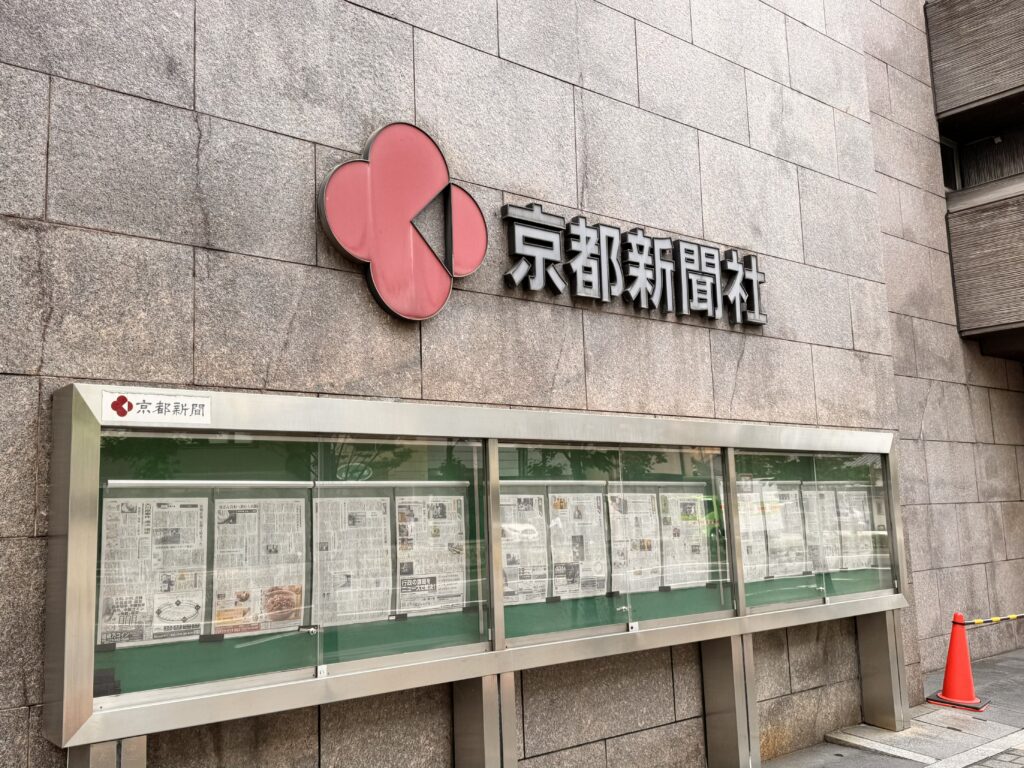
Kyoto, Japan, where modernity and tradition blend seamlessly, the Kyoto Shimbun has served as a record of Kyoto’s rich culture, economy, daily life and sports.
Established June 9, 1879, the Kyoto Shimbun is a private company with over 140 years of history. When it was initially established, it was called the Kyoto Shoji Hayabure, then it was named Hinote Shimbun. Sixty-four years later, it was renamed the Kyoto Shimbun and its been the same ever since.
Currently, the Kyoto Shimbun employs around 470 employees. From that, 300 of them are responsible for reporting and editing. Among the 300, 140 are journalists, while 70 employees are responsible for printing. The other employees at the Kyoto Shimbun are responsible for advertising sales, human resources and other company responsibilities.
Kyoto Shimbun provides morning and evening editions of its newspaper. The morning edition has a print run of 310,000 while there are 90,000 evening editions printed daily.
With newspapers on a decline, the Kyoto Shimbun adapted and provides news on both paper and through digital means. The Kyoto Shimbun shares information on multiple social media sites, and notably X, formerly known as Twitter. On X, the Kyoto Shimbun account actively posts information 24 hours a day and seven days a week. Its website is no different. On the Kyoto Shimbun website, you can find real-time information along with archives of past articles. It even has their own digital reporting department for online articles, and the Kyoto Shimbun app.
Kyoto Shimbun has three primary groups when it comes to reporting: culture, sports and politics. The politics group focuses on politics and economics, as well as local news in Kyoto. The sports division reports on professional sports in Japan as well as amateur sports. They also cover Kyoto’s very own professional soccer team, the Kyoto Sanga. Whenever the Kyoto Sanga has an away game, Kyoto Shimbun sports department employees follow them so their readers can know the results right away. Finally, the cultural group covers Kyoto’s culture along with household issues. They’re also in charge of Kyoto Shimbun TV section.
There is a fourth group called the Cross Recovering Center. This group of employees quickly report on events as the newspaper is still being printed. When events like this happen, the news will first be broken on digital and then detailed coverage will be in the following printed newspaper. This division shows that Kyoto Shimbun has become well versed in the digital landscape and in the print world.
Kyoto Shimbun journalists used to only carry notebooks and pencils when out interviewing and then return to the Kyoto Shimbun building to write their stories. These days, they still carry notebooks and pencils, but now they must also carry a digital camera, smartphone, or even a laptop computer along with them. Having those items makes the flow of information smoother, and the journalist doesn’t have to return to the building to write the story immediately. Instead, the journalist is able to report from the field quickly and continue to gather news and conduct interviews.
As Kyoto continues to change, the Kyoto Shimbun remains a vital source of information regarding everything Kyoto.
About The Author