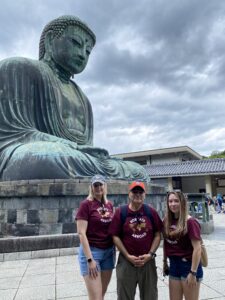
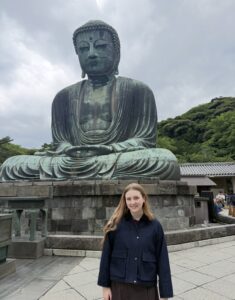
Thick clouds covered the summit of Mount Misen as SJMC Japan students visited one of Miyajima Island’s famous landmarks, exploring the mountain’s scenic trails, historic sites and religious significance despite limited visibility from the overcast weather.
Located on Miyajima Island in Hiroshima Prefecture, Mount Misen rises about 535 meters (1,755 feet) above sea level and attracts visitors from around the world. On clear days, the mountain offers sweeping views of the Seto Inland Sea and the surrounding islands. During this visit, however, low clouds and fog limited visibility, creating a different experience for students exploring the mountain.
Students traveled part of the way up the mountain aboard the Miyajima Ropeway before continuing on foot through the forested landscape. While the weather obscured the views typically associated with Mount Misen, it did little to diminish the significance of the site.

“Although it was hard to see the views from the mountains because it was foggy and humid, I was still able to enjoy the beauty of the surrounding nature,” said Ellen Nash, a digital media innovation junior. “I loved hearing the birds chirping and seeing the fog among the green trees. The contrast made the landscape look really beautiful.”
Beyond its natural beauty, Mount Misen is also known for its cultural religious landmarks. Several Buddhist halls and temples are located throughout the mountain, offering visitors a glimpse into traditions that have shaped the area for centuries. These sites remain important attractions for both pilgrims and tourists visiting Miyajima Island.
In addition to its religious significance, Mount Misen is home to several notable natural features and historic sites. The mountain contains a network of hiking trails that wind through dense forests and connect visitors to observation areas, temples and unique rock formations.
Designated as part of the UNESCO World Heritage site of Miyajima, Mount Misen plays an important role in preserving both the island’s natural environment and its cultural heritage. Its combination of history, spirituality and scenic landscapes continues to make it one of the region’s most visited destinations.
One of Mount Misen’s most well-known landmarks is Reikado Hall, which housed the Eternal Flame. According to tradition, the flame was first lit by Kobo Daishi Kukai during his training on the mountain and has been kept burning continuously for more than 1,200 years. The flame later became the source of the Flame of Peace at Hiroshima Peace Memorial Park, connecting the mountain’s religious history to Hiroshima’s global message of peace.
The site recently gained national attention after a fire destroyed Reikado Hall in May 2026. The blaze damaged the historic structure, which had long served as the home of the Eternal Flame before the structure was lost. The incident renewed public interest in the mountain and highlighted the challenges of preserving historic religious sites that have stood out for centuries.
For SJMC Japan students, the visit provided more than a typical sightseeing experience. The cloudy conditions shifted attention away from the summit views and toward the mountain’s history, religious traditions and cultural importance.
The fog-covered landscape created a quiet atmosphere as students walked along trails that have been used by pilgrims and visitors for generations. Along the way, they learned about the mountain’s role in Japanese Buddhism and its connections to some of the region’s most significant historical landmarks.

Throughout the visit, students paused to explore the mountain’s trails, observe its historic landmarks and learn about its role in Japanese culture. The fog covering the landscape created a calm atmosphere, drawing attention to features that might otherwise be overlooked on a clear day.
Rather than focusing solely on the summit, students experienced the mountain through its forest, temple and stories, gaining a deeper understanding of why Mount Misen remains an important destination for visitors to Miyajima Island.
Although the weather prevented students from seeing Mount Misen’s famous views, the experience offered a different perspective on one of Miyajima’s most visited destinations. Instead of focusing on the scenery, students explored the stories, traditions and history that have made the mountain a symbol of faith and resilience for more than a millennium.
About The Author