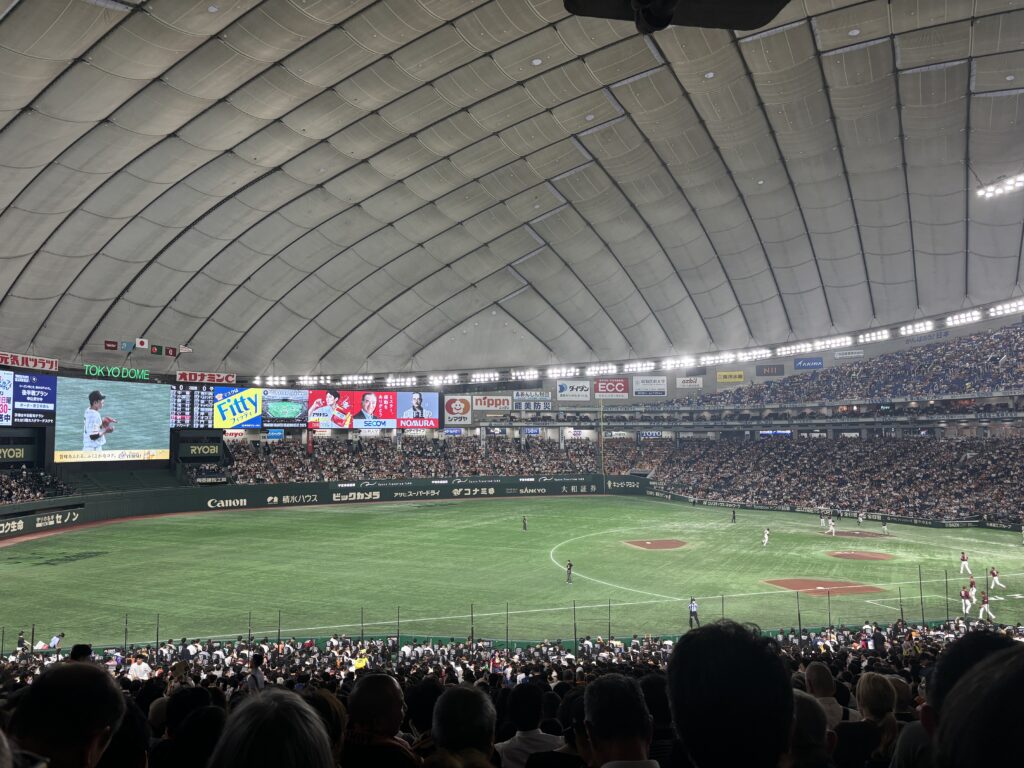
When SJMC Japan Academic Program Director and Professor Gilbert D. Martinez presented the opportunity to attend a Japanese baseball game, I knew I wanted to go. What I didn’t know was that I’d be watching the same game I’ve always known but in an entirely different way.
This was not baseball as I knew it. It was so surreal to me. There was a band from both teams, cheerleaders, constant chants and towels flying through the air. This was truly Japanese baseball.
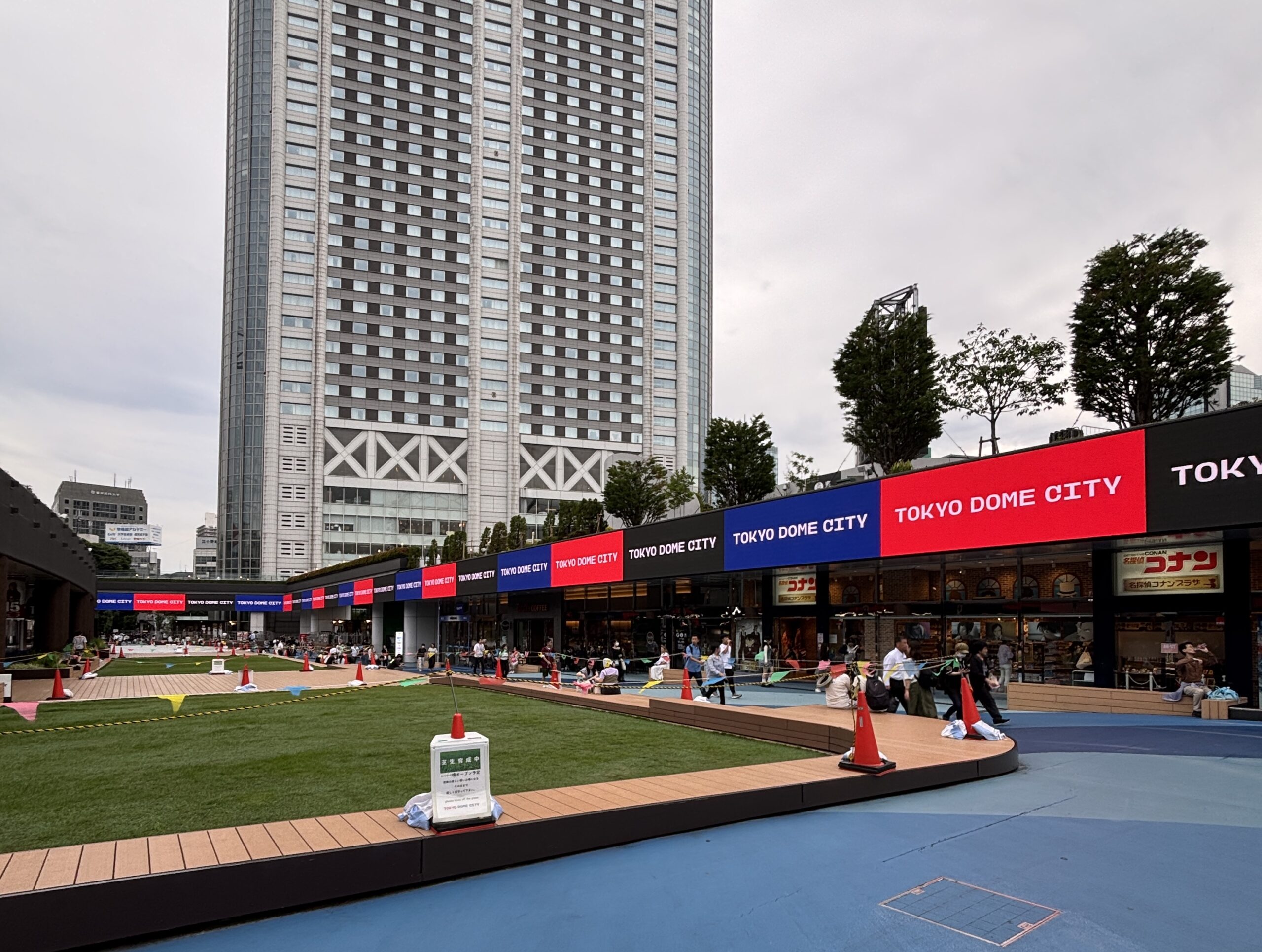
We excitedly got off the train after visiting a museum in Minato. As we walked up to Tokyo Dome to watch the Yomiuri Giants host the Tohoku Rakuten Golden Eagles, we were instantly greeted by a huge, buzzing shopping center in front of Tokyo Dome. The environment was amazing. There were high-tech structures, giant banners and huge video boards. At the shopping center, we could shop for food, anime-themed souvenirs and official team jerseys.
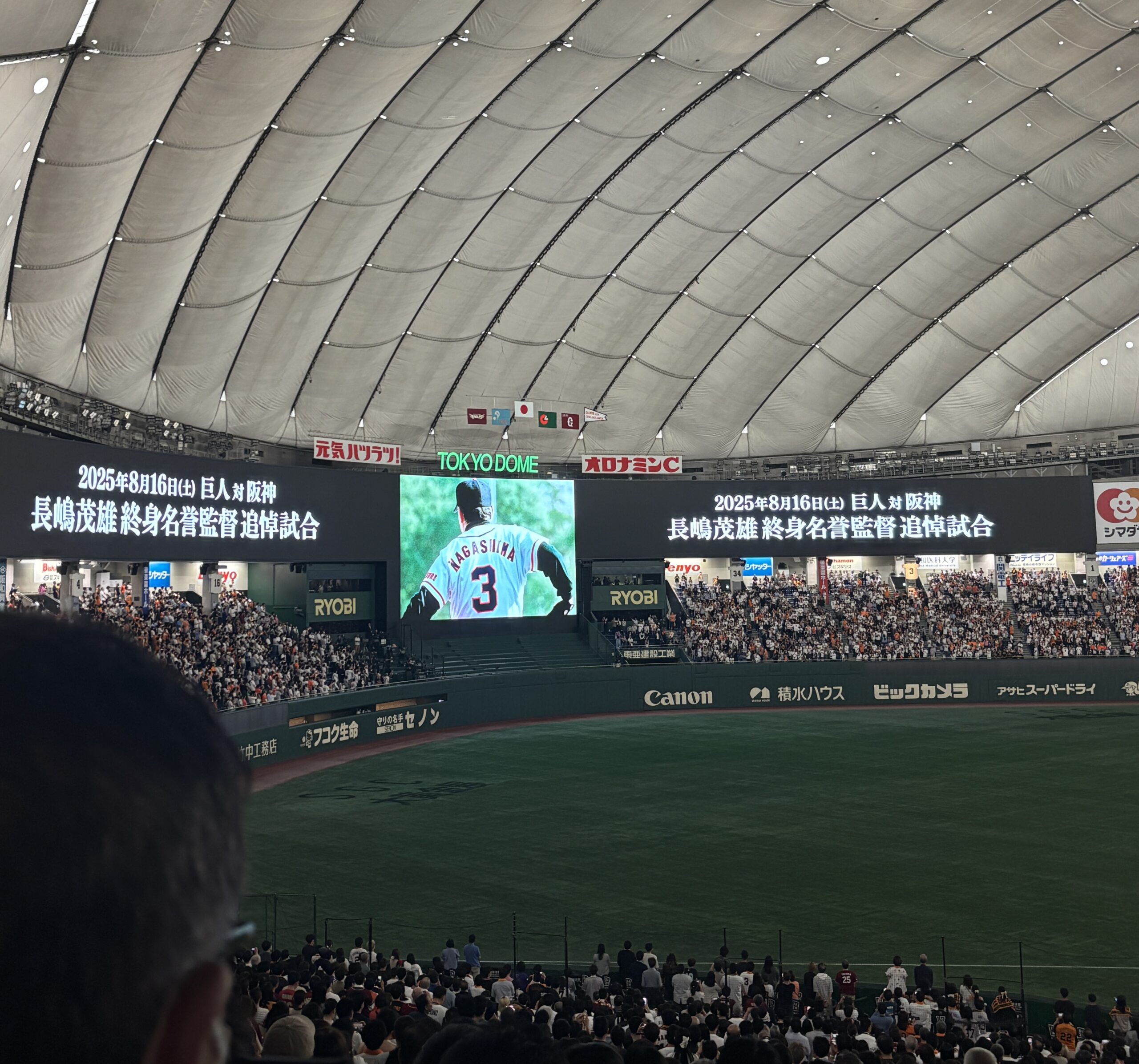
Baseball was introduced to Japan in 1873 by Horace Wilson, an American teacher in Tokyo. The game caught on quickly and continues to grow more and more popular to this day. Over the years, Japan has been known to produce many baseball legends, one of the most famous being Shigeo Nagashima. Nagashima has been a symbol of Japanese baseball for decades. He died June 3, 2025, and a memorial video was played in his honor before the game.
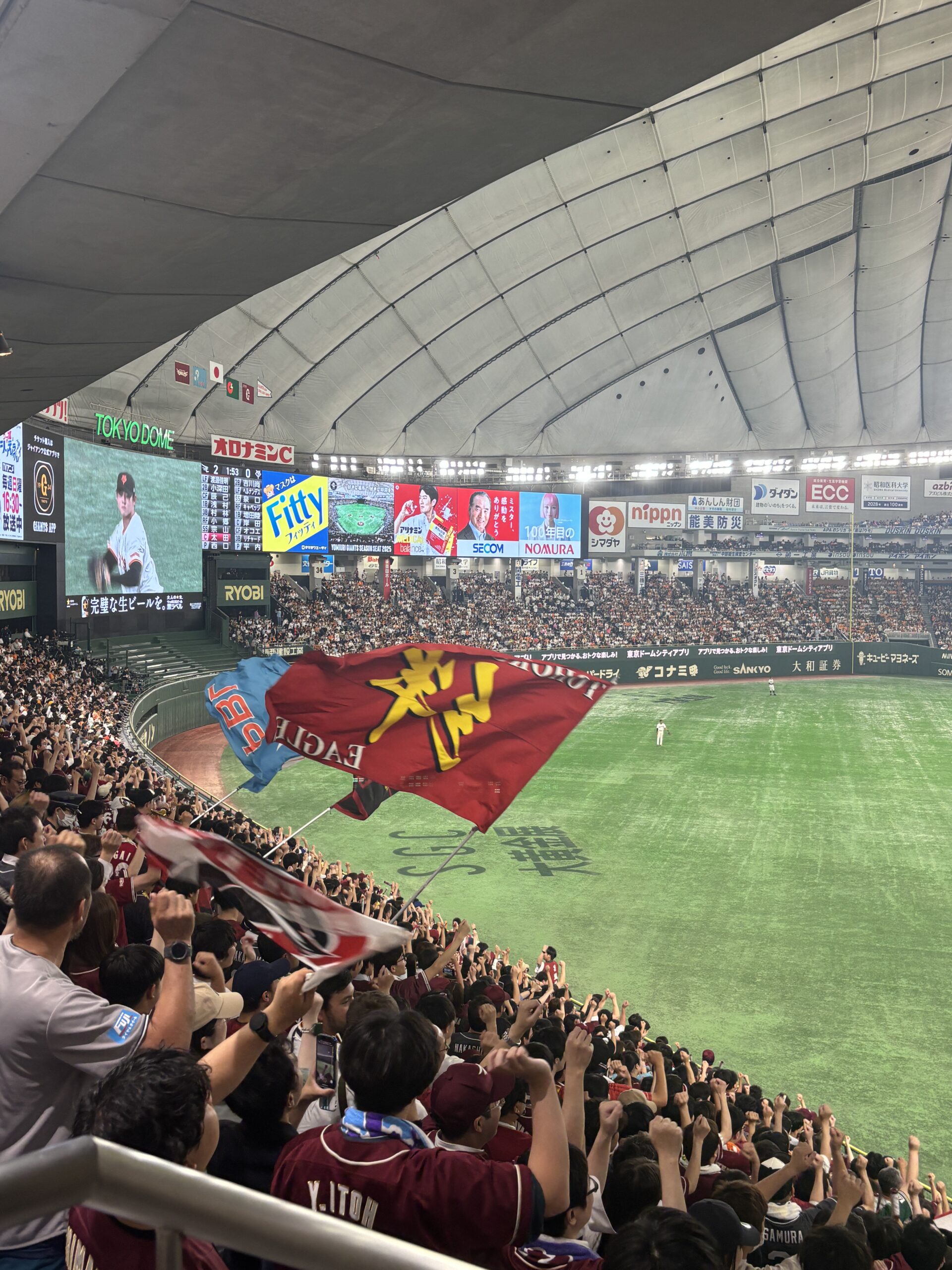
What shocked me most was that the visiting team had a designated seating section. Even more surprising was that they were not only allowed but encouraged to bring a band and perform throughout the game. Both teams had coordinated chants for each player, known as ōendan, which are a central part of the experience. The cheering was nonstop while each team was on the field, and this created an atmosphere of constant energy. Both the home and visiting fans even appeared on the stadium’s big screen multiple times.
Another difference that stood out was that there was no bullpen for relief pitchers. Instead of warming up off the field like in Major League Baseball, relief pitchers came out and threw right on the field near their teams’ dugouts, clearly visible to fans.
The culture of Japanese baseball is exceptional. It’s clear that the teams really want to try to connect with its fans. Since we had a rather large group attending the game, the stadium created towels that read “Texas State University.” It was a thoughtful gesture that made us truly feel welcomed to attend the game. We each wore and waved our towels with pride.
Another detail that made us feel connected was at the concessions which sold bento boxes featuring the players’ favorite meals. It was a unique touch, it felt personal and in a way, made the experience even more meaningful.
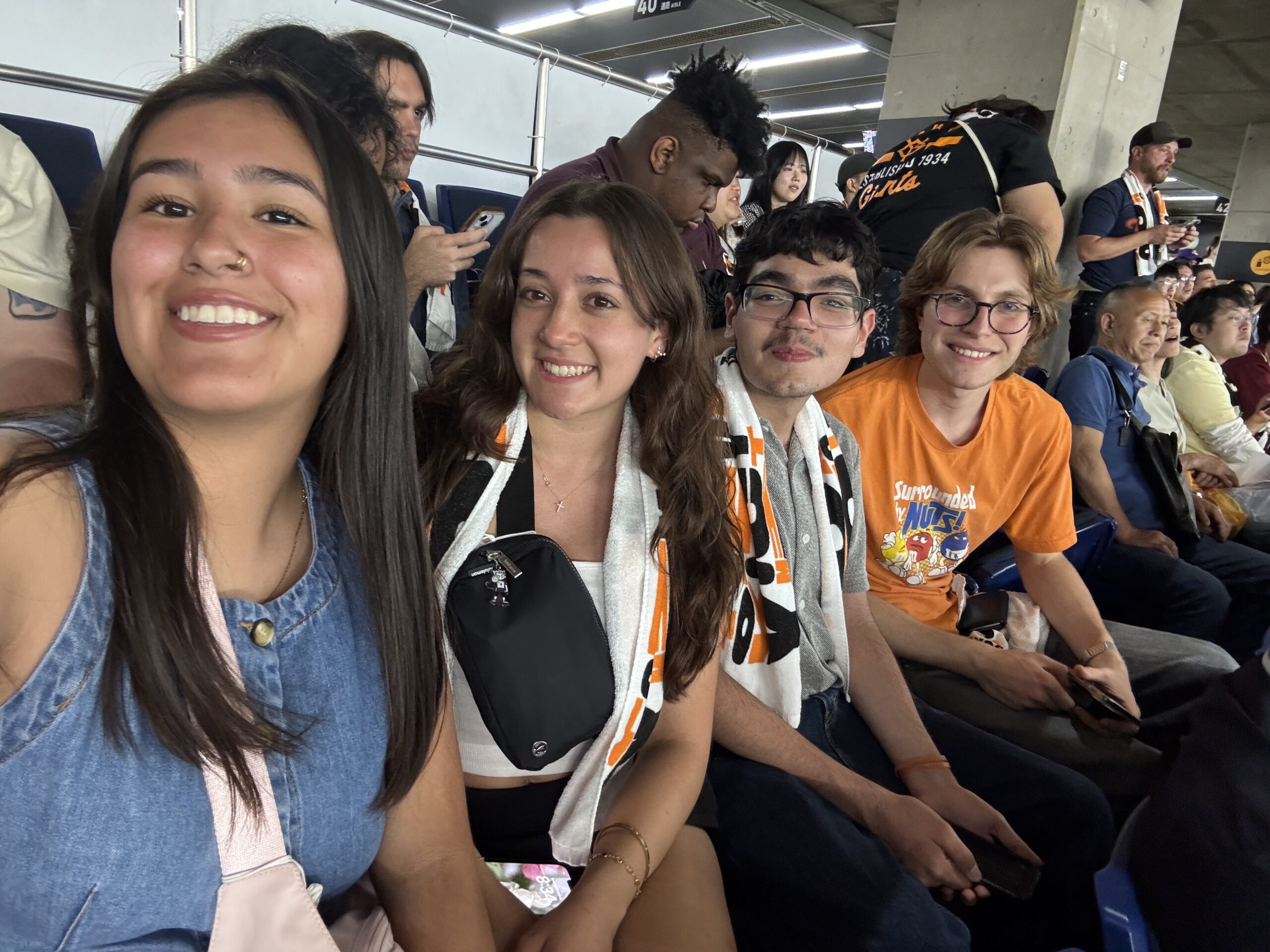
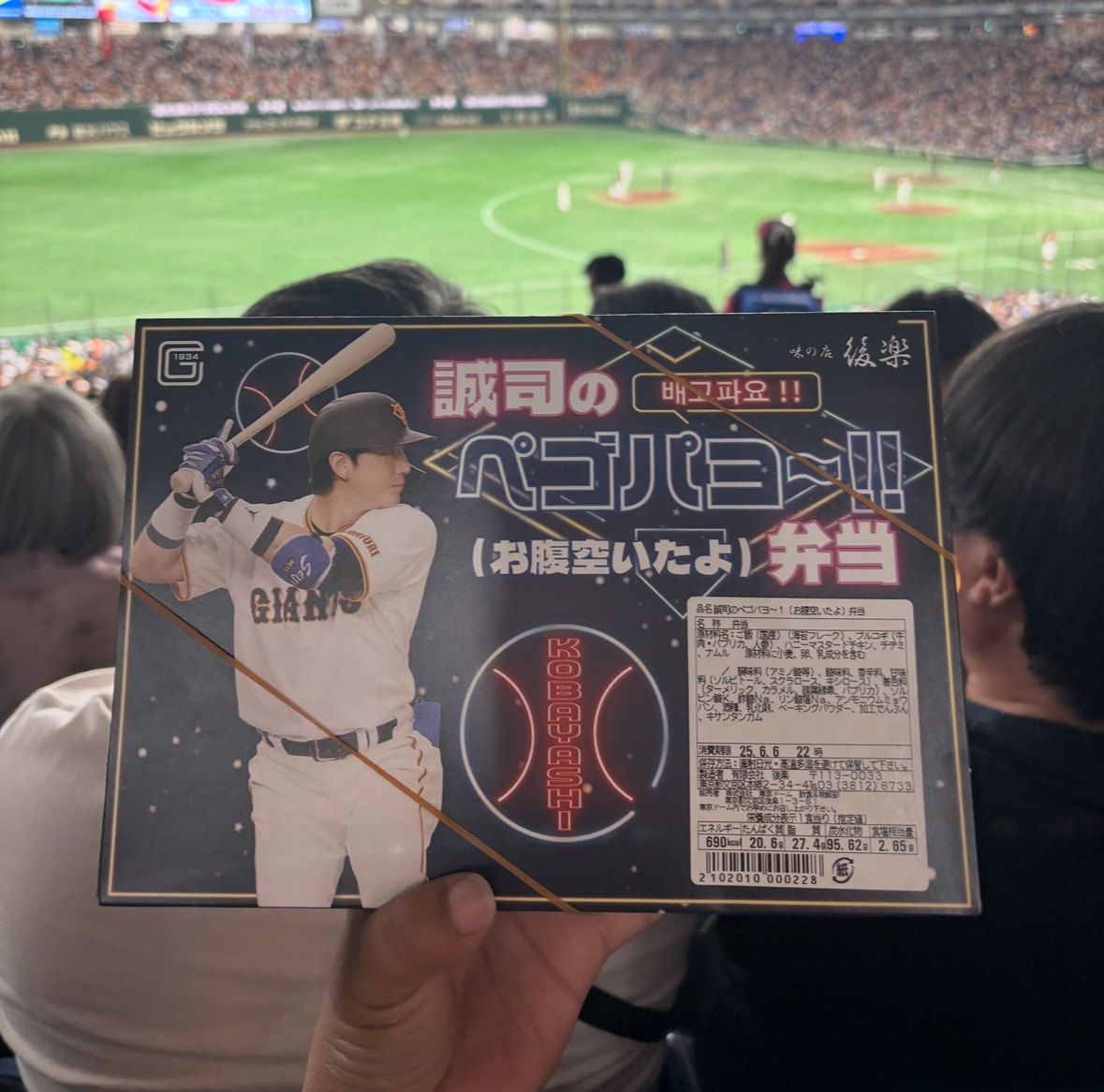
Even though the Giants lost, getting to experience Japanese baseball was unforgettable. Funnily enough, this really opened my eyes to the cultural differences in the world and how a familiar game could feel so new.
While the rules of the game were the same, the environment was completely different. It showed me new aspects of baseball that I’d never seen before and I’m incredibly grateful to have experienced it!
About The Author