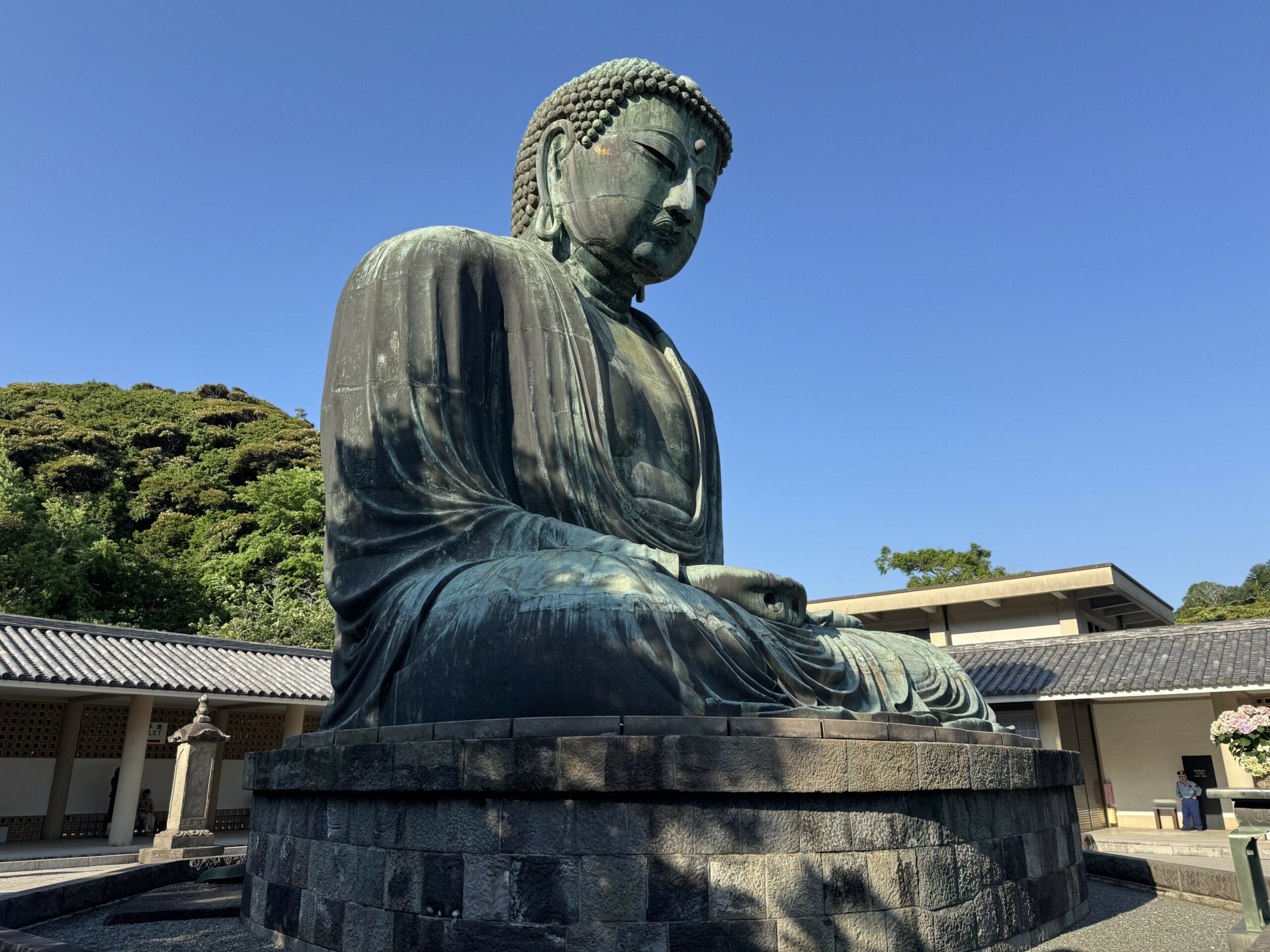
Enduring several centuries, typhoons, earthquakes, Kamakura’s Daibutsu statue remains in a state of eternal calmness, continuing to watch over Japan.
Casting of the bronze Daibutsu, also known as the Great Buddha of Kamakura, began in 1252 and lasted 10 years. When it was completed, the Great Buddha was housed in Daibutsu-den Hall.
Unfortunately, the building was destroyed beyond repair due to raging typhoons hitting the structure in both 1334 and 1369. Then, in 1498, a severe earthquake struck and damaged the area, including the Great Buddha.
During the mid-Edo period the Great Buddha was repaired by two priests with funds provided by a merchant from the Asakusa district in Tokyo. With the restoration of Daibutsu, a temple dedicated to the practice of the nenbutsu, or mindfulness of Buddha, was also restored. This temple was named Shojosen-ji Kotoku-in. This temple is now simply known as Kotoku-in.
Visitors from around the world flock to the Kotoku-in temple grounds to stand in the presence of the Great Buddha, which is nearly 44 ft. and weighs around 121 tons. While some are drawn to the novelty of its size, others view this statue as a symbol of resilience due to its serene expression and endurance throughout time.
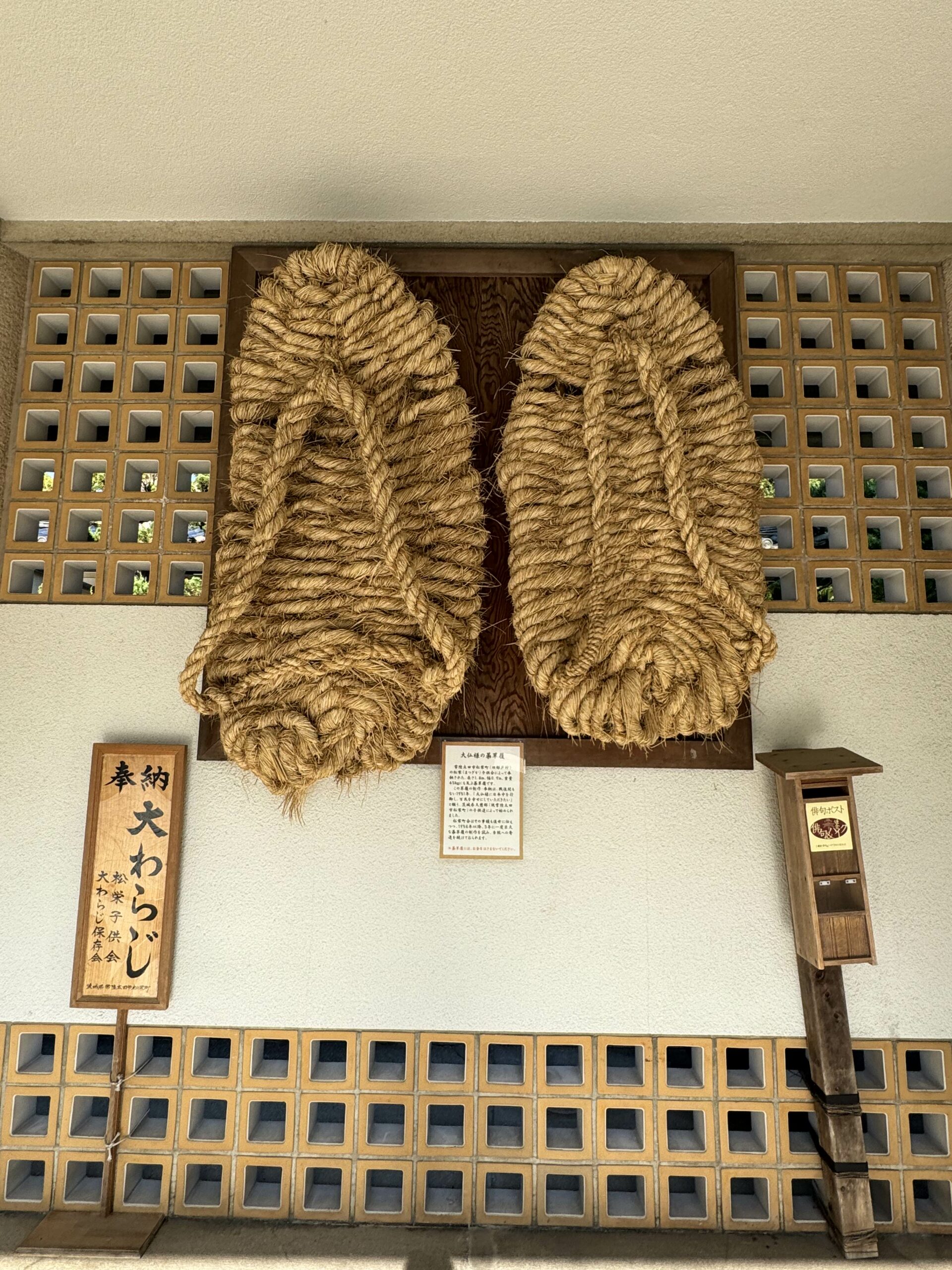
To the Great Buddha’s left are giant straw sandals. The sandals are 1.8 meters long (nearly six feet), 0.9 meters wide (nearly three feet) and weigh 45 kilograms. The sandals were first brought to Kotoku-in in 1951 by the Children’s Association of Matsuzaka-cho in Hitachi Ota City, Ibaraki., when Japan was still recovering from World War II.
The children’s message that accompanied these sandals was, “We pray that the Daibutsu will walk throughout Japan, working for the happiness of everyone.” Every three years the same children’s group remakes the sandals and presents them to Kotoku-in.
Surrounding the Great Buddha are multiple plaques with prayers. These plaques are dedicated to various subjects. Notably, one of these plaques is dedicated to the late Sri Lankan President Junius Richard Jayewardene, who spoke at a peace conference in 1951 and showed immense love toward Japan and the Japanese people. This love was based in understanding and pure compassion since this was shortly after World War II.
Jayewardene urged for each country at this conference to show forgiveness and love towards Japan during a hard time. The front of the monument has his face cast in a gold circle. Underneath the gold circle the quote reads, “Hatred ceases not by hatred, but by love,” in five different languages, including English.
The Great Buddha of Kamakura also offers visitors the option to venture inside of the statue. It costs only ¥20 (about USD 0.14). When walking into the statue, visitors are greeted with a spiral staircase leading to the main part of the statue. Once inside, the temperature is noticeably very different from the outside. The interior is stuffier and a lot warmer. The interior of Daibutsu provides visitors with information on how the Great Buddha was constructed and what measures they have taken to keep the Great Buddha strong and durable to withstand the elements.
At the end of the Great Buddha experience, there is a small gift and souvenir shop. This shop offers small charms and statues of Daibutsu ranging in various different sizes. However, none are as big as Daibutsu, but they are just as meaningful.
Visitors to Kamakura should make sure to stop by Kotoku-in where Daibutsu peacefully resides until it is time for him slip on the sandals and spread happiness throughout Japan.
About The Author