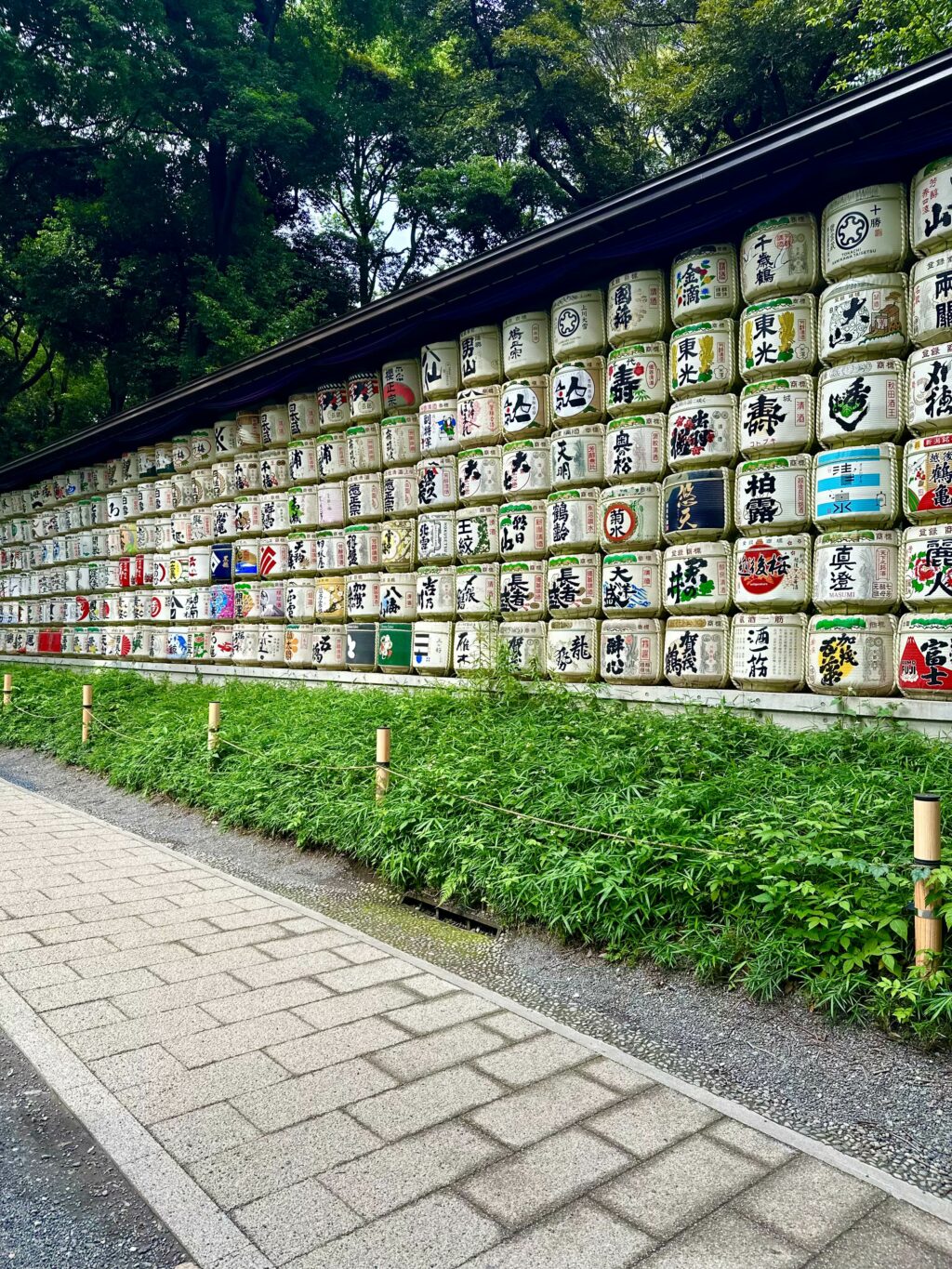
Sake barrels donated from all over Japan to honor the emperor and empress
In a sea of concrete, bustling city streets and tourist attractions galore, a secluded isle of Japanese tradition resides at Meiji Jingu.
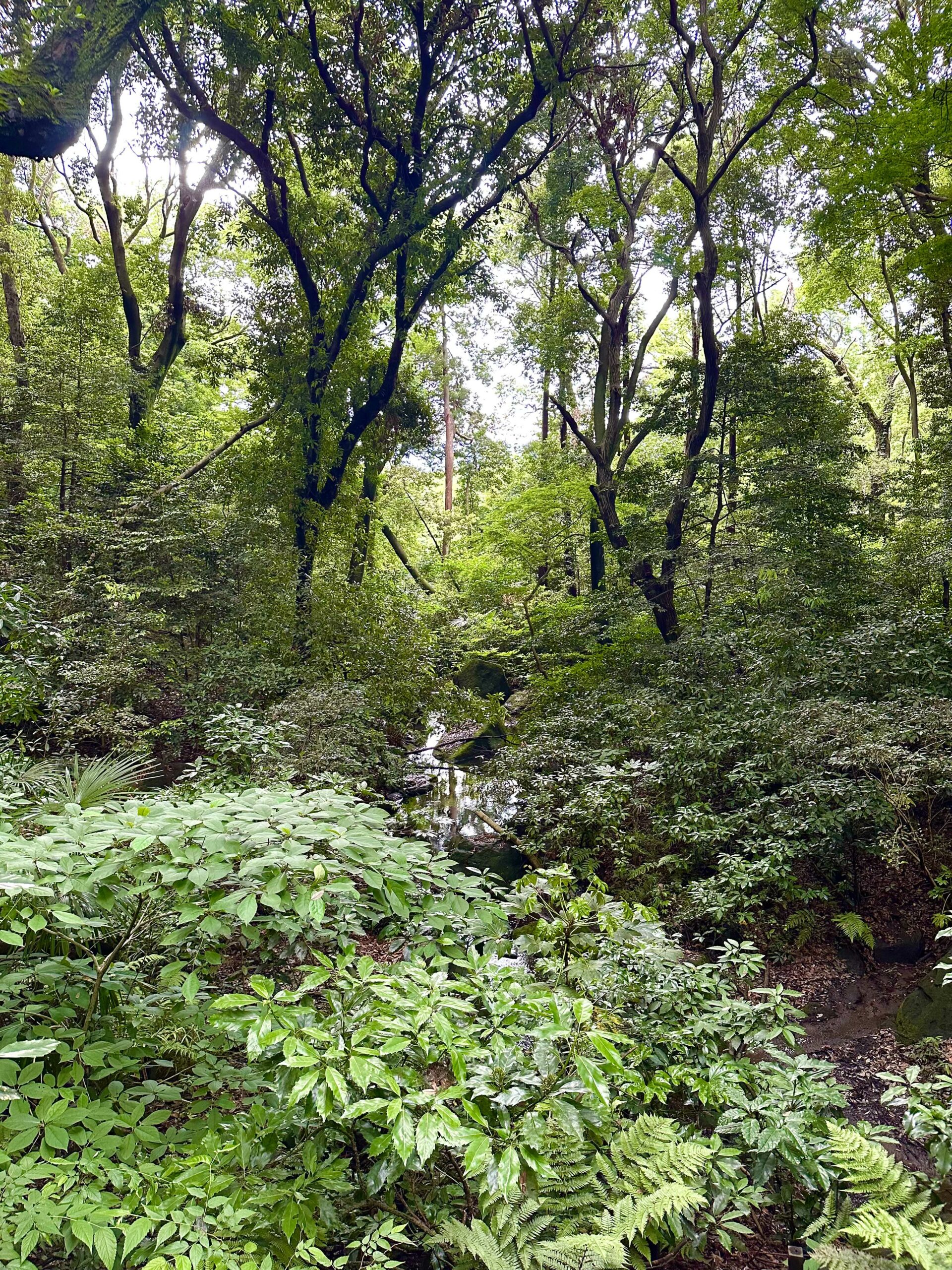
Established in 1920 as a shrine dedicated to the honorable Emperor Meiji and Empress Shoken, Meiji Jingu is perhaps the most important of all shrines connected to the Imperial House of Japan. The shrine complex is encased within 70,000 square meters of human-made self-regenerating forest.
Only a short walk away from the famous Takeshita Street markets of Harajuku, a sequence of remarkable torii gates greet visitors as they arrive for their visit to the shrine. Upon preparing to cross through each gate, guests bow at either side, being sure to avoid the central path reserved for the gods.
Meiji Jingu has a special place in the hearts of the Japanese people who journey there for blessings and purification. The Shinto religion has an inseparable connection to Japanese history. Shinto is a religion which attributes spiritual beings known as kami to natural phenomena and living things. It has no official founder yet is the oldest original religion in Japan.
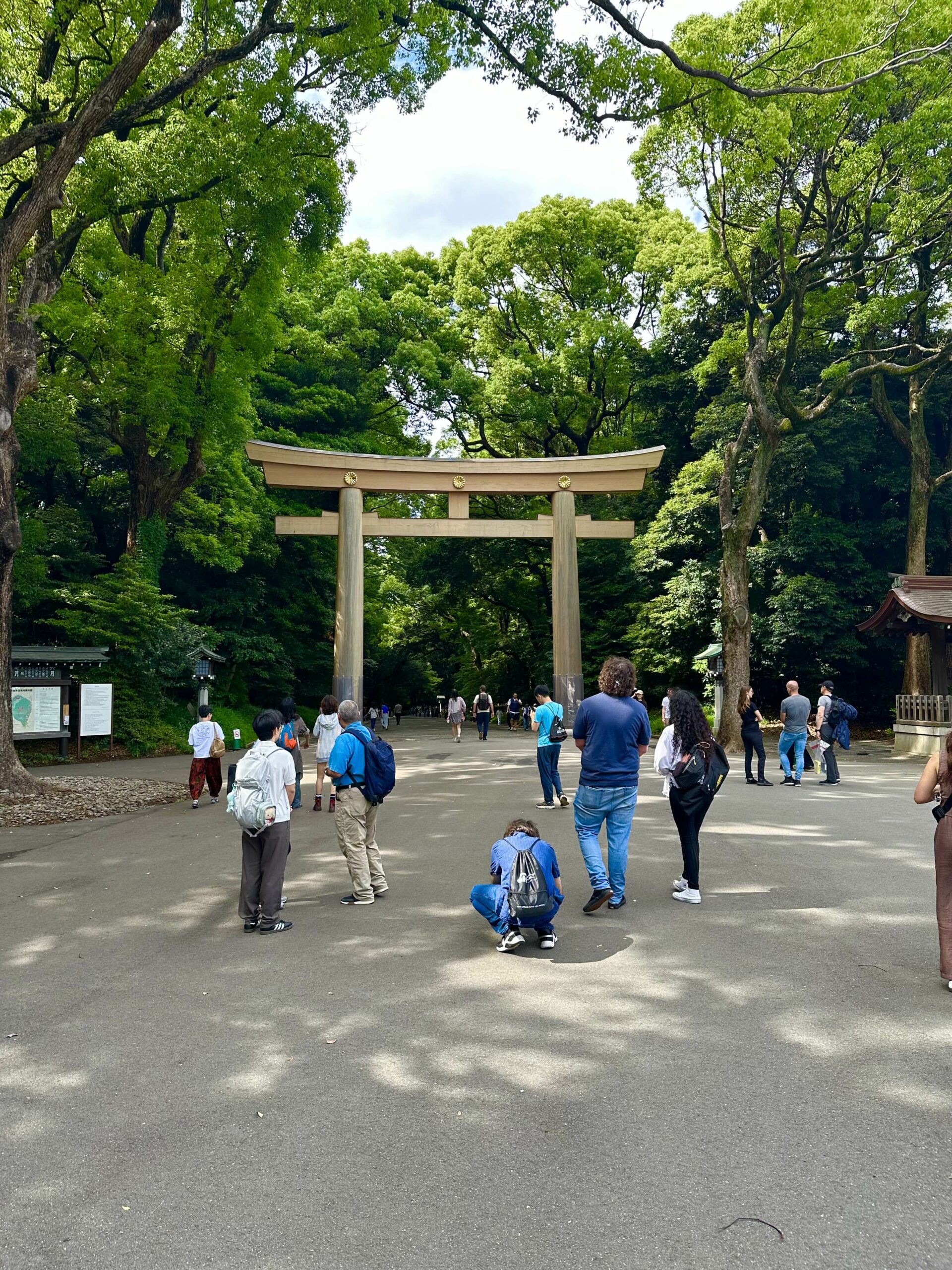
Past the first torii gate, the ethereal beauty of the surrounding forest evokes a sense of awe. The path to the main complex is gently interrupted by a Purification Font, barrels of sake reserves donated by breweries across Japan, wine barrels from various regions of France and placards containing information about the natural area.
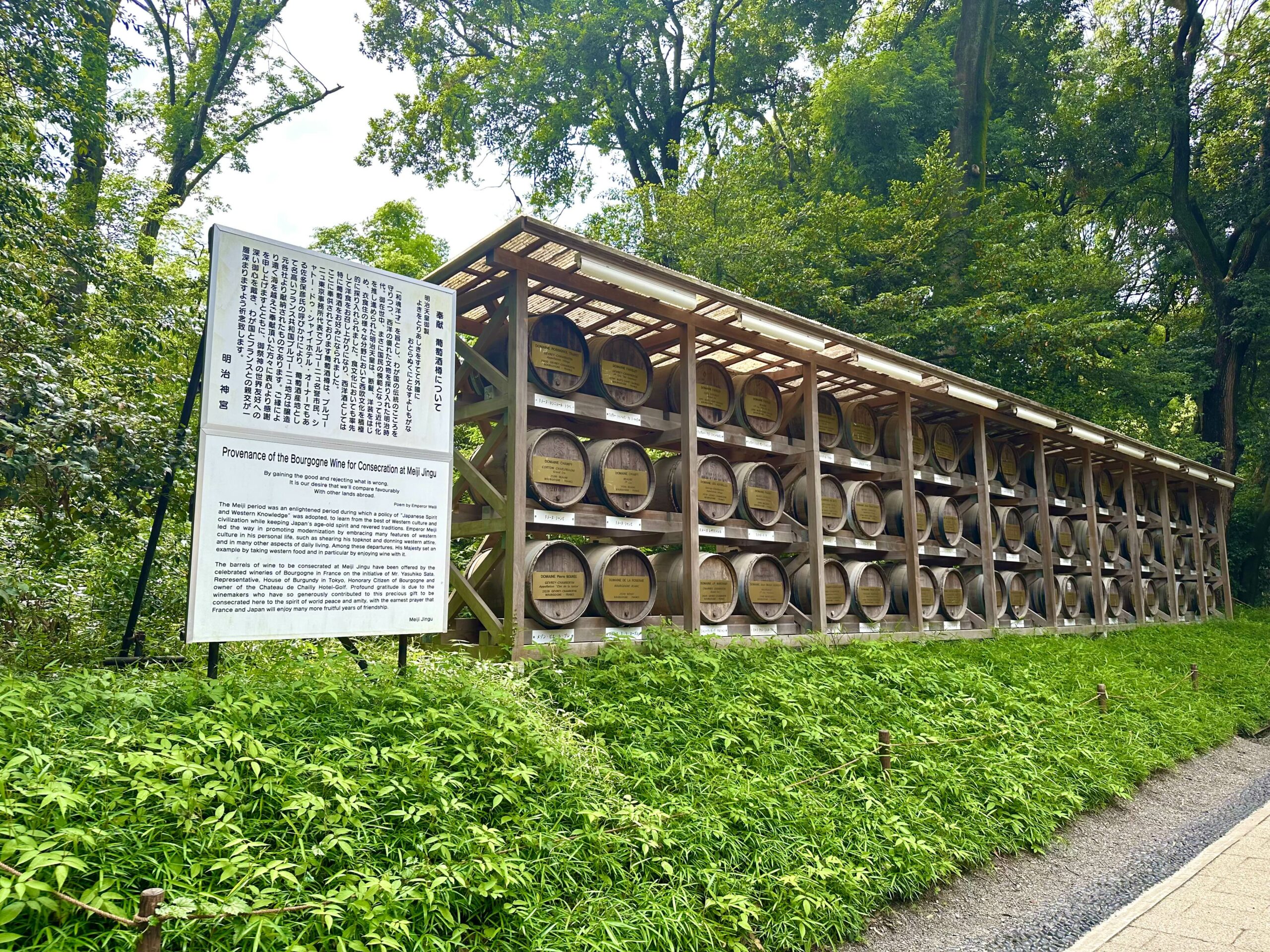
Guests are encouraged to wash their hands and mouths at the Purification Font before continuing deeper into the shrine. Each rack of donations to the shrine pays respect to the souls of the emperor and empress. Guests should be sure to enjoy the natural features that have been curated along the forest path beyond.
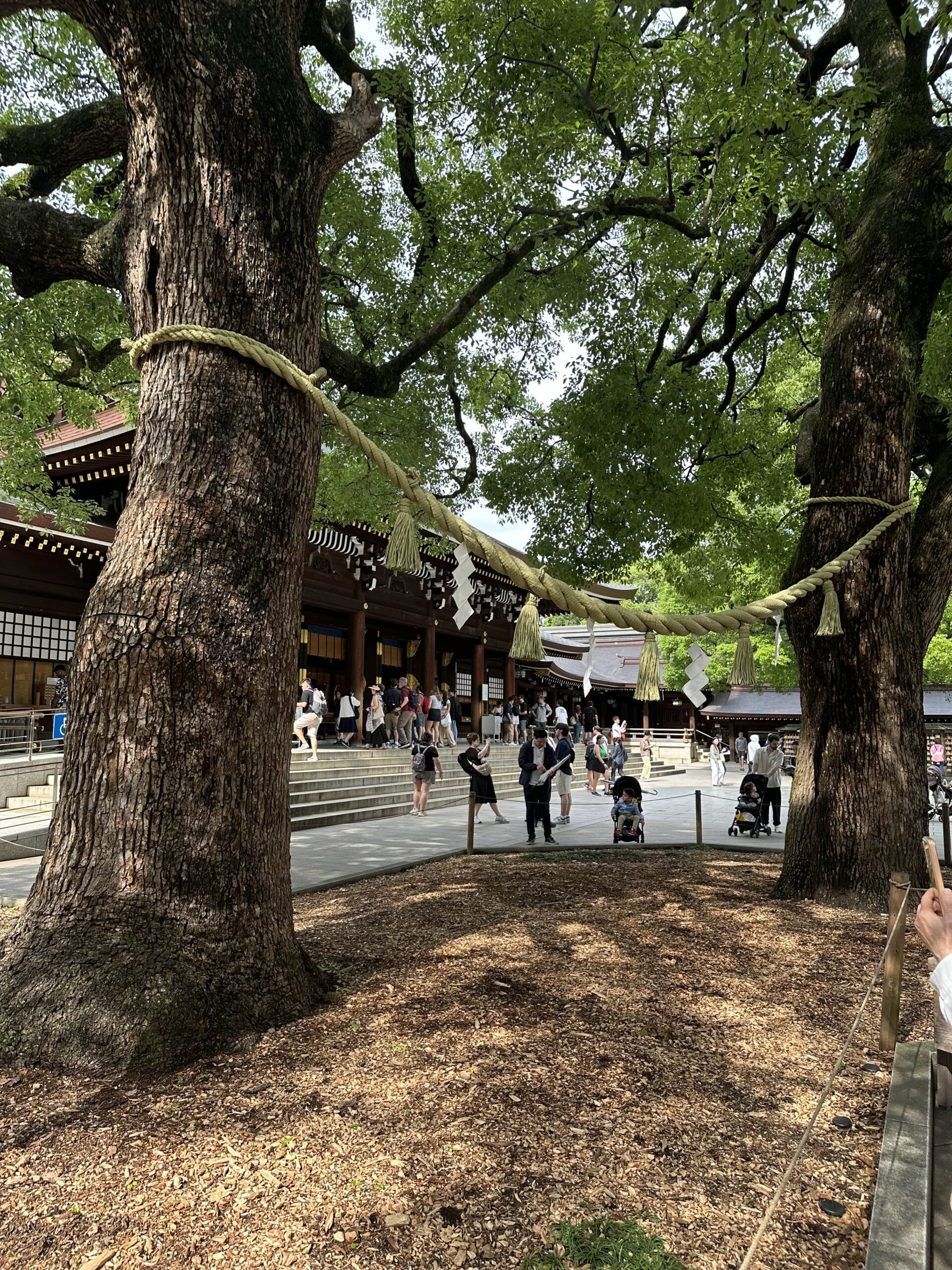
After proceeding through the last of the three torii gates, visitors will find themselves face-to-face with the main complex. This inner sanctum protected by the surrounding forest feels secluded despite the large crowd it attracts. Within these walls resides an ema-kake rack adorned by wooden tablets with the prayers of visitors. Adjacent to the rack are two trees connected by a protective rope, or shimenawa. The Meoto-Kusu, or “coupled-trees” as they are aptly named, represent a strong bond of marriage. Newlyweds visit these trees to bless their marriage at the shrine.
As guests continue through the main complex, a set of stairs frames the altar of the shrine. The clinking of coins being tossed into the offering box echoes around the walls of the shrine. Guests make their way to the altar to say a prayer to the kami enshrined here. They then toss in coins, bow twice at the front of the altar, clap twice for the attention of the gods and then say a prayer. After praying, it is customary to bow once more out of respect before making one’s way back down the altar steps. The area at the altar is private and photos or videos of the area are expressly forbidden.
To the right of the altar is the main exit of the shrine. Just past the doors, shrine employees sell charms of good luck, health and divine protection. These charms range from ¥500 (USD $3.45), all the way up to ¥5,000 (USD $34.50). Further past the main shrine exit, guests will notice vehicles pulling into a covered structure. Here, a Shinto priest performs vehicle purification rituals to cleanse newly purchased cars. Drivers hope to avoid bad luck on the road through these rites, which are done in the true spirit of Meiji modernization.
The final torii gate of the shrine marks the end of a long walk full of ancient tradition and significant Japanese history. Guests turn back towards the shrine as they reach the gate and bow out of respect one final time. From here, the forest slowly shrinks away as the modern streets of Tokyo come back into full view.
About The Author