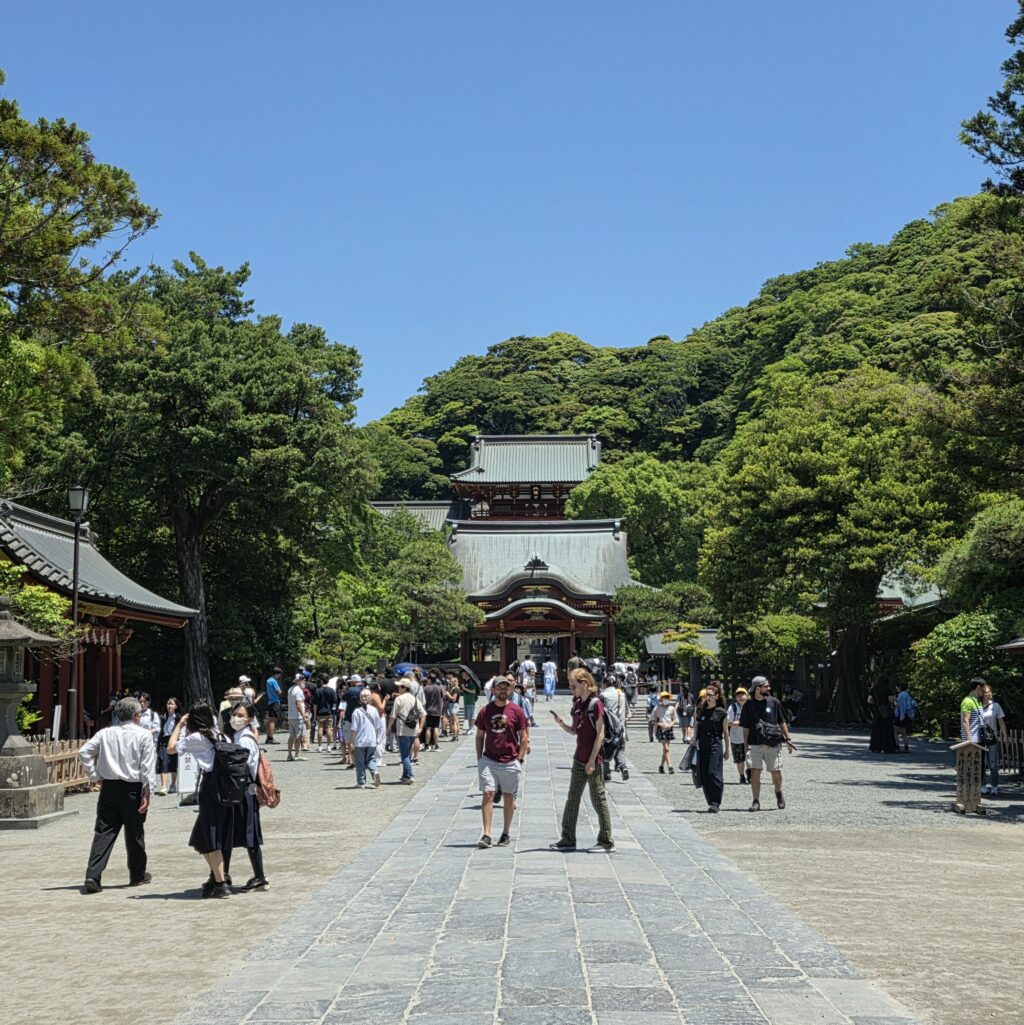
Lively tourists and school groups walk through ancient pathways past Shinto shrines that erupt from the earth and trees. In Kamakura, the Tsurugaoka Hachimangu shrine offers a beautiful sight but also the advantage of being surrounded by plentiful shopping and snacking opportunities.
Kamakura itself was once the political capital of Japan. From 1185 to 1333 it became the hub of important matters due to the Minamoto family appointing the shogun in Kamakura. This appointment began the era of a samurai dictatorship from 1185 to 1868, lasting over two other political capitals and 684 years.
The Shinto shrine’s grand appearance draws all types of visitors into its walls, opening at 6 a.m. year round. Shinto, or “Way of the Gods,” is the indigenous faith of Japan. Practically as old as the country itself, Shinto practitioners worship kami (Shinto gods), which represent important aspects of nature and life, like the sun, mountains, wind, war and harvest. Kami is thought to be in everything, even people.
Shinto is considered an optimistic faith, as it reasons that humans are naturally good. There are no absolute rights or wrongs in the Shinto religion. However, it’s believed there are some evil spirits so purification rituals are common to protect oneself.
Tsurugaoka Hachimangu itself offers four shrines: harvest, sea, blacksmithing and war. All deities present here were considered extremely valuable for the prosperities of shogun and samurai life, especially the war spirit. The two shrines the SJMC Japan students were able to visit were the harvest and war shrines.
The shrine of harvest, or rice, is the smaller of the two shrines here. Adorned with fox statues on the entrance and found only by trailing up a very worn stone staircase through torii gates – the shrouded Inari shrine is a pop of red against the deep greens.
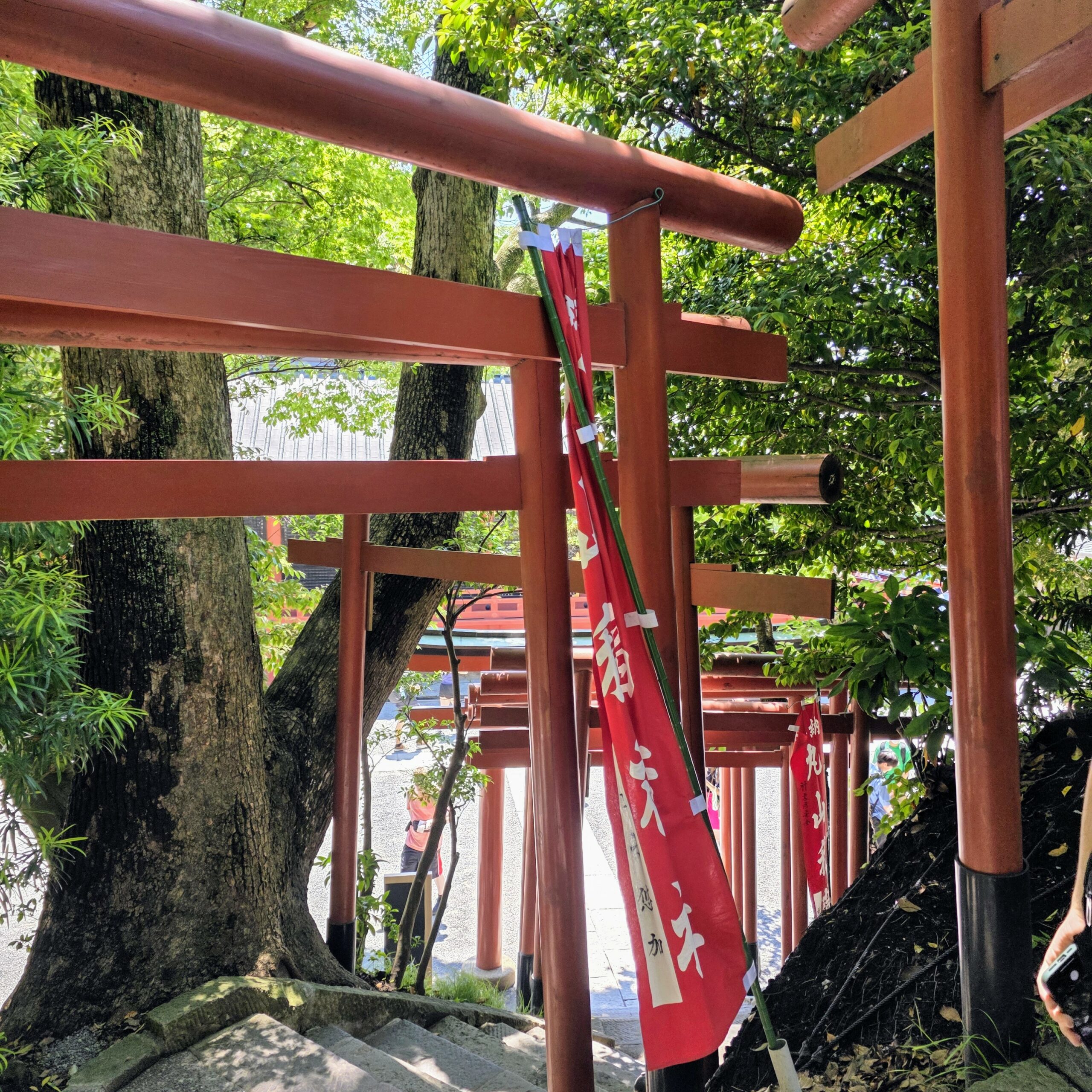
The original purpose of this shrine was mainly for harvest but over time evolved with a new purpose as business men and women would go to these shrines and wish for the good luck of their companies.
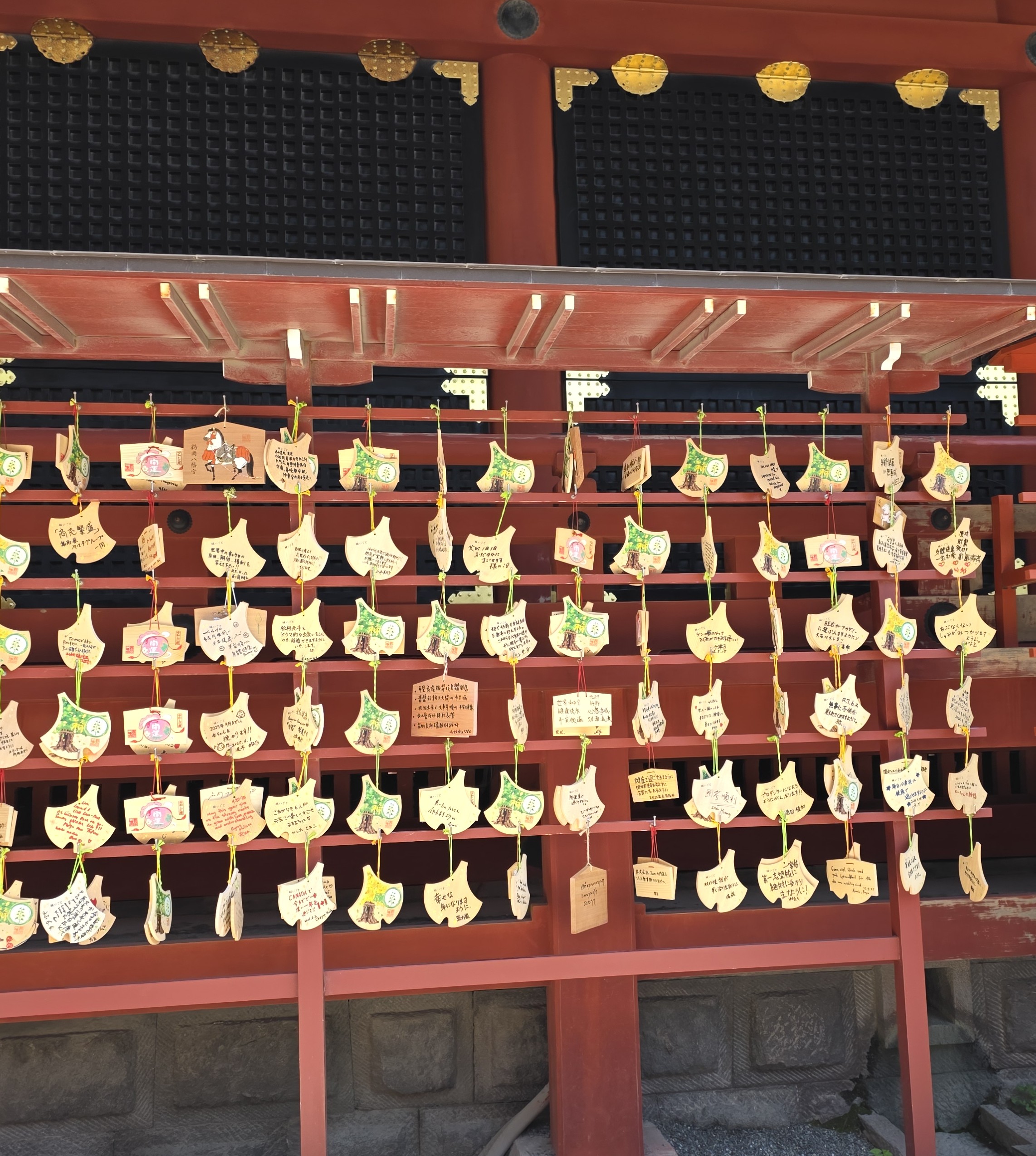
The much larger Hachiman shrine for the god of war offered a beautiful display of architecture. People milled about here much more frequently as visitors often squeezed by each other waiting in line to pray or take photos. Upon immediate arrival, there is a place for omamori, an amulet that patrons can write their prayers on for good luck or protection. Other common wishes include good luck on an exam or protection from car accidents.
Past this point deeper into the shrine, no photos were allowed to be taken in the space. The students’ tour guide described the portable shrines tucked away in the building, explaining that priests would move a piece of the god of war into the portable shrine. Then it would be carried around the village during times of festivals, such as the annual Kamakura festival during April when the city’s samurai history is celebrated with traditional dances and horseback archery.
Although no photos were allowed, it is easy to learn the distinct noise of a Shinto shrine. There is a constant clink of having coins thrown into a special offering place for prayer. Coins fly, hitting the metal bars on the way down, then the patron would clap their hands to begin their prayer. Here is what can be heard inside:
Returning to the outside of the shrine’s main gates, the SJMC Japan students were able to overlook other buildings in the area and came to realize the path they would take. These steps were similar to the other ones on the path to the Inari shrine and were almost just as worn. At the end of the stairs, the students were greeted by a station for a purification ritual.
An ¥100 donation allowed visitors to step through the gate and perform the figure eight ritual. This particular purification was said to last for the next six months.
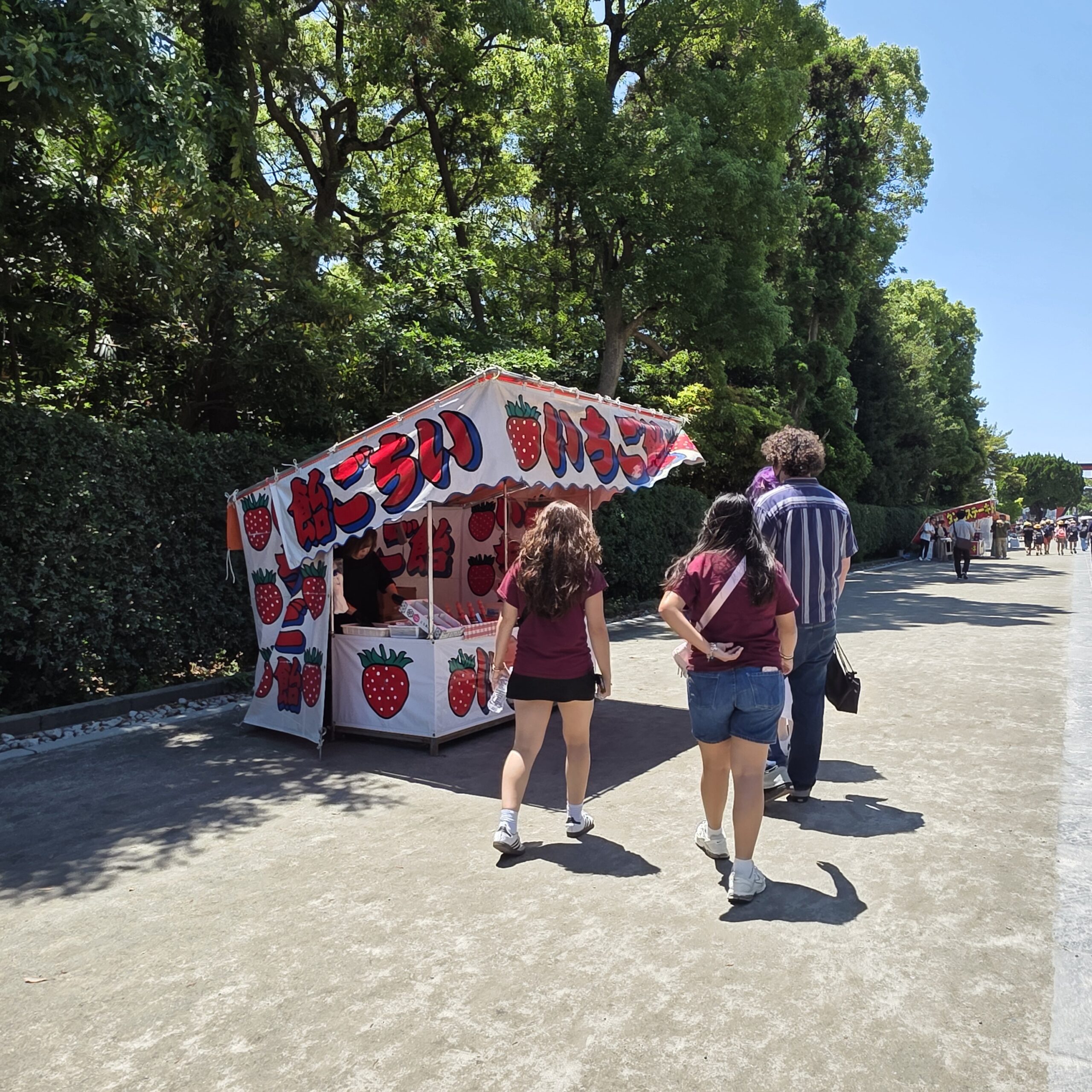
As the group wandered further, one could expect to see more religious shrines to find and pray at, but they were pleasantly surprised by the sight of snack booths and vendors!
The students very quickly wandered off to grab any type of candied fruit or keepsake. There were vendors that french fries, jewelry, and even kimonos for pets. It was nowhere near as packed as one might imagine the Tsukiji Outer Market would be but just as delicious.
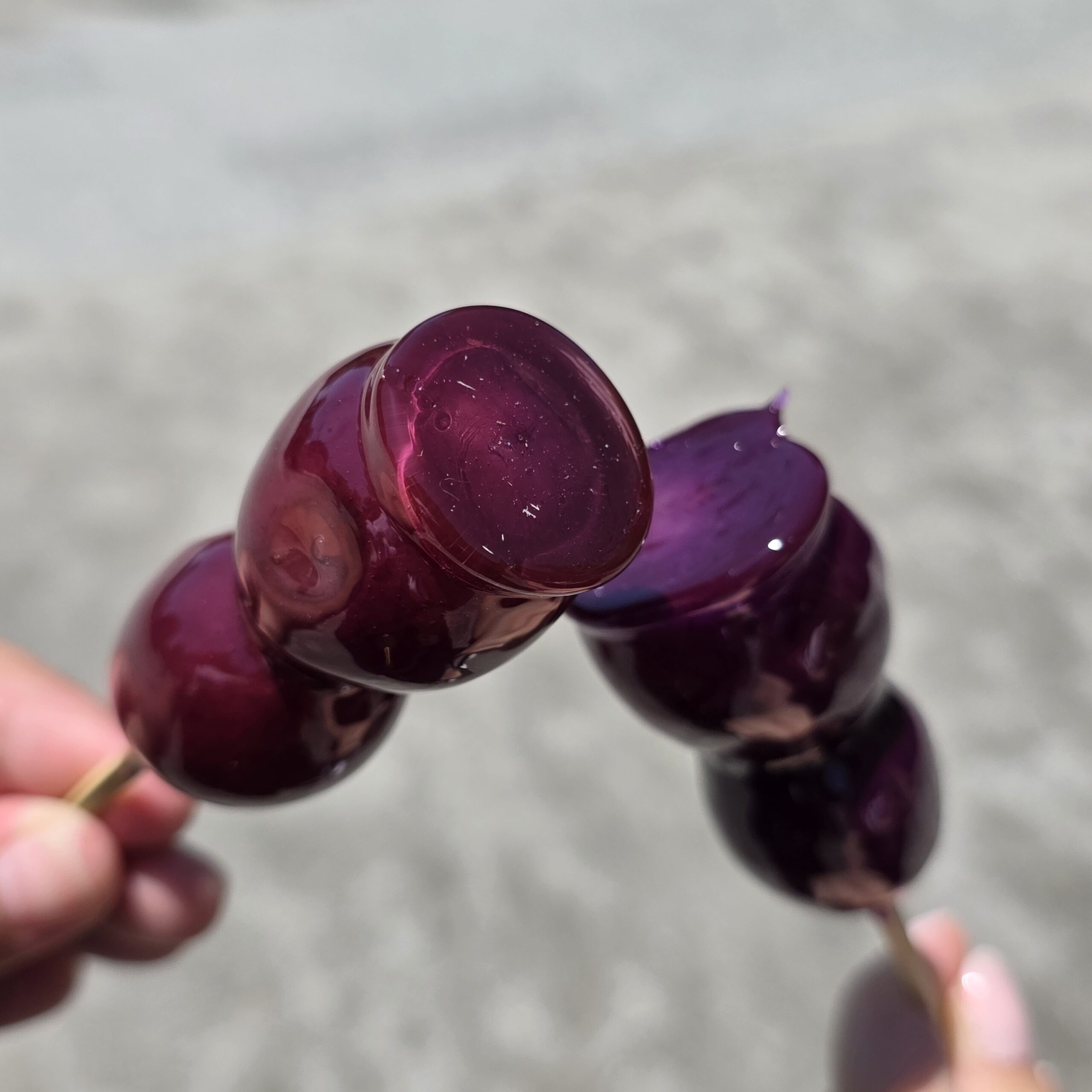
Students stopped to try some candied grapes on a stick, quickly snapping a photo before digging in (It is absolutely scrumptious).
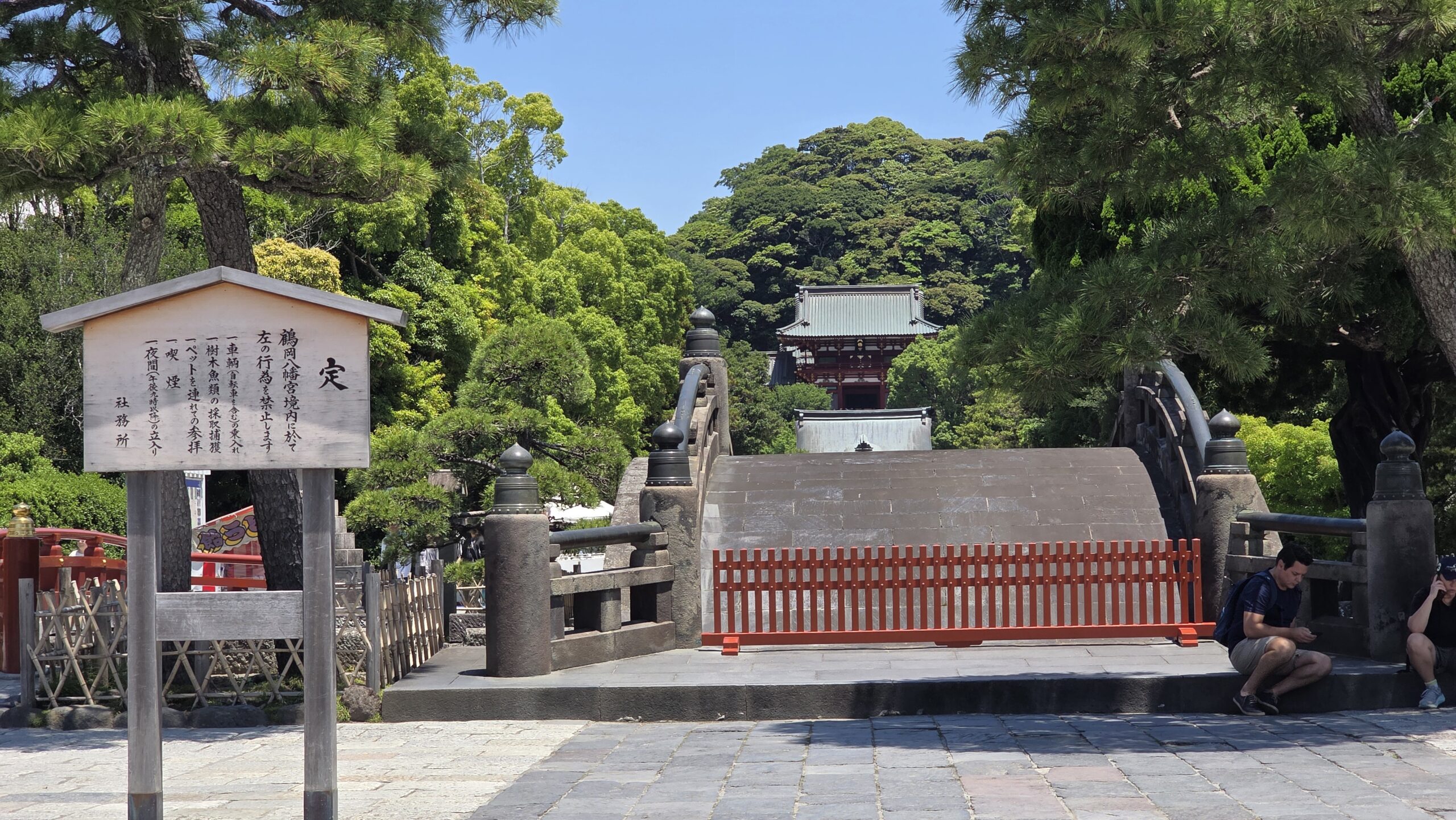
Visiting Tsurugaoka Hachimangu allows one to walk the barrier between modern Kamakura and the shrine, realizing even at a distance, the sharp contrast between the peaceful shrine and a bustling city street.
About The Author