Kamakura is a small seaside city in the south of Japan in the Kanagawa prefecture.
Despite being 55 kilometers away from the bright lights of Tokyo and only measuring 39 square kilometers, its historical and cultural significance makes it a prime visiting spot for both tourists and Japanese individuals alike. Known as the “Kyoto of east Japan,” Kamakura is home to multiple Shinto shrines and Buddhist temples such as the iconic Kotoku-in and Hase-dera. A trip to Kamakura isn’t complete without visiting these two iconic locations.

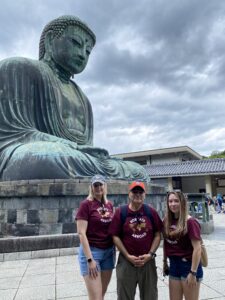
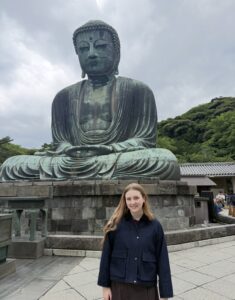
Kotoku-in is a Buddhist temple that features a massive copper statue of Kamakura Daibutsu which translates to Great Buddha of Kamakura. This Giant Buddha is considered a national treasure and is officially honored as such by both the Japanese government and its people. Weighing in at over 121 tons and over 11 meters tall, this Daibutsu is the second largest Buddha statue in Japan. Following its construction – which started in the mid-twelfth century – Kamakura Daibutsu was enshrined inside Daibutsu-den Hall. After the building was destroyed due to typhoons and an earthquake, the statue remained open to the elements permanently, giving it a teal tint, which was the result of oxidation over the years.
The fee for entry is 300 yen, with prices varying for children, teachers and other exceptional circumstances. The average commute time to arrive from Tokyo is about an hour to an hour and a half, with many visitors arriving via tour bus and public transportation. Upon entry to the temple, visitors are greeted with a fountain and wooden ladles. This fountain serves as a handwashing station, acting as a modern and simplified version of a full-body ablution, reflecting the Buddhist emphasis of starting with a pure body and mind.
Once cleansed, a wide and open staircase leads visitors to the Kamakura Daibutsu itself. In this open area where the statue sits, guests will see incense smoke from a large bronze burner . This collection of burning incense is a tradition believed to bring blessings and purification. Occasionally, Kotoku-in opens the doors to the Kamakura Daibutsu, allowing visitors to enter and tour the inside of the statue for an additional price of 50 yen. The entrance to the Great Buddha is not permanently open and available to the public, so any lucky visitors that have the opportunity to enter should definitely chose to see it.
Hase-dera is another prominent and historic Buddhist temple located in Kamakura. It is also often referred to as Hase Kanon, a reference to the eleven-headed Kannon statue inside of the temple. This iconic statue is a physical display and manifestation of Kannon, goddess of mercy within the Jodo sect of Buddhism. The statue is massive, measuring in at just slightly over nine meters tall, enshrined in the Kannon-do Hall on the upper grounds of the temple.


Hase-dera is also very famously known for its hydrangea path. Located on the tallest hill within the temple grounds, this path is iconic, with peak hydrangea blooms happening in June. The path’s official name is Prospect Path and features 40 different hydrangea flowers as well as a breathtaking view of the coastal area.
The fee to enter the temple is 400 yen for adults and 200 yen for children ages 6 to 11 years old. Additional costs include entrance to the Kannon Museum and goshuin (a temple stamp) with both costing 300 yen per person. These add-ons can be paid using cash and any form of IC card such as Suica or Pasmo. Hase-dera is in a prime location for visitors arriving via train, as it is just a five-minute walk from Hase Station.
Ultimately, Kamakura proves that a city doesn’t need to be massive to leave a monumental impression. Landmarks like Kotoku-in and Hase-dera offer visitors more than just beautiful photo opportunities, they provide a connection to centuries of Japanese tradition and Buddhism. For anyone traveling through Japan, a day spent wandering through Kamakura’s historic temples and coastal paths is an absolute necessity.
About The Author