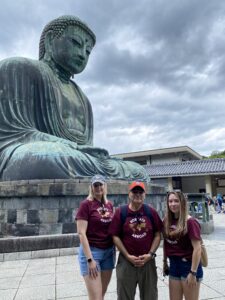
SJMC Japan students walked beneath thousands of bright vermilion torii gates as they explored Fushimi Inari Taisha, one of Japan’s most famous and historically significant shrines.
Located in Kyoto, Fushimi Inari Taisha is known around the world for its pathways lined with seemingly endless red-orange torii gates that wind through the forested slopes of Mount Inari. The shrine has more than 1,300 years of history and serves as the head shrine for thousands of inari shrines across Japan. It is dedicated to Inari, the Shinto deity associated with rice, agriculture, prosperity and business success.
Before entering the famous gate-lined trails, visitors are given the option to purchase small wooden prayer plaques, known as ema, or special torii-shaped plaques where they can write wishes, prayers or personal messages.
While SJMC students did not participate in the tradition, many observed the colorful displays filled with messages left by visitors from around the world. The plaques provide a way for people to express hopes for success, good health, happiness and other personal goals before continuing through the shrine grounds.

One of the most recognizable features of Fushimi Inari is the Senbon Torii, or Thousand Torii Gates. Although the name translates to “thousand,” there are actually around 10,000 torii gates located throughout the shrine complex. The bright vermilion gates create tunnel-like pathways that stretch along the mountain trails, creating one of Japan’s most photographed and visited attractions.
As SJMC Japan students walked through the winding paths in a recent visit, they learned that each torii gate has been donated by an individual, family or business. The names of donors are often inscribed on the back of the gates. Over time, thousands of donations have contributed to the shrine’s famous appearance, with new gates continuing to be added everyday.

After exploring the famous torii gates, SJMC Japan students visited several gift shops surrounding Fushimi Inari Taisha where they browsed a variety of traditional Japanese souvenirs and local goods. The shops offered everything from fox-themed charms and keychains to snacks, postcards and handcrafted keepsakes inspired by the shrine’s history and culture. Many students took time to search for gifts for friends and family while experiencing another aspect of the local tourism culture.

Even the nearby train station reflects the shrine’s unique identity. Fushimi Inari Station features design elements inspired by the shrine, including torii gate motifs that welcome visitors as they arrive. The station serves as an extension of the cultural experience, allowing travelers to feel connected to the shrine before they even reach the entrance. Together, the gift shops, station and surrounding streets create an atmosphere that celebrates the history and traditions of one of Japan’s most iconic landmarks.
For SJMC Japan students, the visit offered an opportunity to experience a location that combines religion, history and culture in a way few sites can. Walking beneath rows of towering torii gates allowed students to see firsthand why Fushimi Inari has remained an important spiritual and cultural landmark for more than 1,300 years.
Beyond the shrine itself, the surrounding area offers visitors a glimpse into everyday life in Kyoto. Narrow streets lined with family-owned shops, restaurants and cafés create a welcoming atmosphere for travelers exploring the neighborhood. Many businesses have served visitors for years, helping preserve the area’s traditional character while accommodating millions of tourists annually. For SJMC Japan students, walking through the district provided an opportunity to observe how cultural landmarks can influence local communities, supporting both tourism and small businesses while maintaining a strong connection to Japan’s history and traditions.
From observing traditional prayer plaques to exploring the famous torii gate pathways, students gained a deeper appreciation for the history and significance of one of Japan’s most iconic shrines. Surrounded by centuries of tradition and the natural beauty of Mount Inari, the experience provided a memorable glimpse into a landmark that continues to captivate visitors from around the world.
About The Author