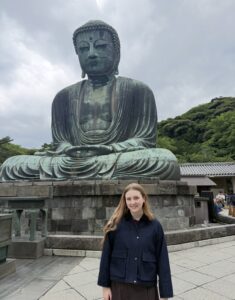
My study abroad trip to Japan offered a firsthand look at a country I had previously only seen through social media, travel videos and pop culture. Being there in person made those images feel real in a completely different way, especially as I experienced daily life, cultural customs and local traditions.
One of the most memorable parts of the trip was seeing Miffy featured throughout Japan. The character appeared in stores, merchandise and displays in multiple cities. Although Miffy originated in the Netherlands, Japan has embraced the character and made it part of its consumer culture. Seeing it so widely represented showed how global media and characters can cross borders and become part of everyday life in another country.
Japanese culture stood out most in daily interactions and public behavior. Public transportation was quiet and orderly, even during busy times. People were highly respectful of shared spaces, which created a calm environment in trains, stations and streets.
I also quickly picked up simple but important customs, such as standing on the left side of escalators to allow others to pass on the right and bowing as a sign of respect in greetings and interactions. These small habits reflected a strong cultural focus on awareness of others.
Food was another major part of the experience. Trying authentic Japanese cuisine felt different from Japanese food in the United States. Meals such as fresh sushi, ramen, traditional breakfasts and matcha-based drinks highlighted local ingredients and preparation styles. Eating in Japan also felt more connected to tradition and daily routine rather than just dining out.

I also purchased a set of custom chopsticks as a personal souvenir. They were customized with my name, making them more meaningful than a typical tourist item. Using chopsticks throughout the trip became a regular part of eating, and the custom set serves as a reminder of the experience and the cultural practices I learned.

Throughout the trip, I visited major locations including Fushimi Inari Shrine, known for its long paths of red torii gates. Walking through the gates was one of the most visually striking moments of the trip. I also visited Tokyo Disney, explored local shops, attended a Japanese baseball game and traveled through different city areas, each offering a different view of modern and traditional Japan.

As an advertising student, I noticed how visual communication played a major role in everyday life. Signs, advertisements, and symbols were used effectively to guide people, even when language barriers existed. Design and visuals often carried meaning without needing translation, showing how communication can work across cultures.
Another thing I noticed throughout my time in Japan was how advertising and branding were deeply integrated into everyday environments without feeling overwhelming. From train stations to shopping streets, visuals were clean, intentional and highly organized.
Even busy areas like Shibuya used large digital screens and signage in a way that still felt structured rather than chaotic. Brands relied heavily on strong visuals, simple messaging and recognizable characters to communicate quickly with both locals and tourists. This showed me how effective advertising does not always need heavy language; it can rely on design, placement and consistency to leave an impact across different audiences.
Overall, the SJMC Japan program combined culture, food and everyday observation into a full experience of life in Japan. From seeing global characters like Miffy in local stores to learning customs like escalator etiquette and bowing, each moment added to a clearer understanding of Japanese culture.
The experience made it clear how much can be learned from being immersed in a place rather than only viewing it from afar. It also showed how everyday routines, from ordering food to navigating train stations, are shaped by cultural expectations that become easy to understand through experience rather than explanation. Being surrounded by these details made the culture feel more natural and meaningful, turning simple daily moments into lasting impressions.
About The Author