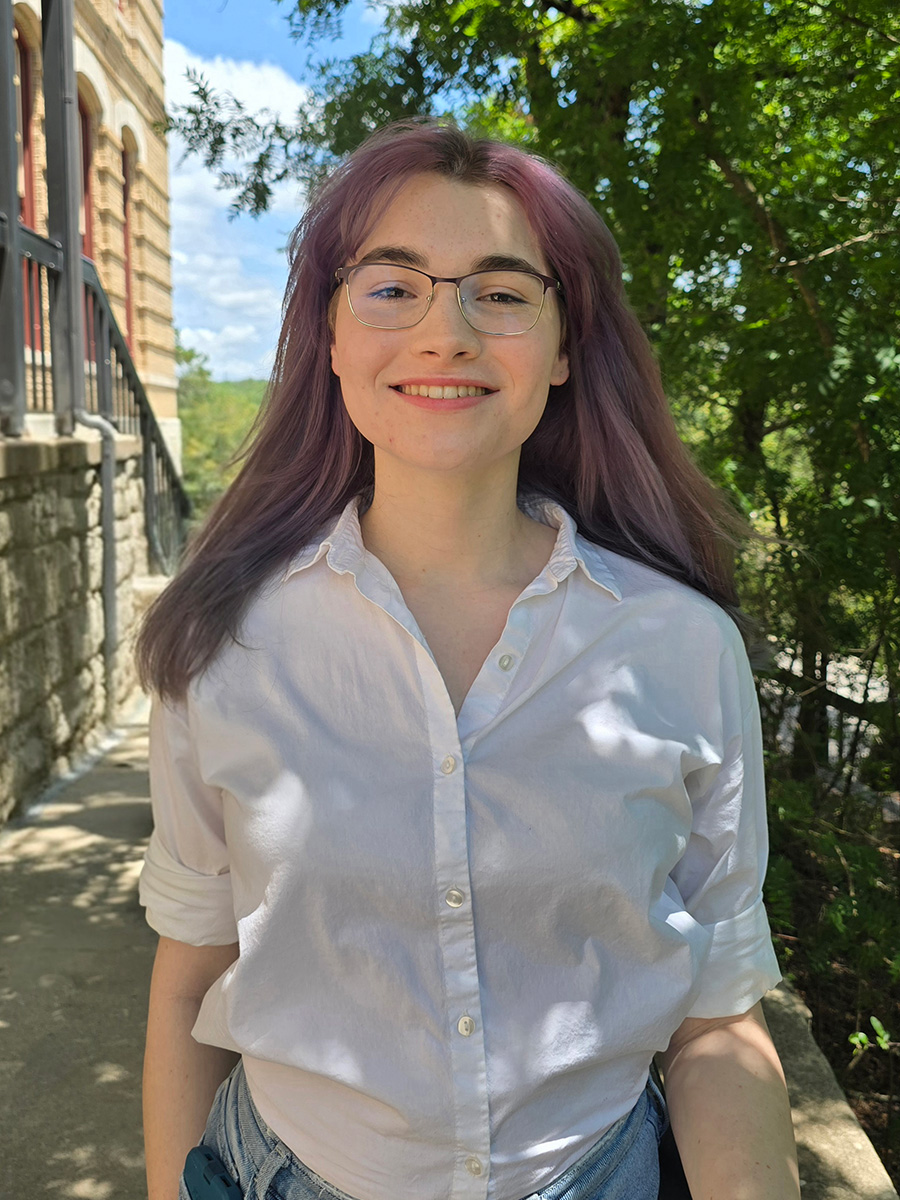
As the SJMC Japan students began to settle into their new routine, they embarked on a jam-packed adventure of Japanese baseball at the Tokyo Dome, a multicultural exchange at the University of Tokyo and an informative visit to the Tokyo bureau of the Wall Street Journal.
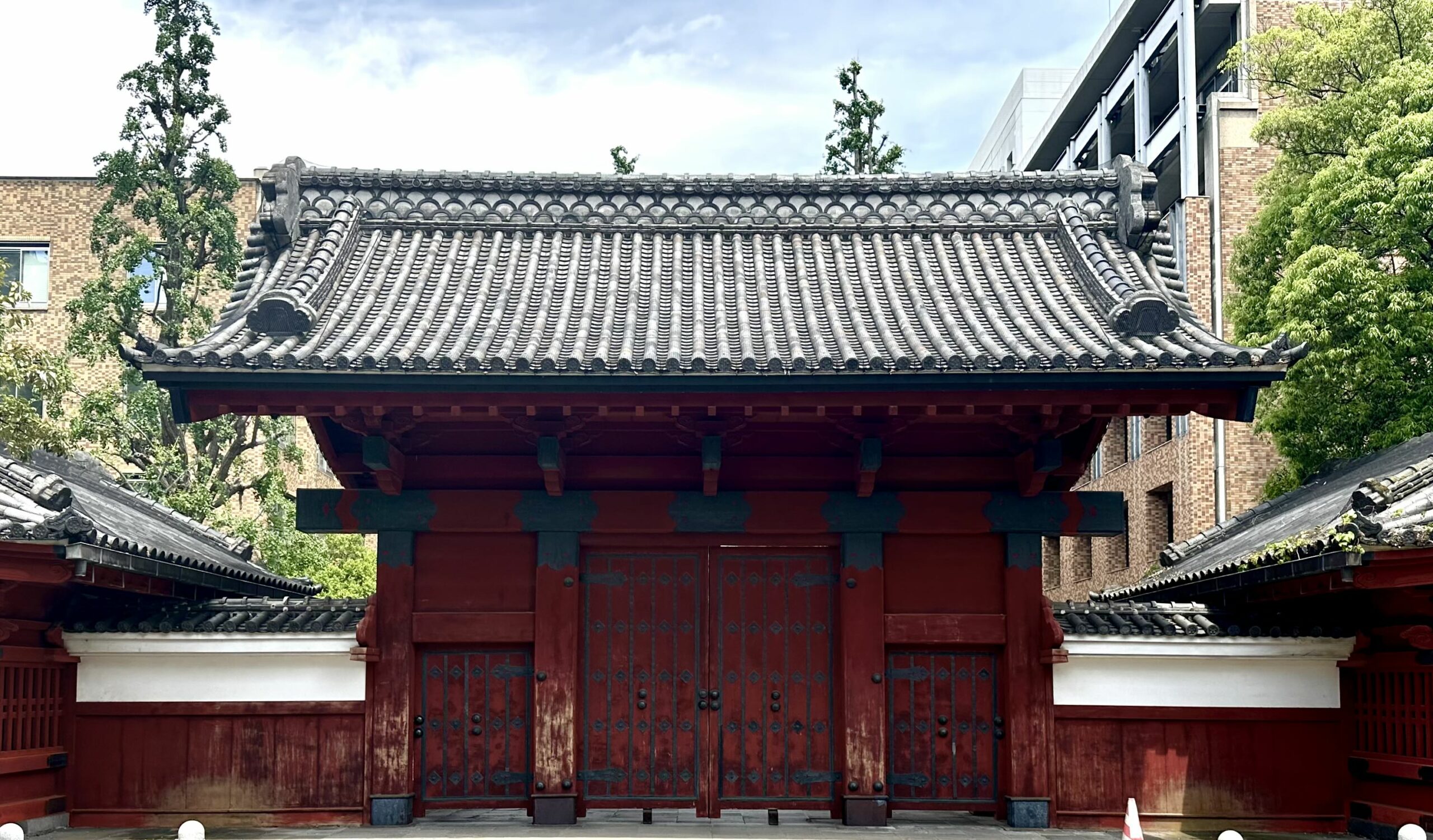
The prestigious University of Tokyo has roots dating back to 1684, when the shogunate created the Tenmonkata (Astronomy Agency) to manage Japan’s calendars. The Hongo Campus that the students toured was once an Edo residence of the Maeda clan of the Kaga Domain. One of the first features students noticed as they approached the beautiful campus was the Akamon Gate, which was initially constructed on the property for the reception of a shogun’s daughter to the residence.
This gate is now the last of its kind in Japan.
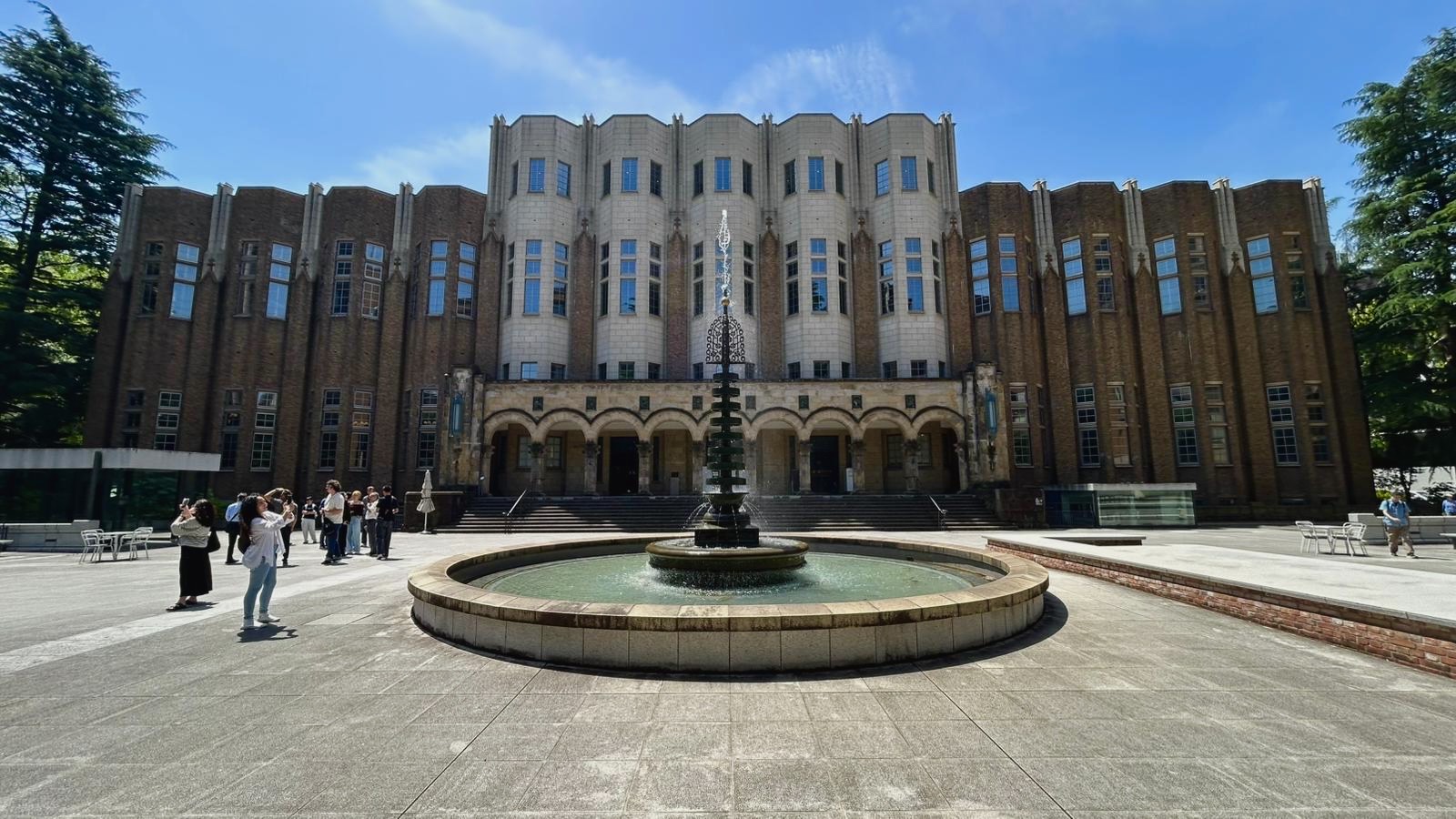
Students had the extraordinary opportunity to speak with three of the 28,479 students who attend the University of Tokyo during the tour. The students described differences between attending university in the United States and Japan. Natsuki Tada, 19, a sophomore studying law and politics at the University of Tokyo, said she is taking 12 classes this semester. The structural differences in the experiences of SJMC Japan students at Texas State University and those at the University of Tokyo left many team members either shocked or envious of their school life. Azuli Rodriguez, a digital media innovation senior at Texas State, said that the differences in the work culture were surprising.
“The foundations of it are so different, like how they are taking 12 to 20 classes at once,” Rodriguez said.
Angie Vasquez, a graduate student at Texas State University, particularly enjoyed speaking one-on-one with the University of Tokyo students. She talked about how, even though the academic setting is not at all what she’s used to, it was endearing to hear how the Japanese students said they all faced similar obstacles to students in the United States when it comes to making friends.
“My favorite experience was the interviews because they were more intimate,” Vasquez said. “So much was different structurally—the classes, the dorms—but they all have the same problems we do.”
Nathaniel Lopez, a digital media innovation sophomore, also reflected on the exchange, saying that their respective university experiences shared more similarities than differences.
To conclude the visit, the SJMC Japan team gifted favorite snacks and candies from Texas to the wonderful students who guided them through the University of Tokyo.
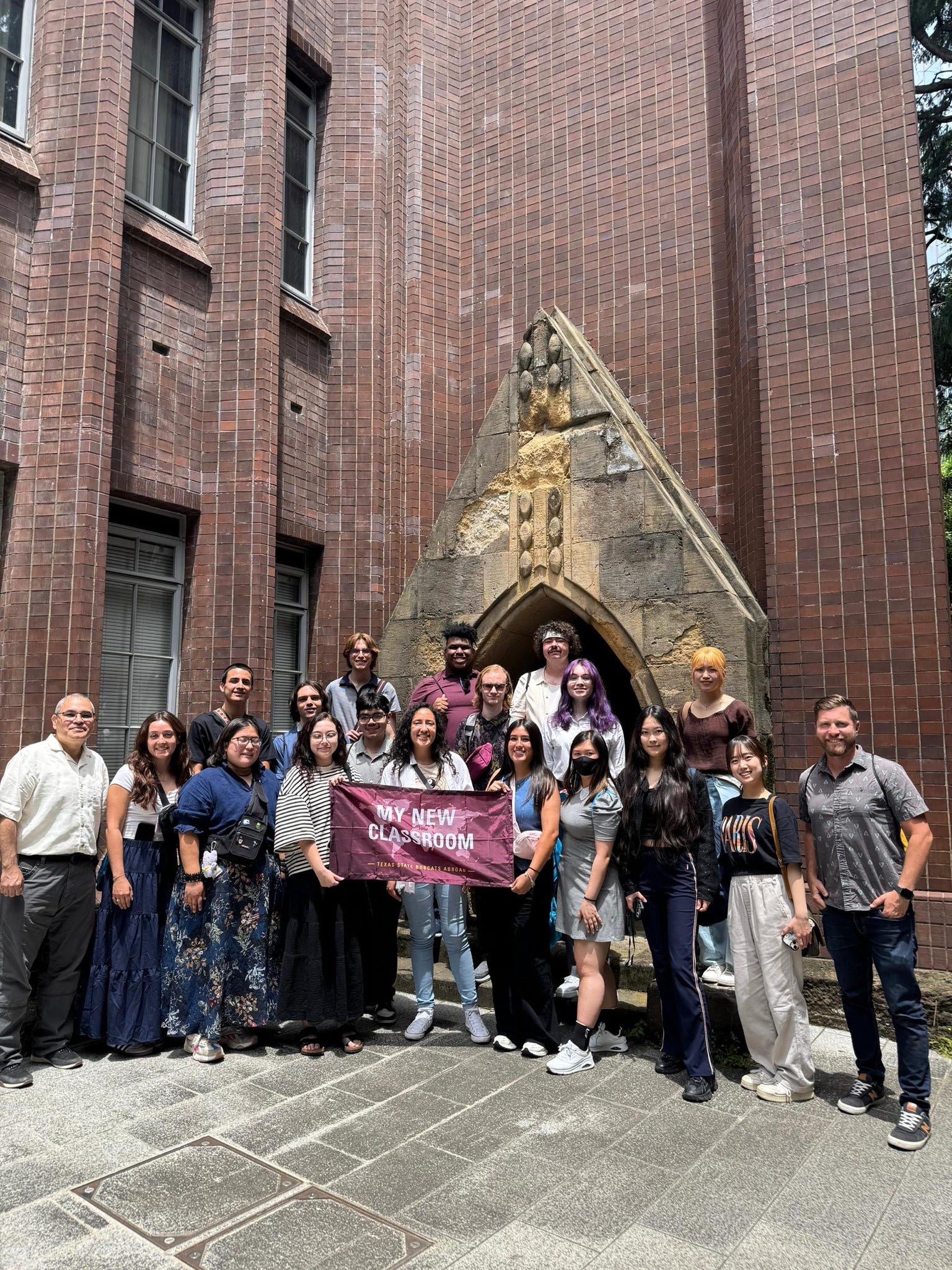
Afterwards, a visit to the Tokyo bureau of the Wall Street Journal was valuable for students keen on learning more about what it takes to be successful in journalism. Students had the privilege of meeting with George Nishiyama, the managing editor of WSJ Japan. Stefan Chupp, a digital media innovation junior at Texas State, asked Nishiyama about the most impactful story he had covered during his career as a journalist.
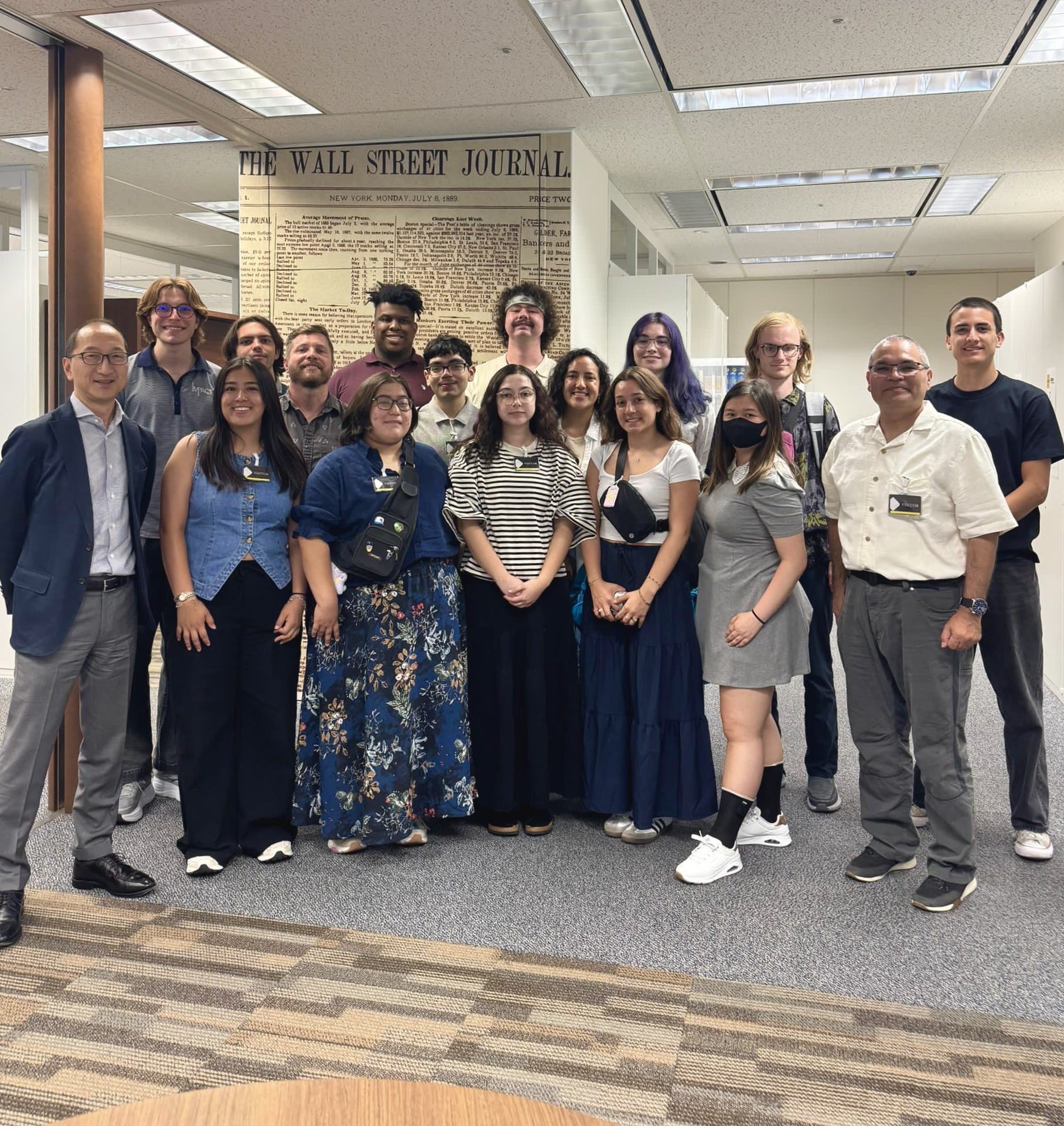
Nishiyama spoke about his experience covering a story involving Japanese abductees taken to North Korea. He also highlighted the difficulty of dealing with tough sources as a journalist. When students asked about starting their own journalism careers, he gave a key piece of advice.
“Curiosity is what’s important in a journalist,” Nishiyama said. “I think what we really recognize in the interns is their difference in curiosity and how they’re always looking for things. Not being passive, but active.”
In addition to meeting with Nishiyama, he was generous with his time—speaking briefly with two students for further advice and a one-on-one interview. Nishiyama elaborated on his journalistic career and his role as a reporting liaison between the United States and Japan.
Perhaps the most exciting part of the day for the students was attending a baseball game at the Tokyo Dome. As the students who decided to come along exited the train station and headed for the street, they were struck by the incredible size of the fully enclosed stadium. Students came prepared to cheer on home team Tokyo Giants. They indulged in a variety of unique Japanese stadium treats, player-themed meals and a wide range of incredible merchandise.
The excitement in the air was palpable leading into the first inning. Students clapped as Giants fans waved massive flags, performed songs with brass instruments and chanted for the home team. On the opposing side, Tohoku Rakuten Golden Eagles fans cheered from their section in the left-field stands in the hopes that their team would claim victory. In the end, the Golden Eagles beat the Giants, 2-0.
Despite the Giants’ loss, the students remained in high spirits on the train ride back to their hotel. Peyton Bayne, an electronic media junior at Texas State, said that the experience was remarkable.
“The crowd was amazing,” Bayne said. “I’ve never seen anything like it.”
Amanda Cabrera, who is also a junior in electronic media at Texas State, said that she was blown away by how loud the fans got. Rodriguez was also taken aback, saying she wasn’t prepared for all the activity going on around the stadium or the 60-plus food options.
After a full day of visits to prestigious locations and an unforgettable experience at the Tokyo Dome, the students began to buzz with excitement about the next day’s activities.
About The Author