In the first full day in Tokyo, SJMC Japan students visited one of the most sacred areas in the city, learned about an energy-focused business intelligence firm and enjoyed a nine-course meal.
Traveling as a group, students got a quick course on how to navigate Japan’s public transit system. With its complex routes, the Tokyo subway system can be unfamiliar and overwhelming. Some SJMC Japan students, despite their best efforts, found themselves headed in the wrong direction in the midst of rush hour. But they got their bearings after quickly consulting with SJMC Japan Academic Program Director Gilbert D. Martinez, who helped guide them back to the hotel.
Kendall Casanova, a public relations senior, had an especially stressful experience trying to lead her group back to the hotel.
“The train was very overstimulating,” Casanova said. “I was overwhelmed, and even thought we got lost at first… it helped us figure out how it works.”
As chaotic and frustrating as it might have felt for those who became lost in the jungle of subway lines, the important thing is that everyone made it back safely, just slightly late for the welcome dinner.
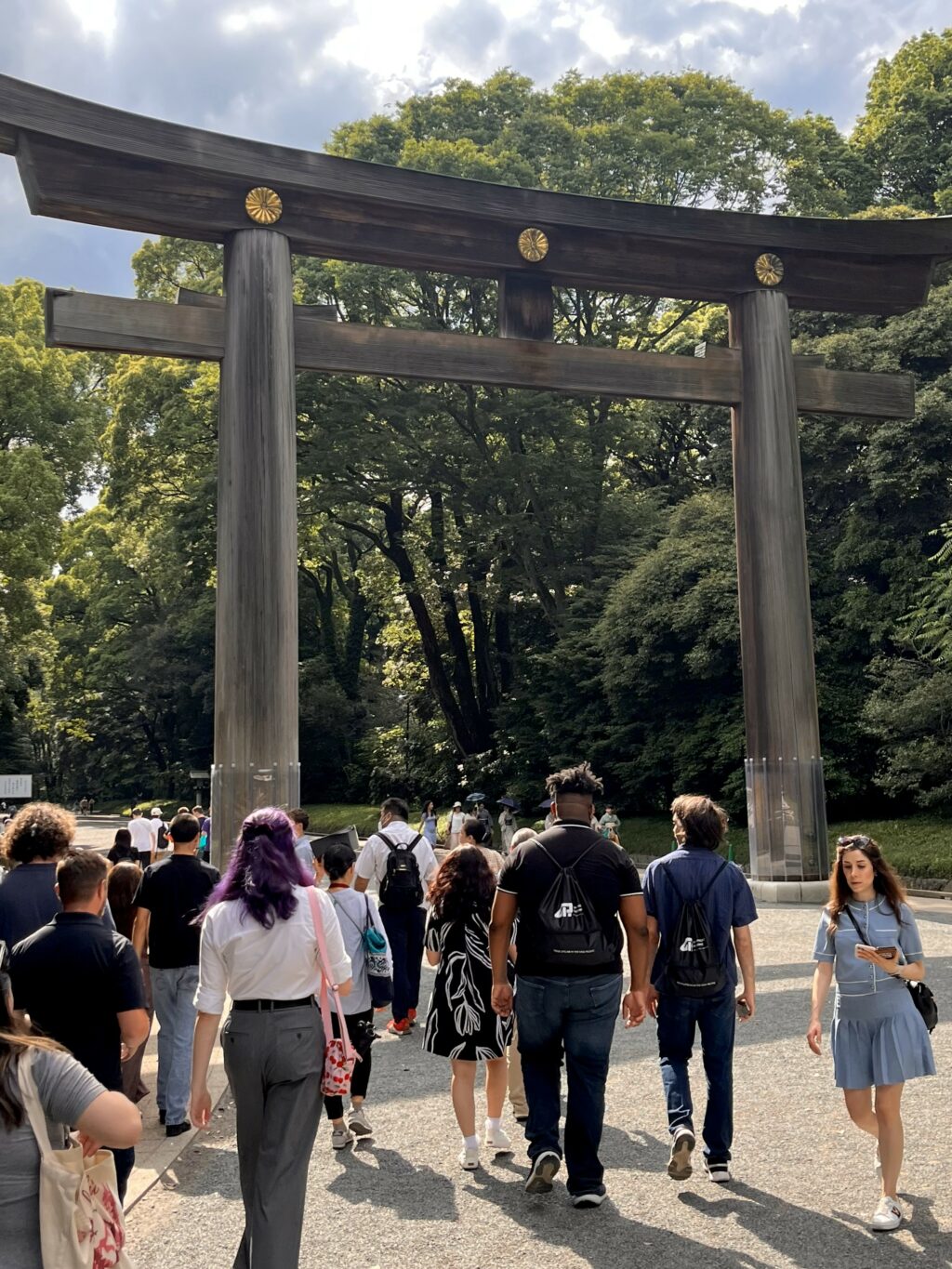
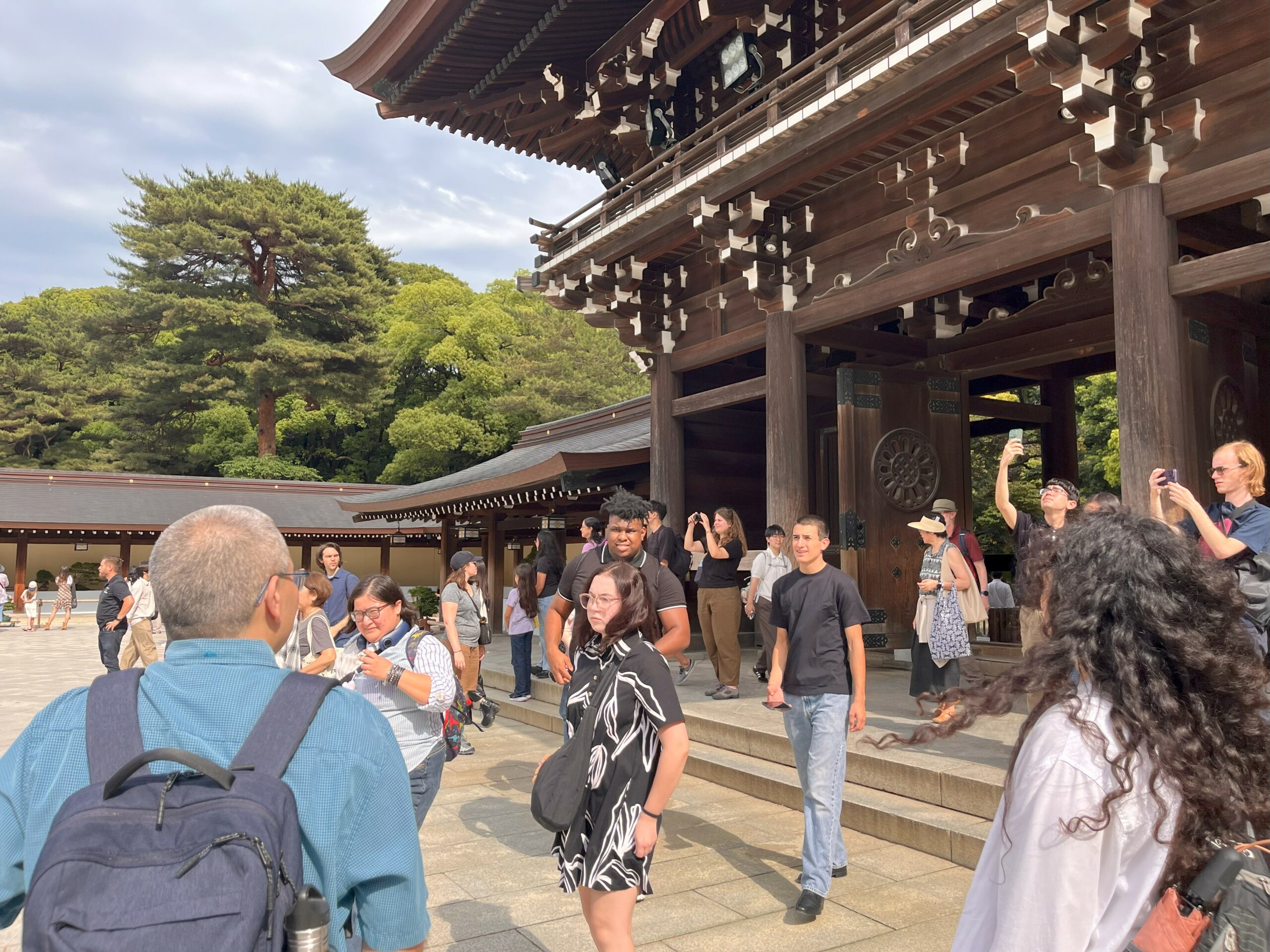
Earlier that day, SJMC Japan students also visited Meiji Jingu, one of Japan’s most sacred Shinto shrines surrounded by a man-made forest. The shrine was built in 1920 in honor of the Emperor Meiji and Empress Shoken, role models to their people. To many, Meiji Jingu is a sacred place for worship, good fortune, health and marriage. To the Texas State students, it was also a place to learn and take part in cultural practices.
To show their respect, tourists are meant to follow the outer area of the walkway, as the middle is reserved for the gods. As students bowed and then passed through three torii gates, they saw barrels brought in during the Meiji period, where Emperor Meiji inspired his people to adopt western culture while still maintaining Japan’s age-old spirit. As the group progressed deeper, students were encouraged to practice common traditions of the shrine, such as making an offering at the main shrine, writing wishes on tablets called ema and buying charms and amulets for themselves and their loved ones.
Students didn’t just interact with new spiritual practices but also learned about the media landscape in Japan.
In the morning, students visited the Yuri Group, an energy-based firm, and met founder and President Yuriy Humber, who shared that his firm specializes in news and analysis. With a subscription-based weekly report, Humber said his firm offers commentary, helping companies stay informed about energy news and trends. Today, the group stands out in the niche market with more than 5,000 subscribers.
However, Humber, who worked as a Bloomberg business reporter for 10 years, five of them in Japan, never planned to be the founder of a company. In fact, before Bloomberg, he said he didn’t even know much about business and had to relearn his way back up.
“There’s one thing you cannot learn, and that’s motivation,” Humber said. “You can get excited about something, but sustaining that excitement over time, that requires you.”
He advised students to practice their research and writing skills. He also emphasized the need for human connection in the field.
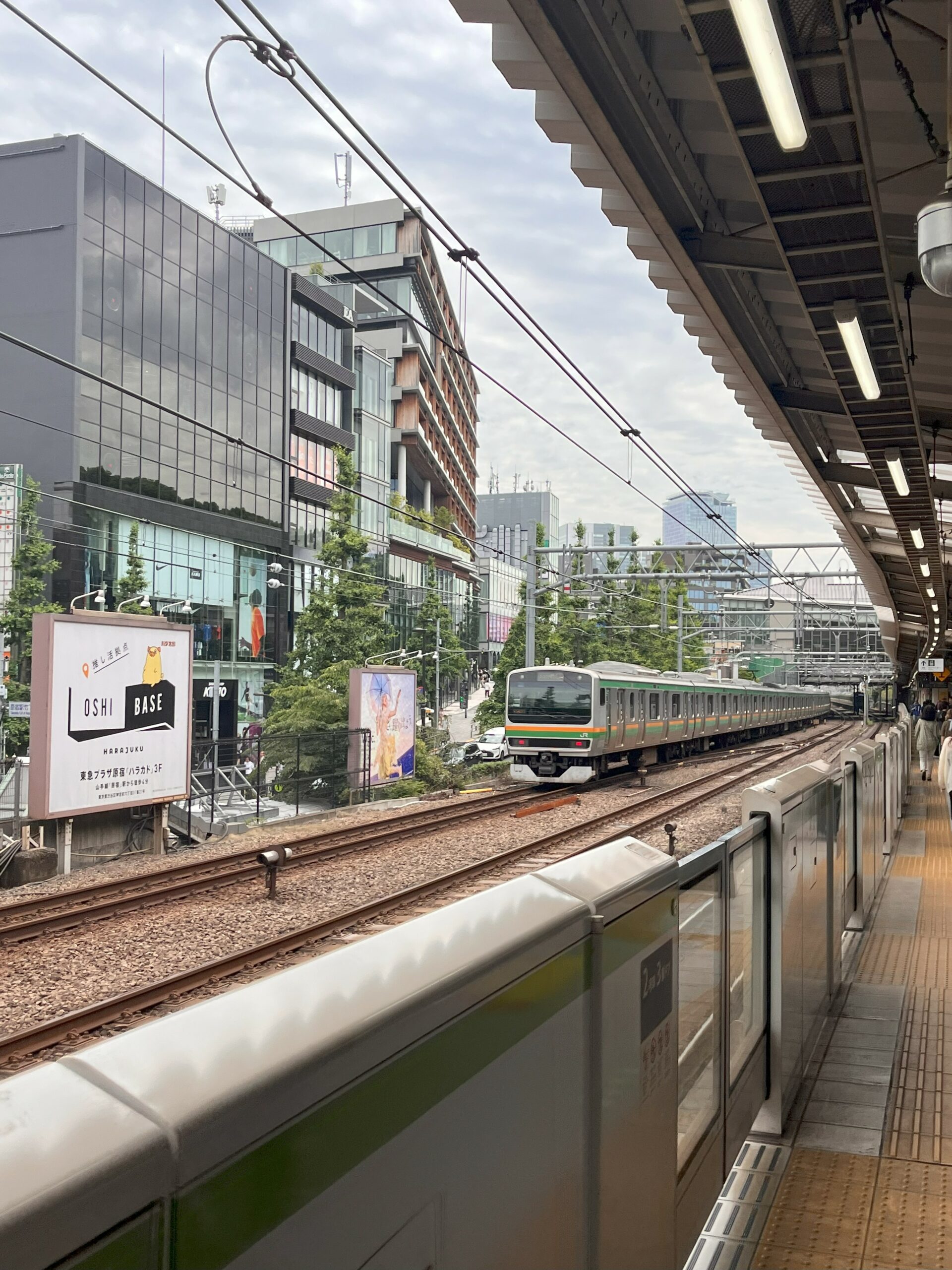
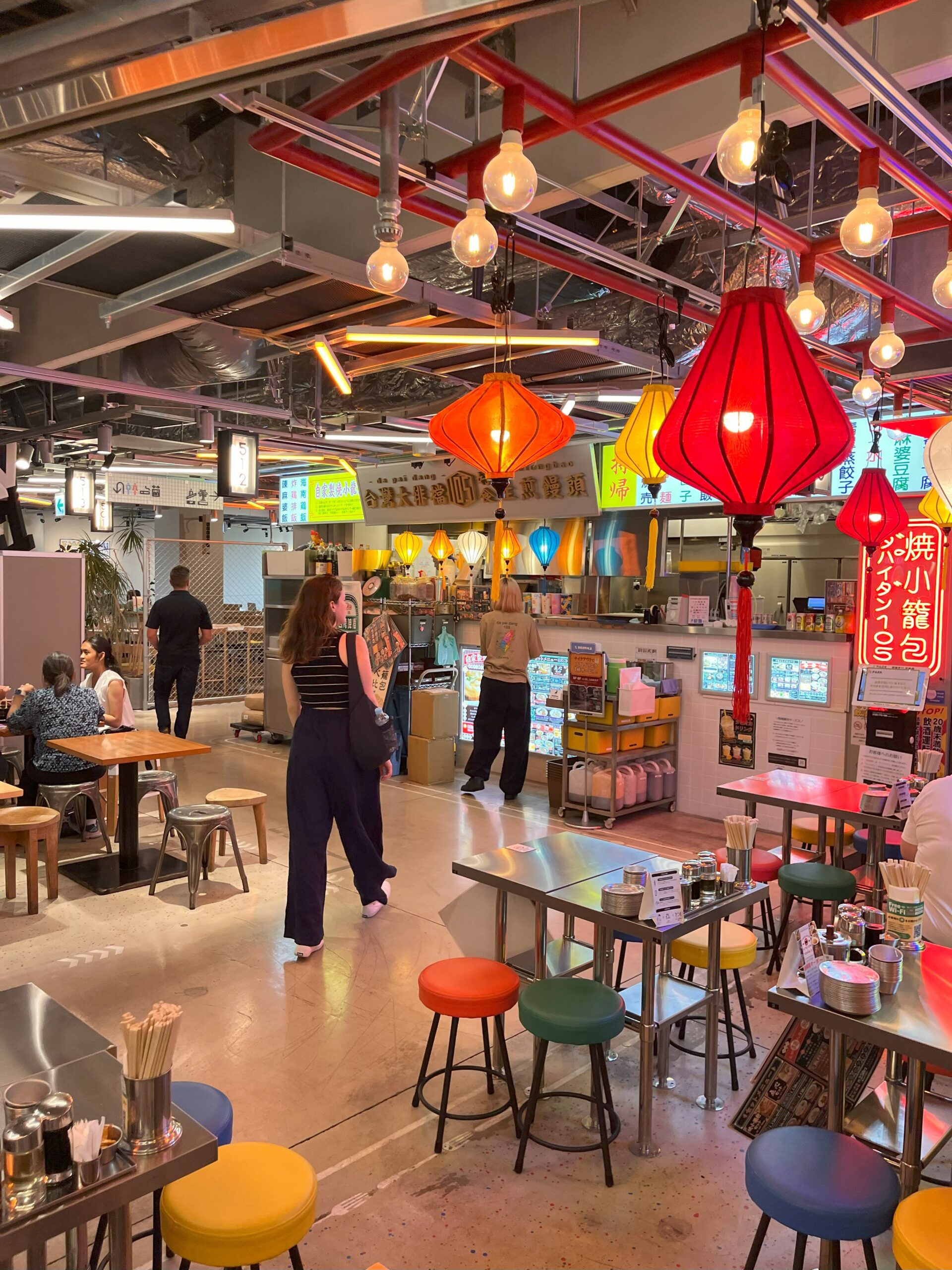
After the Yuri Group visit, students took the train to Harajuku and explored Takeshita Street, the heart of Harajuku’s youth culture. Some had lunch at Tokyo Plaza in the food court while others continued to explore the area.
Nathaniel Lopez, a digital media innovation sophomore, was encouraged to try the 10-yen cheese-pull trend while roaming around Takeshita Street.
“Honestly, it wasn’t worth the price,” Lopez said. “It’s just cheese and bread.”
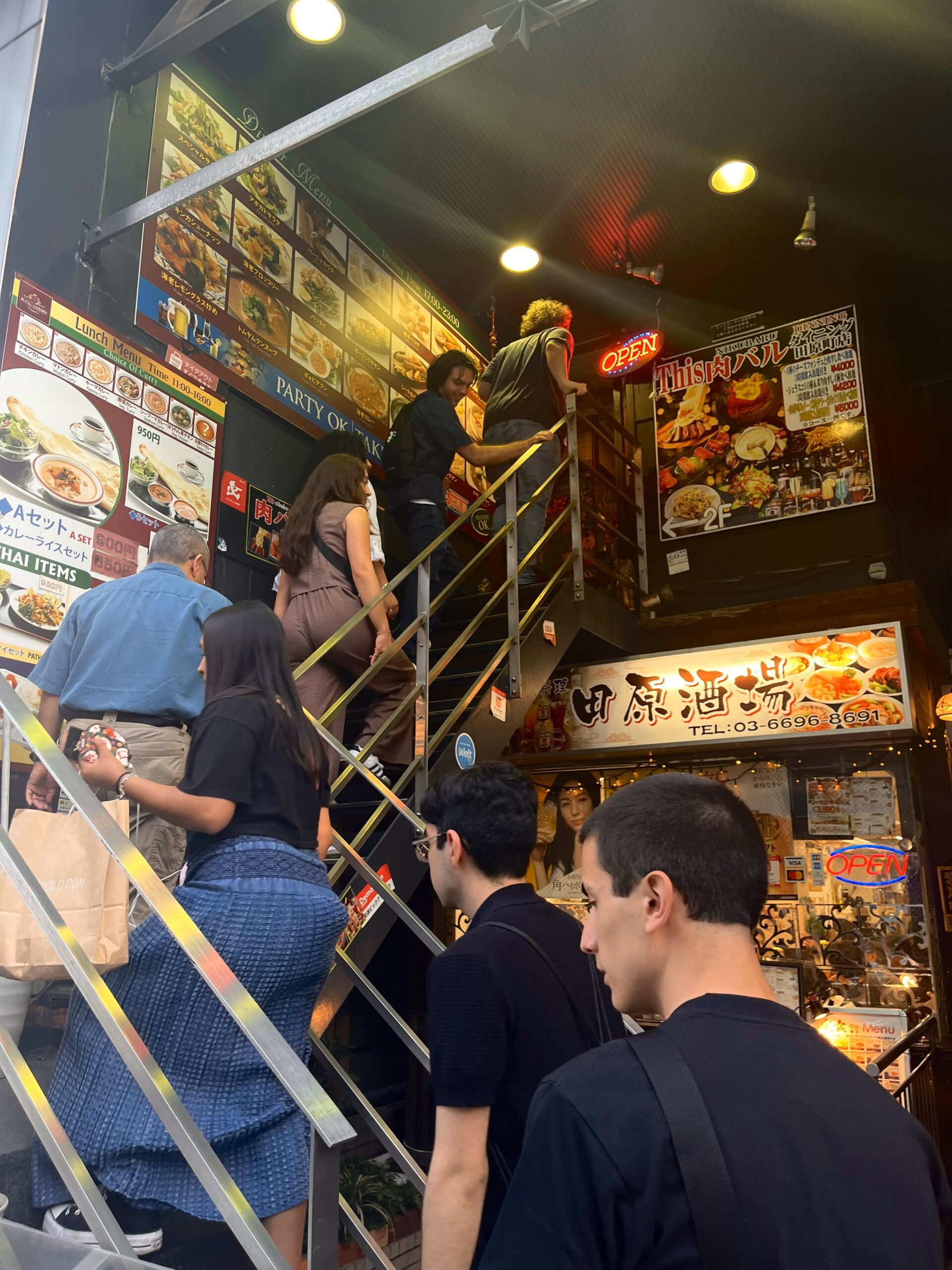
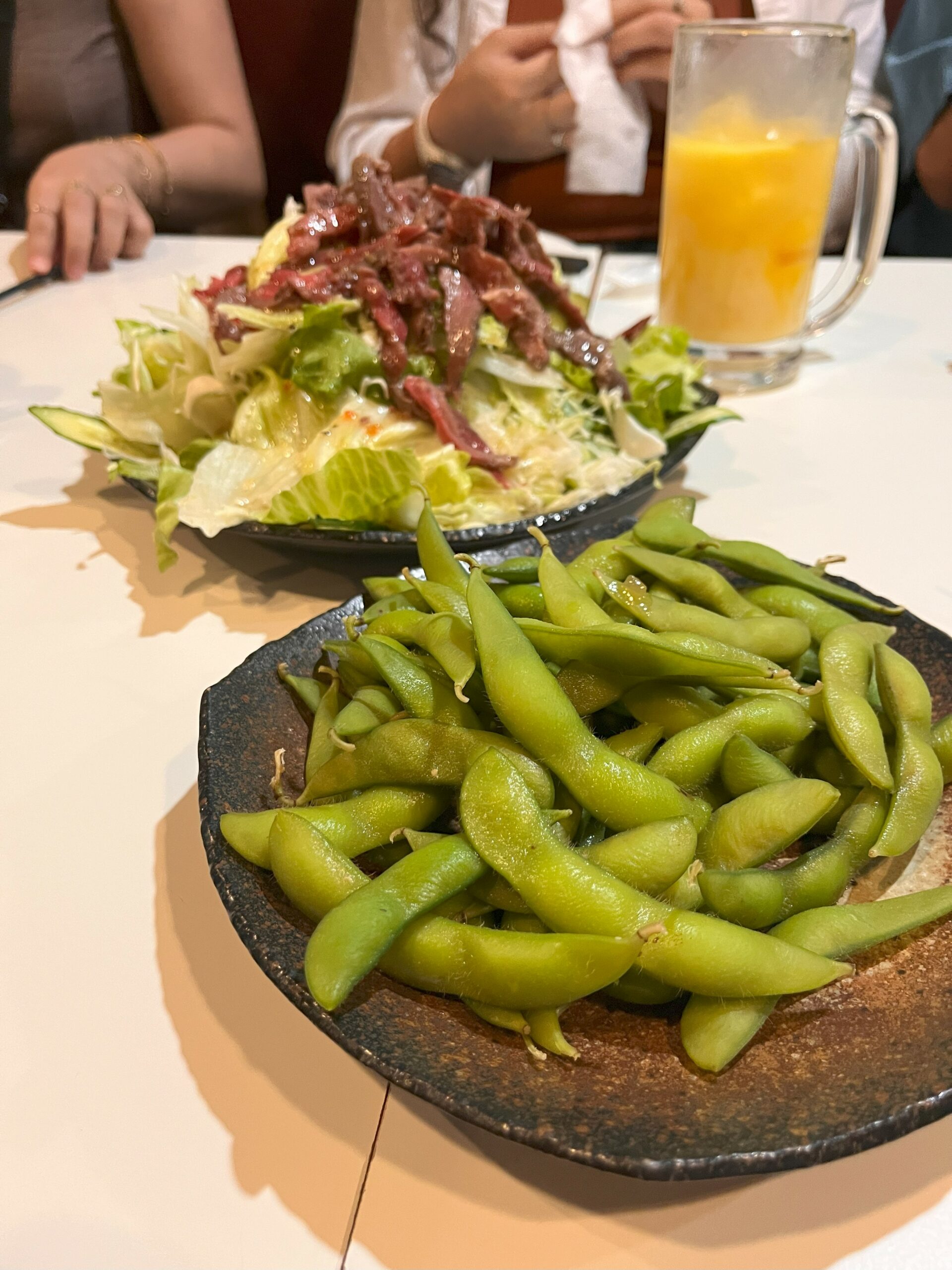
To end their day, the faculty and program provider Asia-Pacific Academic hosted a welcome dinner at Lucky Royal Garden near their hotel for students to enjoy after a long eventful day. The dinner consisted of an all-you-can-eat nine-course meal, each filled with a unique plated dish to go around the table.
Casanova had an especially memorable experience as she tasted raw tuna for the first time.
“Not gonna lie, I didn’t like it,” Casanova said. “That second bite made me gag; I was so scared.”
Martinez and Casanova’s classmates applauded her for trying something new.
As everyone settled, the room started to fill with a constant hum of stories about the students’ first full day in the city. Although the experiences varied, it was a day to remember.

About The Author