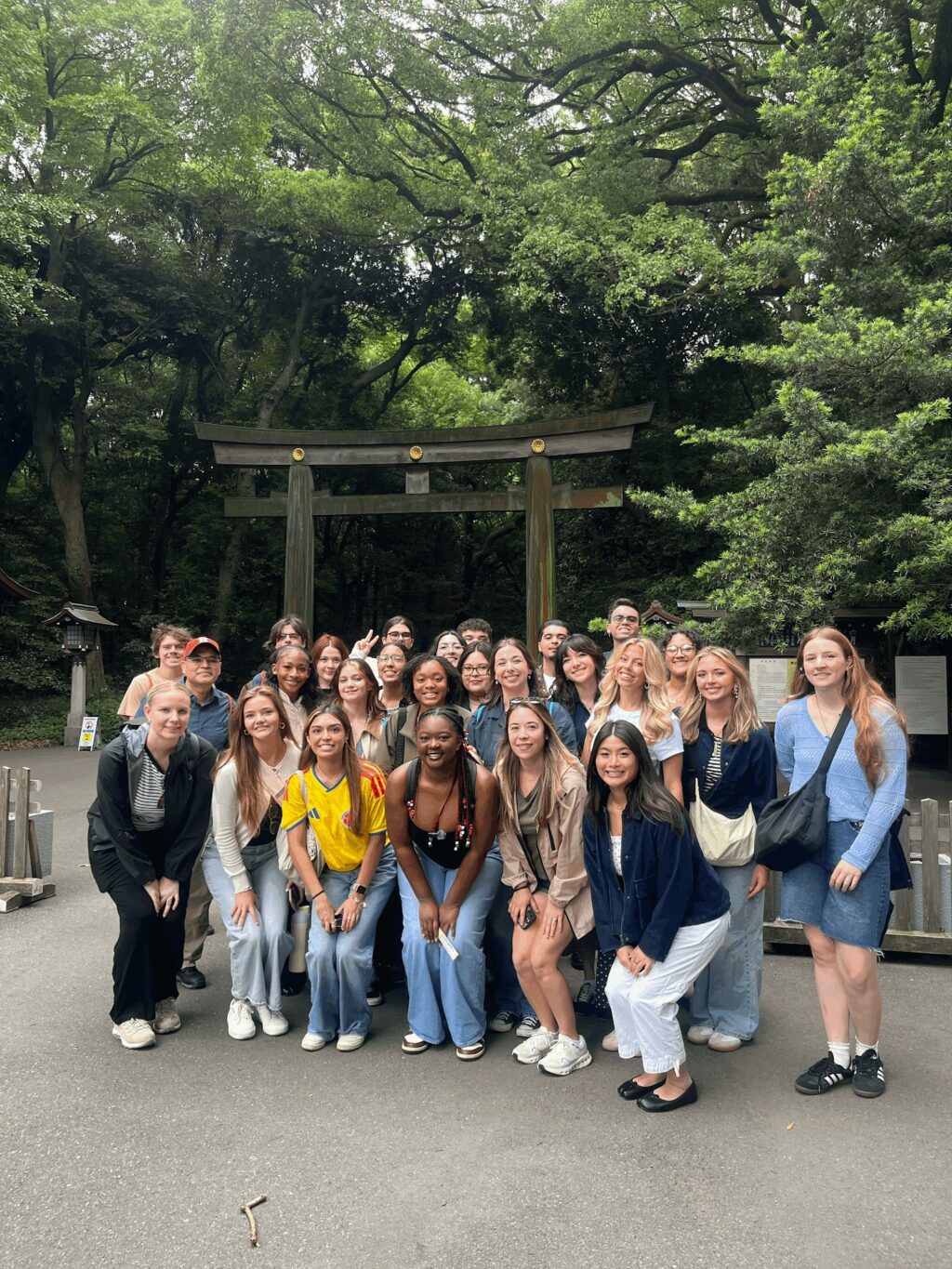
SJMC Japan students took a deep dive into how Japan balances tradition, innovation and modern society with multiple experiences on Friday.
The group was still feeling the after effects of Typhoon Jangmi because a visit with the Yuri Group, a research and consulting firm that focuses on energy issues, was originally scheduled for Wednesday. That was canceled because of bad weather; luckily, Yuri Group was able to meet on Friday.
From discussing the future of journalism and business with professionals with the Yuri Group, to exploring centuries-old traditions at Meiji Jingu Shrine and spending time in the fast-paced environment of Shibuya, each stop showed a different side of Japan. Although these experiences seemed very different at first, they were all connected by a common theme: the ability of Japanese society to preserve its history and cultural values while continuously adapting to change.
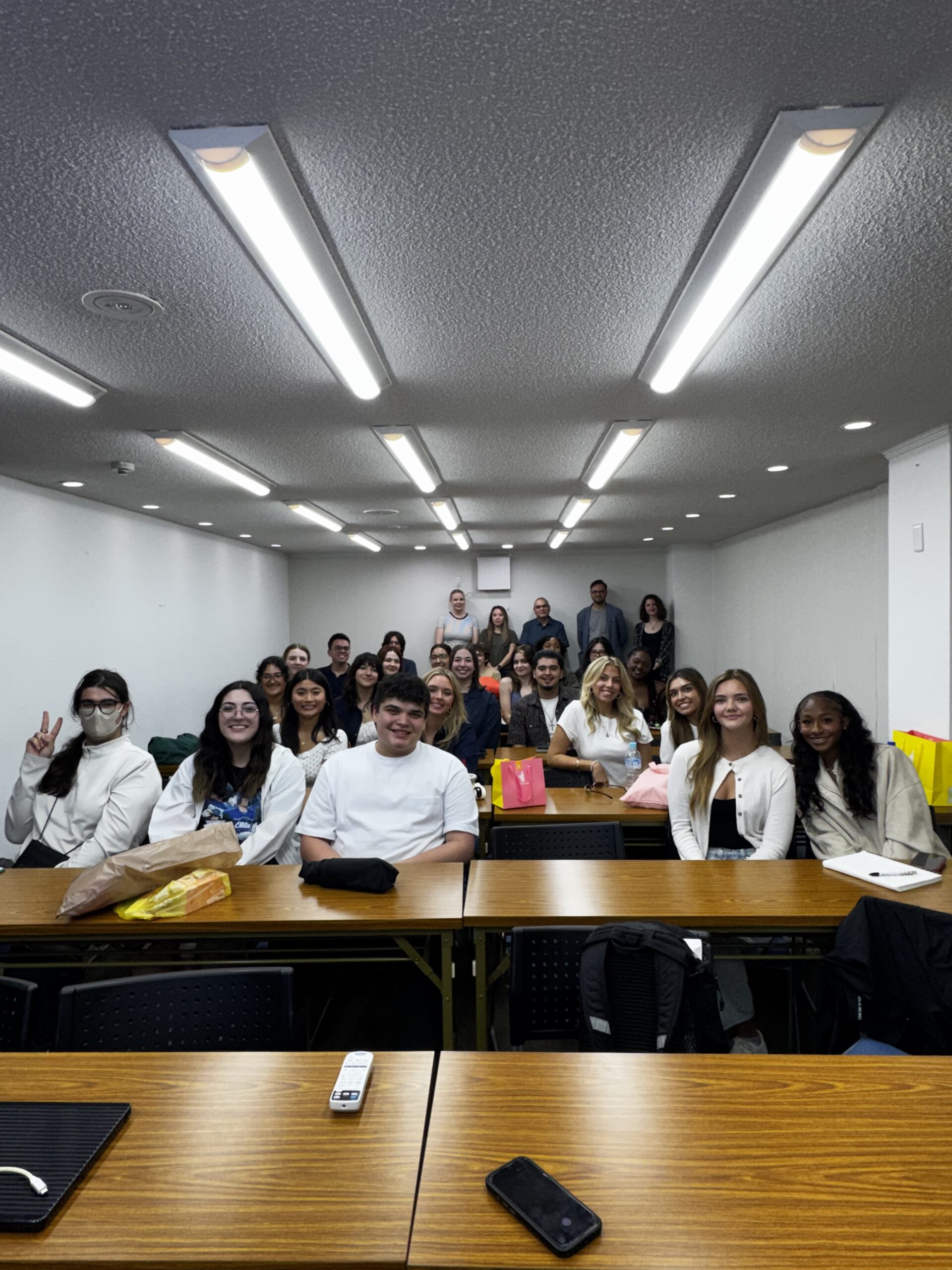

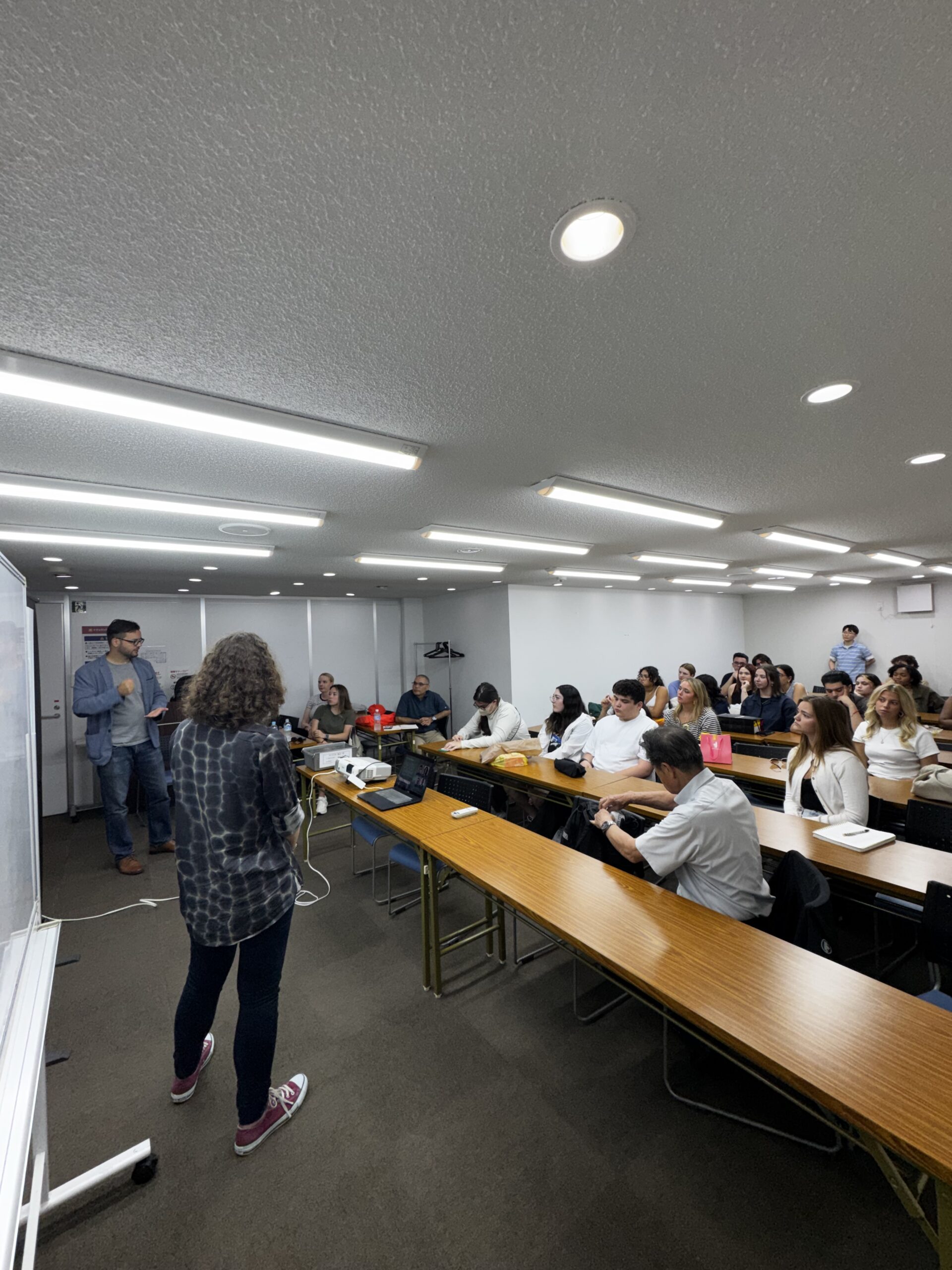
The students enjoyed a meeting with Yuri Group, where they learned about journalism, media, business and innovation in Japan. The group’s founder, Yuriy Humber and researcher Rada Kuznetsovo shared a presentation about Japan’s media landscape and how journalism continues to evolve in the digital age. Students learned about the Nikkei Shimbun, one of Japan’s most influential newspapers often compared to The Wall Street Journal in the United States. Humber and Kuznetsovo also discussed Japan’s ranking on the World Press Freedom Index and how media organizations navigate their relationships with government institutions.
One of the most interesting topics was sparked by digital media innovation junior Ellen Nash after asking, “How will the impact of social media benefit or negatively affect society in the future?”
Humber said the impact that journalists face today is the challenge of balancing speed with the accuracy.of social media. The speakers emphasized that while tools such as AI can be helpful, strong reporting still depends on curiosity, critical thinking and the ability to gather information independently. This message stood out because it reinforced the importance of developing skills rather than relying solely on technology.
The Yuri Group team also shared advice about career development and entrepreneurship. Students learned about Japan’s growing startup ecosystem, emerging industries such as regenerative medicine, fusion energy and physical AI and the Japanese government’s Society 5.0 initiative, which aims to integrate advanced technology into everyday life.
Humber spoke about his international journalism career and emphasized the importance of being proactive, building relationships and taking advantage of opportunities. His career advice was to “throw as wide of a net as possible,” encouraging students to remain open-minded in pursuing their own career goals.
As the SJMC Japan students progressed on their journey, they visited Meiji Jingu shrine, a human-constructed forest in the heart of Tokyo. Created in 1920, this shrine honors Emperor Meiji and Empress Shōken, who are widely credited with modernizing Japan in the late 19th century.
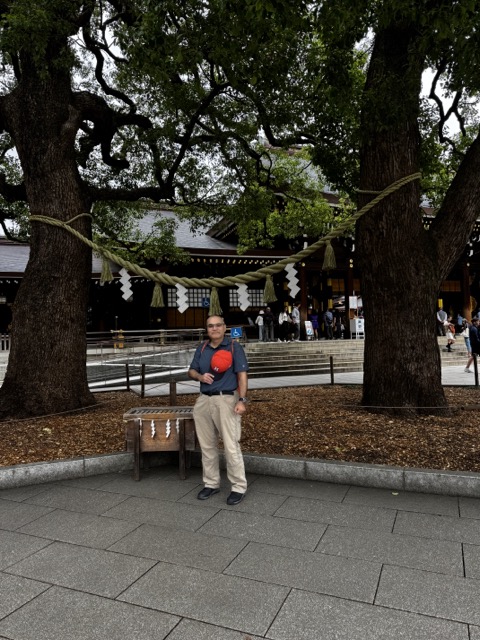
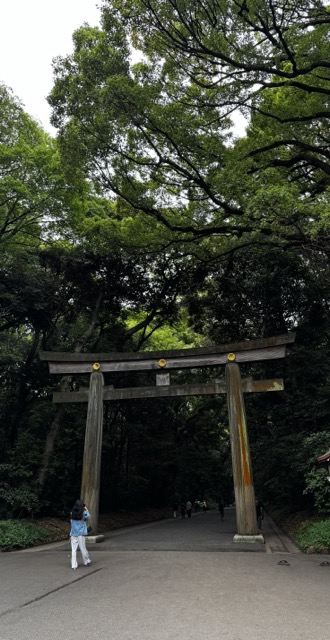
As the students made their way onto the sacred grounds, SJMC Japan Academic Program Director Gilbert D. Martinez suggested that students shouldn’t walk through a torii gate in the middle because that path is reserved for the gods. Tour guide Michio-san quickly added that while some Japanese follow that tradition, not all do. The Meiji Jingu Shrine covers a whopping 173 acres (that’s about 131 American football fields) of rich history. The area was barren land in 1920 before many people donated the trees that now comprise a beautiful forest and ecosystem.
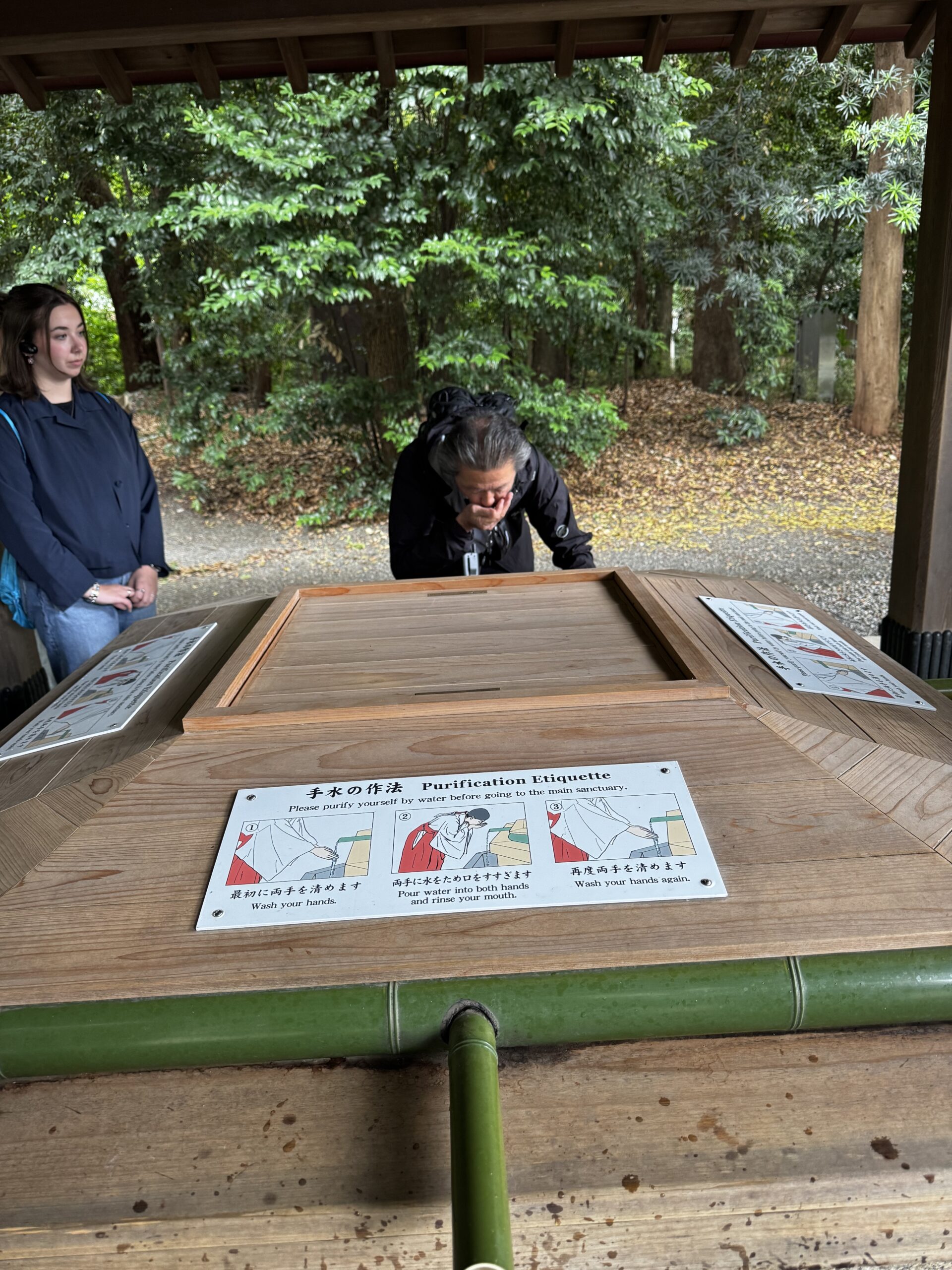
At this location, students experienced traditions that have shaped Japanese culture for generations. Before entering the shrine, they participated in a purification ritual by washing their hands and rinsing their mouths. Michio-san explained that purification is an important aspect of Shinto beliefs and demonstrates respect before entering a sacred space such as Meiji Jingu.
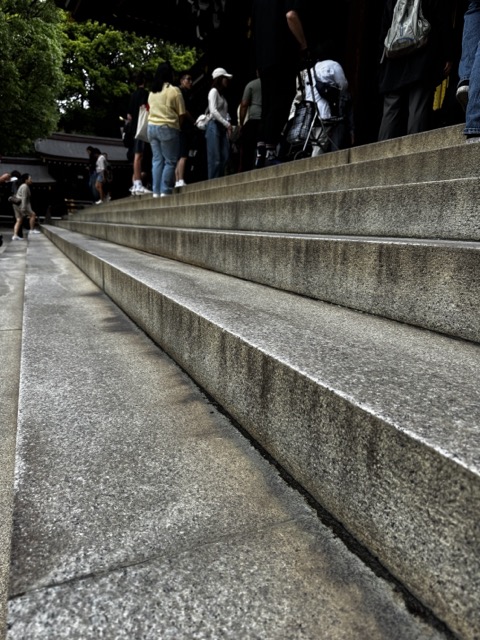
Michio-san mentioned that around three million people each year celebrate New Year’s at the shrine, throwing coins as offerings at the stairs, which have left black marks on the stone over time. Many people also have had or plan to have their wedding at the shrine. The waiting list for weddings at the shrine is booked until 2027.
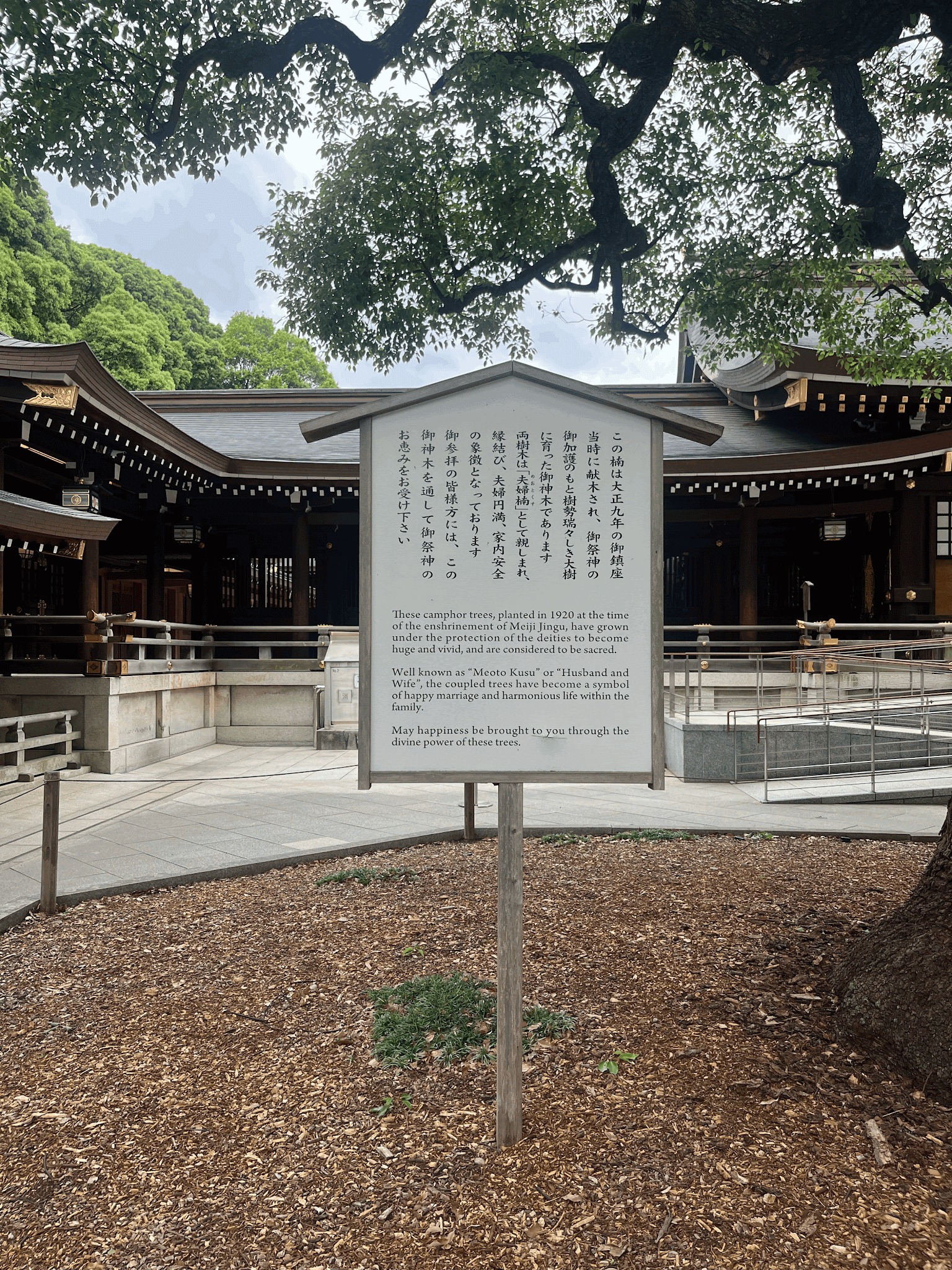
There is a pair of camphor trees widely known as “Meoto Kusu,” or husband and wife, that honor a married couple and represents a strong relationship and a safe and happy household. To the surprise of the students, Friday was also the 28th anniversary of Martinez and his wife, Raeanne. When asked about seeing the trees on his anniversary, he said, “That was very special for me.” Martinez also mentioned how he and his wife had been there before to take a picture in front of the same trees. “My anniversary made it extra special,” he said.
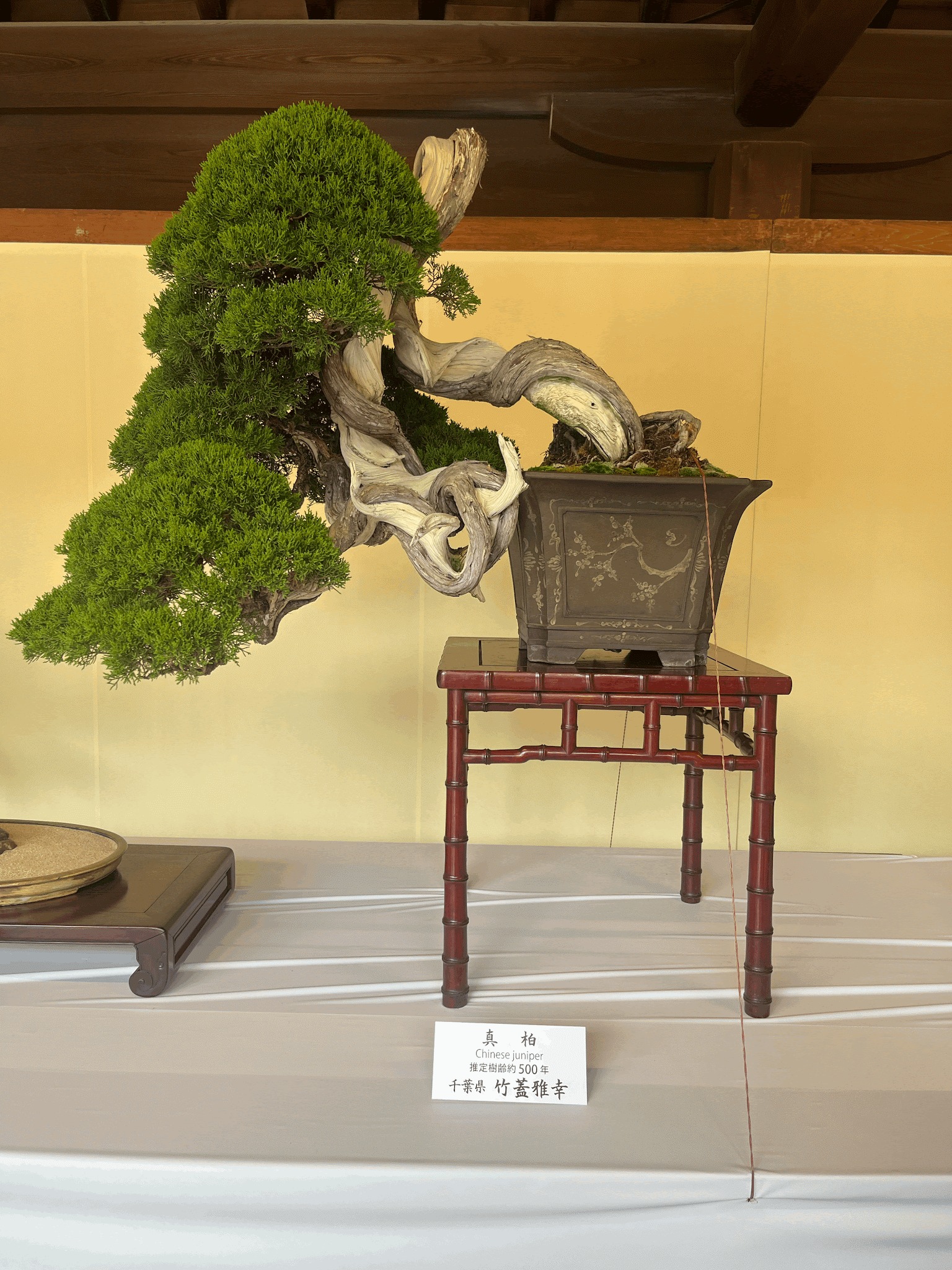
While visiting the shrine, the class also saw a display of bonsai trees that were hundreds of years old. The bonsai trees are only out on certain days, according to Michio-san. Bonsai trees and their upkeep date to the Kamakura period. Although rumored to have started in China, bonsai trees were popularized in Japanese society.
The gold plates on the torii gates to enter the shrine are the emperor’s family crest, and three come on the gates before entering or exiting the shrine. Another detail is the inome (猪目), which translates into “eye of the boar.” While many see it as a heart, it is actually meant to ward off evil spirits since it is considered sacred grounds.

In Shibuya, students witnessed one of the most modern and energetic parts of Tokyo, home to the famous Shibuya Crossing and one of the busiest transportation hubs in the world (approximately 3.3 million people pass through Shibuya Station each day). The area provided a striking contrast to the peaceful atmosphere of Meiji Jingu, yet it also reflected the same values of organization, efficiency and community that students observed throughout the day.
While in Shibuya, students visited the statue of Hachikō and learned the story behind one of Japan’s most beloved pets and symbols. In 1923, Hachikō was given to a professor at the University of Tokyo and became famous for faithfully waiting at the station for his owner every day. Even after the professor passed away, Hachikō continued returning to the station for years. His story has become a symbol of loyalty and dedication, values that remain deeply respected in Japanese society today.
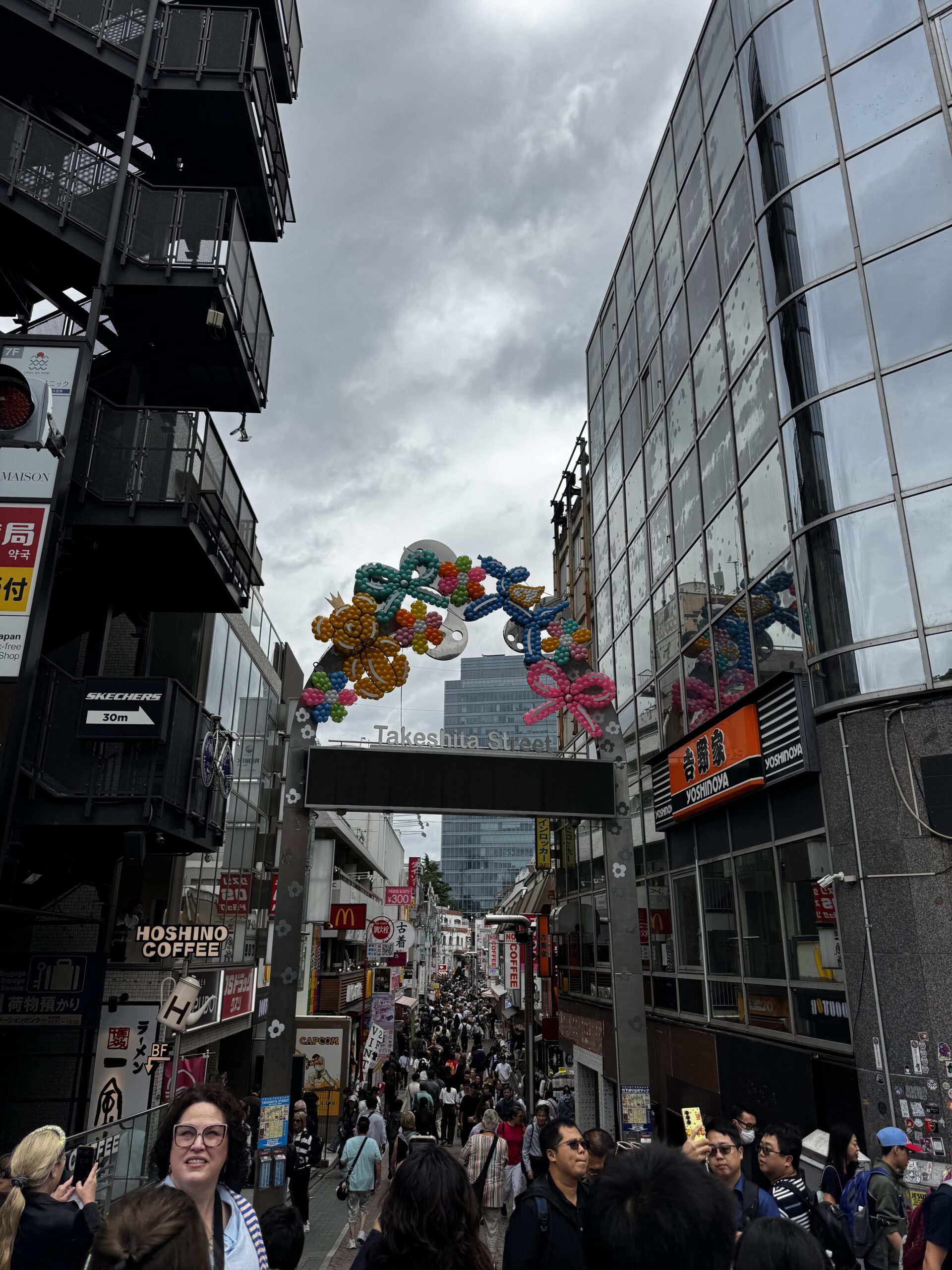
To take a brain break from all the information learned on this day, students went to the popular shopping district of Harajuku. As they traveled down Takeshita Street, many spent their free time enjoying food and shopping. Takeshita Street is littered with animal cafes and clothing stores, making it most college students’ dream destination.
With more free time towards the end of the day, 15 students went to see the Tokyo Yomiuri Giants baseball team host the Chiba Lotte Marines at Tokyo Dome. The Giants took home the win, beating the Marines 8-2! Digital media innovation junior Berkelee Bryan said, “I’m confused… I don’t know anything about sports, but I love the energy!”

Today, the students had a full day of learning and some free time. Tomorrow, with nothing on the schedule, they get to plan what they want to do on their last full day in Tokyo.
About The Author