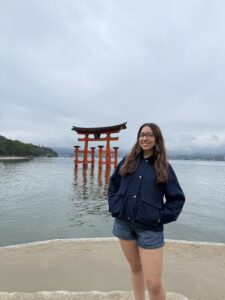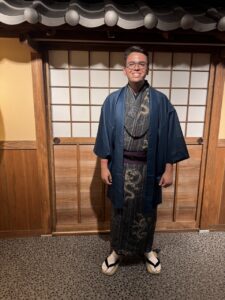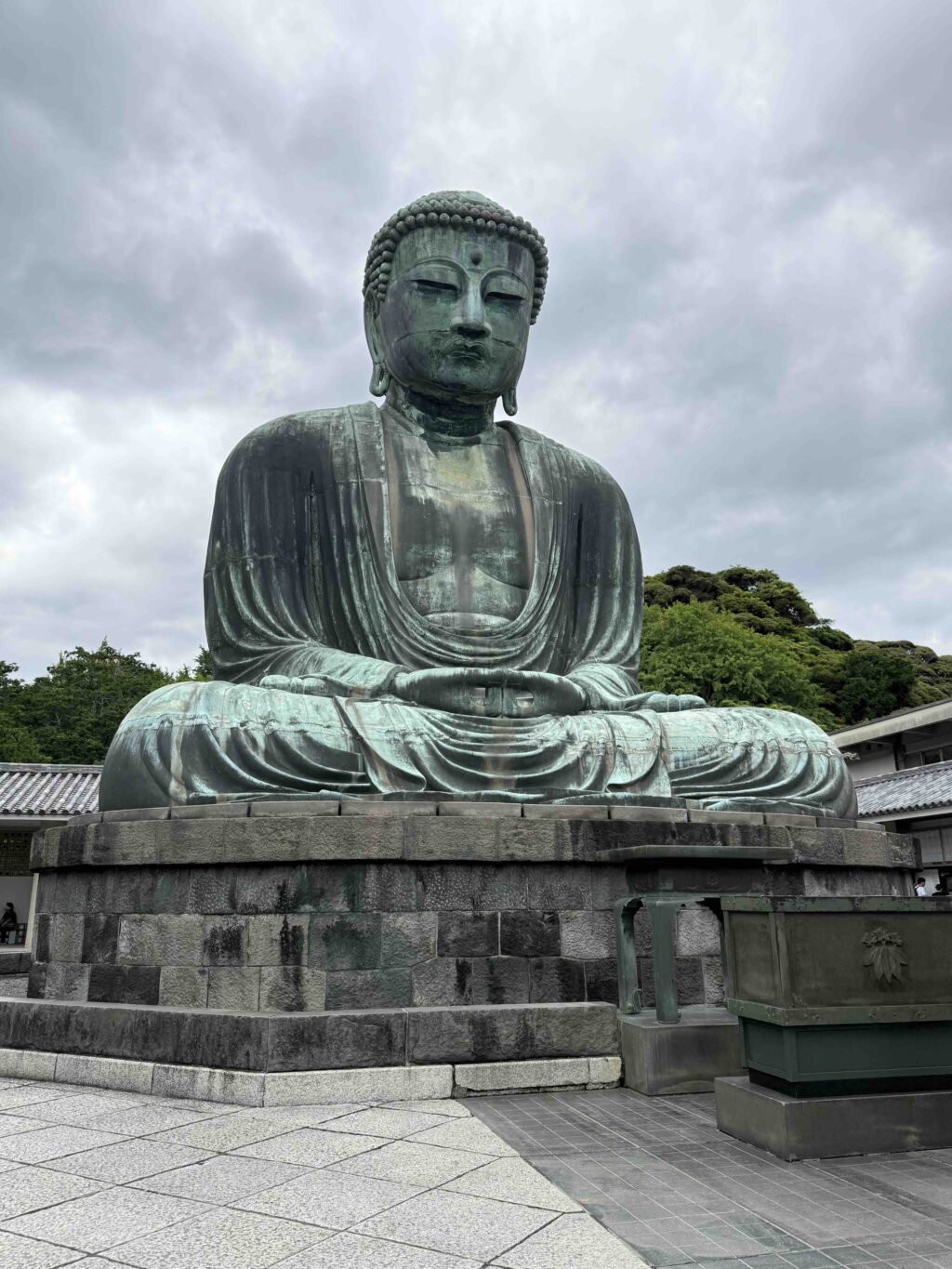
For the second full day in Tokyo, SJMC Japan students hopped on a bus and got out of town for a day trip to Kamakura, an ancient capital of Japan, and nearby Enoshima Island.
Before they left for Kamakura, students shared what they were most excited to see on Thursday.
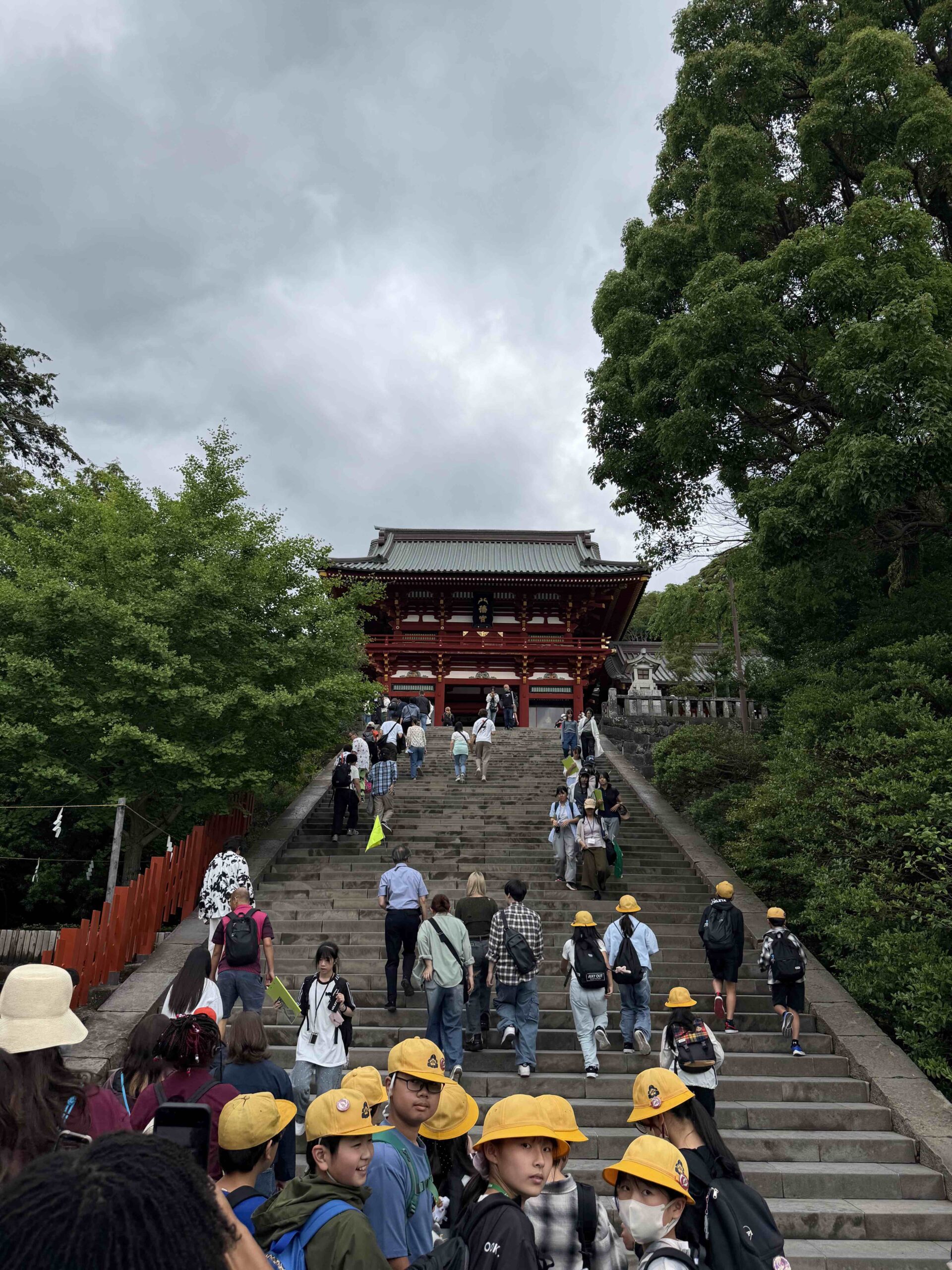
“I’ve heard there’s a lot of stairs,” advertising freshman Ainsley Burnett said. “I’m going to be tired by the end of the day, but it’ll be worth it. It’ll be my first time at a temple or a shrine.”
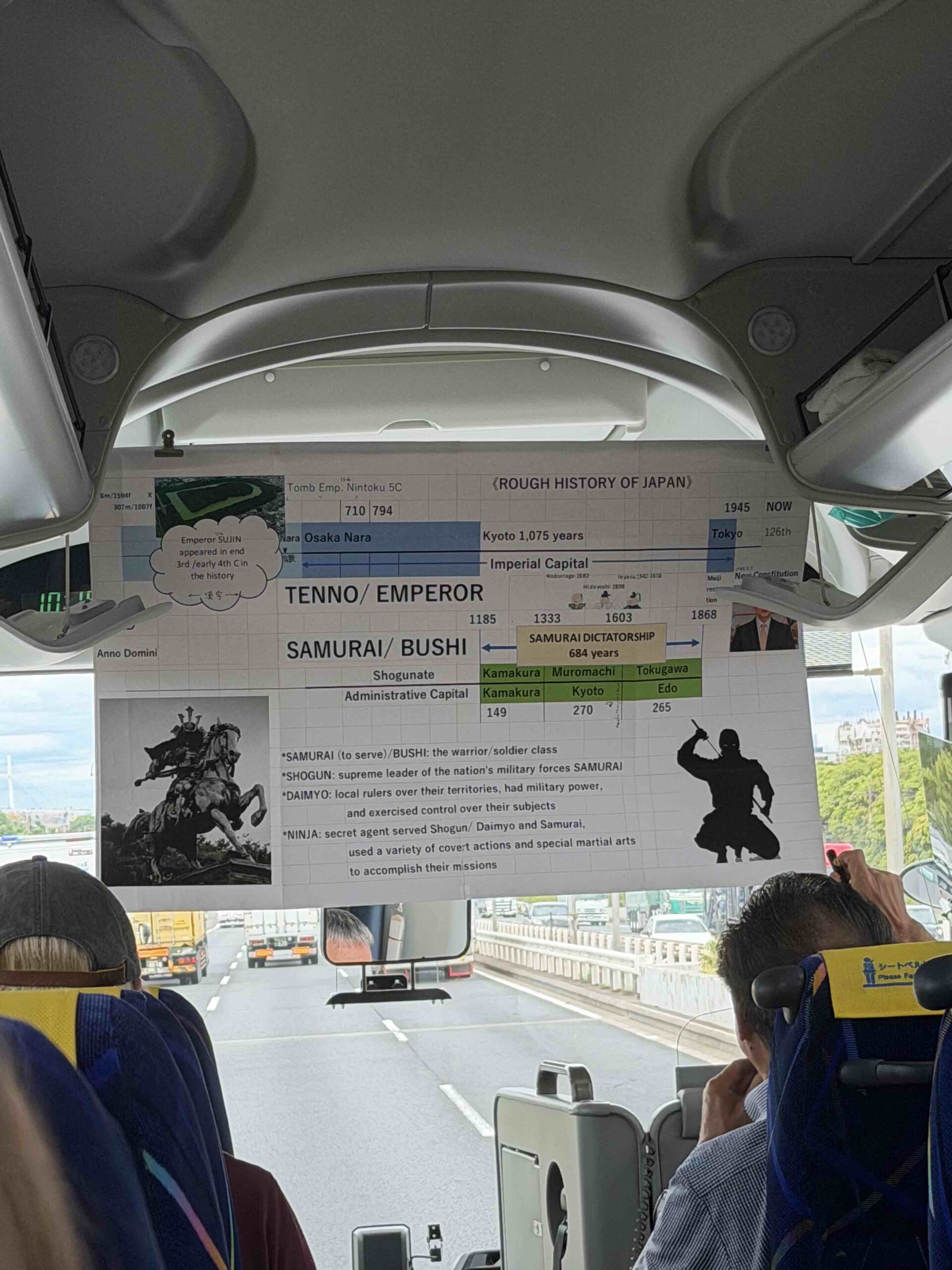
Students also received a short Japanese history lesson from Asia-Pacific Academic program guide Akutsu Michio-san, learning that Kamakura is a popular seaside destination with over 25 million visitors per year. It is also the home of Hasa-dera Temple and Kotoku-in, home of Daibutsu (The Great Buddha of Kamakura).
Once they arrived in Kamakura, students took in the beautiful scenery at Tsurugaoka Hachimangu, a Shinto shrine. Some made a quick prayer at the front of the temple while others explored the surrounding area in individual groups. They went shopping for their souvenir collections and some even tried a fresh matcha latte while browsing.
“I really liked trying the matcha in the area,” digitial media innovation senior Cadyn Perkins said. “I think it was probably the best one I ever had!”
After visiting Tsurugaoka Hachimangu, students went next to Hase-dera Temple. According to signs at this location, this temple is known for housing the finest wooden Buddha statues in Japan. The temple’s legend tells a story of the Buddhist priest Tokudo who had a pair of Eleven-Headed Kannon statues sculpted in camphor in the mountains of Hatsuse. One of those statues then became the primary one featured at the Hasa-dera Temple in present-day Nara prefecture. The other statue was sent out to sea with a prayer to end human suffering and eventually washed up on the beach 280 miles away in Kamakura.
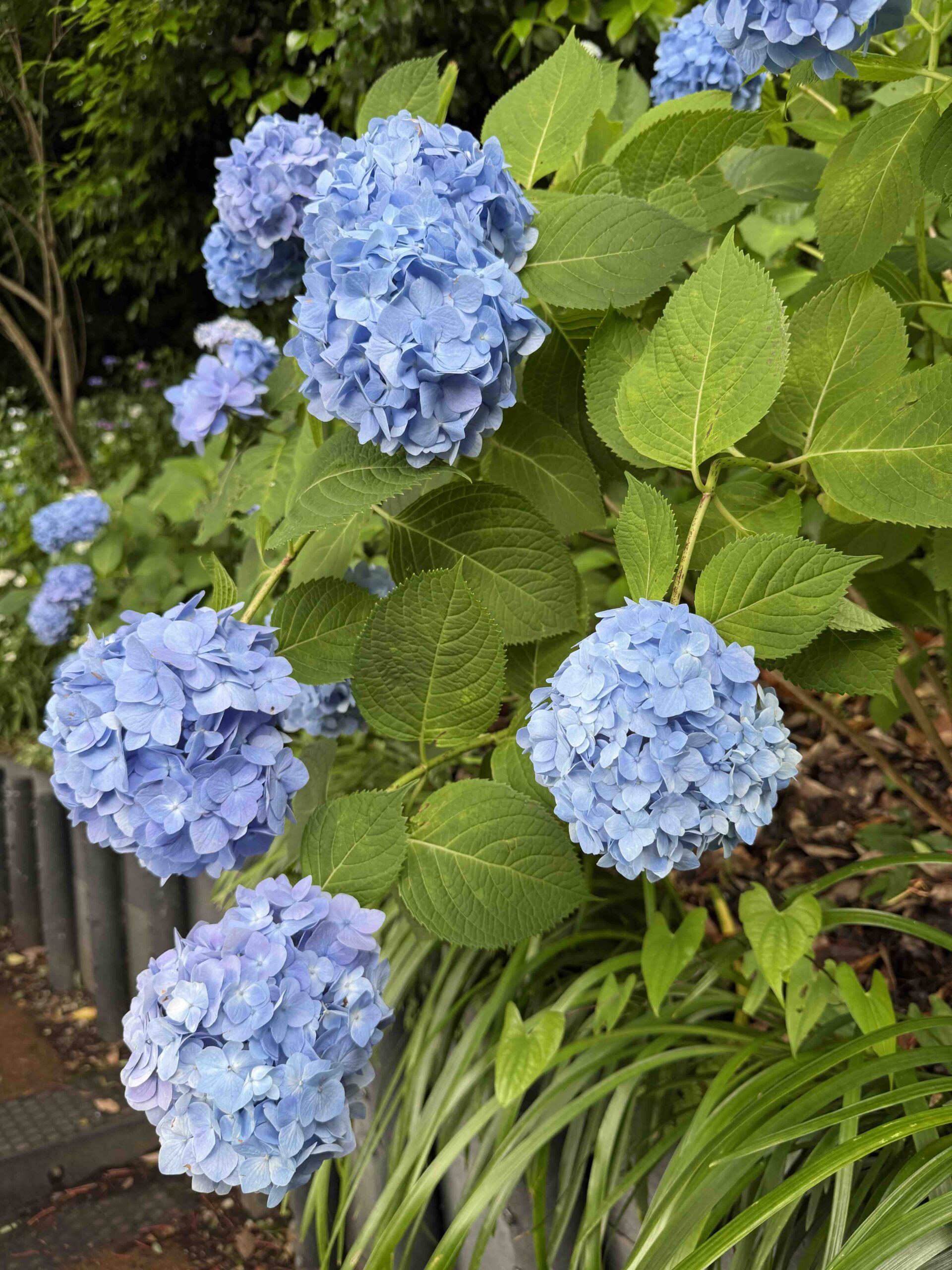
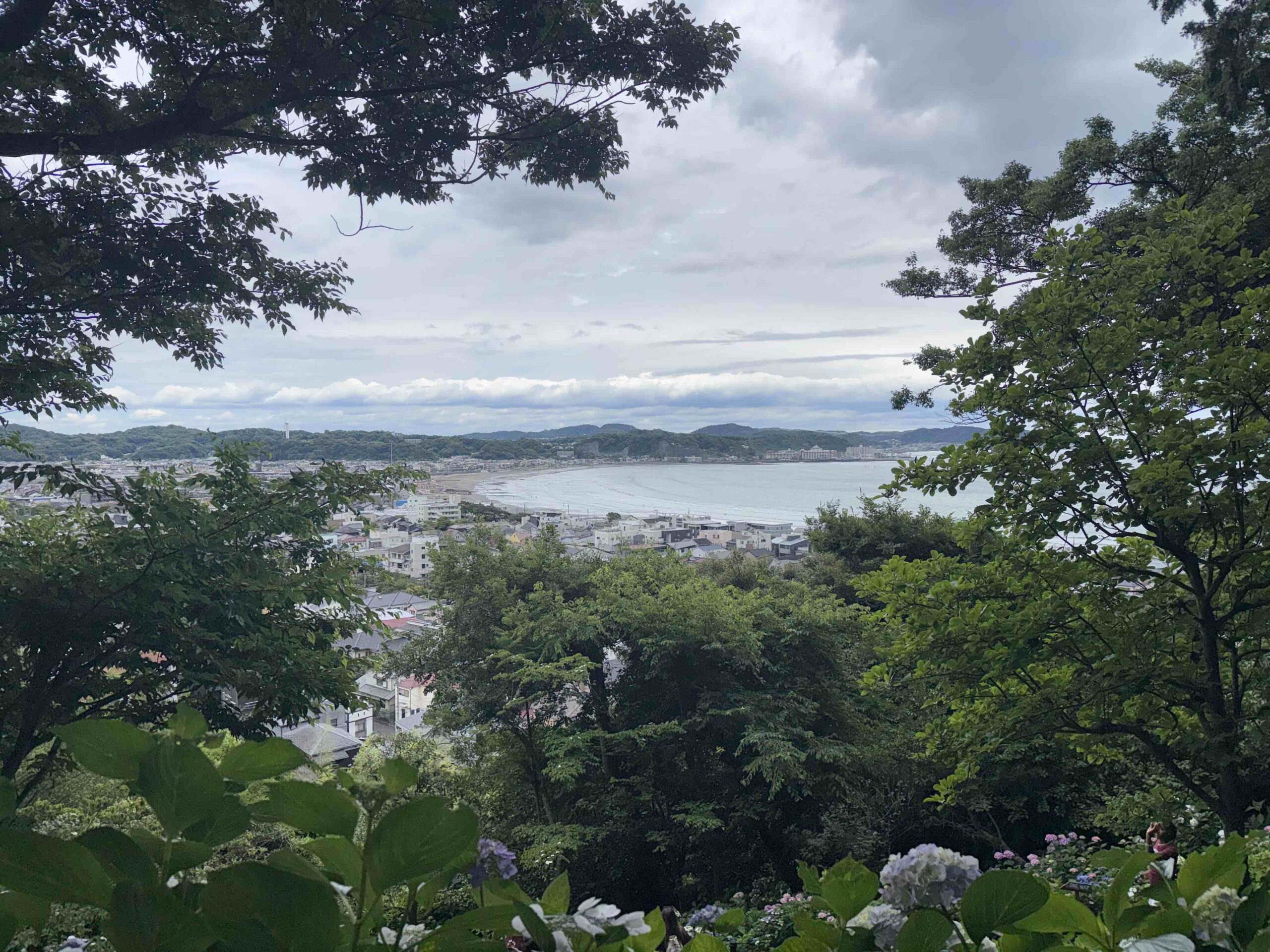
The temple grounds are also known for hydrangeas that bloom every spring. Not only were these flowers visually appealing, they also provided a sense of calmness within nature for the students. Despite some students’ fears of heights, they were determined to reach the summit to see the colorful blooms and views of the sea.

Another student expressed his anticipation for the day on the hour-long bus ride to Kamakura.
“I’m really excited to see the Giant Buddha and learn more about it,” freshman Evan Luna said. “I have an idea of how I should be respectful and mindful of the culture.”
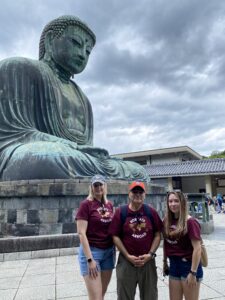
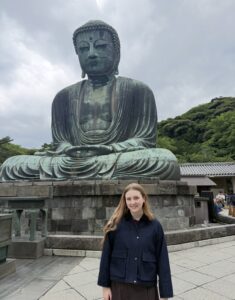
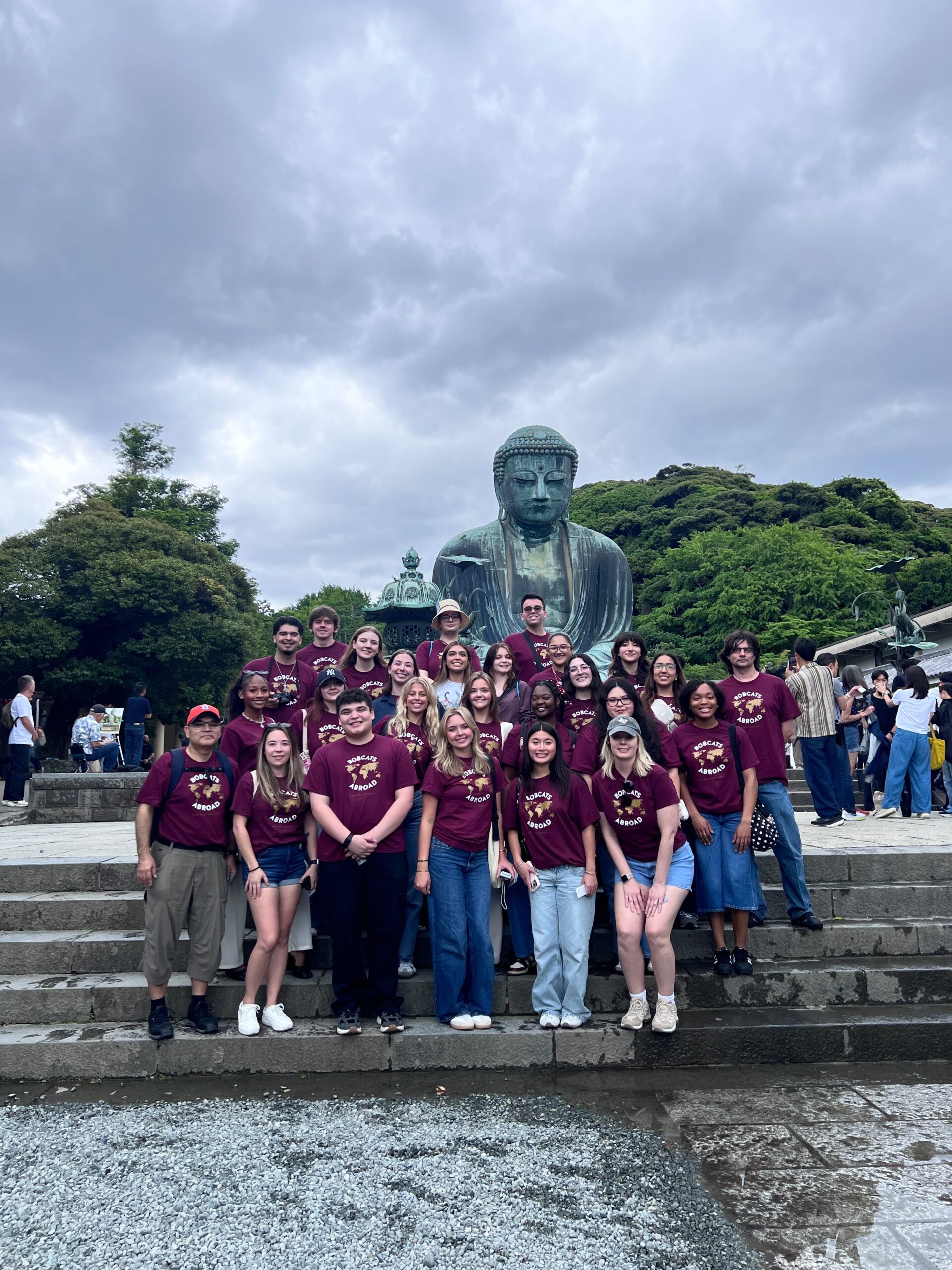
The statue dates to the 13th century and has stood the tests of time. After the wooden structure that housed Daibutsu was destroyed by a tidal wave in 1498, the hall was rebuilt. But the Great Kantō Earthquake of 1923 destroyed the base of the temple, Daibutsu remained standing and free of any damage on both occasions. According to Michio-san’s history lesson on the bus, the temple is sacred to most Japanese people, but mainly represents a shift in Buddhism when citizens and the rising samurai class moved away from the elite class, leading into a new era.
Similar to the Statue of Liberty in New York, Daibutsu is made of bronze but actually appears to be a light shade of green due to a natural oxidization process called patination. According to site brochures, at the time it was constructed, the Great Buddha was made with gold lacquer or gold leaf, some of which still remains on its cheeks today. At 37 feet tall and weighing 121 tons, it is considered a national treasure and one of the most important monuments and symbols in Japanese culture today.
SJMC Japan students were in awe when they saw the statue towering over the trees behind it. Students took many photos with Daibutsu in the background, with some paying as little as 50 yen (31 cents) to view the inside of the statue. Some bought souvenirs while others washed their hands at a nearby fountain in hopes of receiving success and good luck in their future.
During the last stop on the 10-hour excursion, students formed their own groups to have lunch and go shopping in Enoshima. One group ate at a restaurant that featured tatami mats with students sitting on the floor enjoying common Japanese cuisine such as udon noodles, tempura shrimp and mango cream soda.
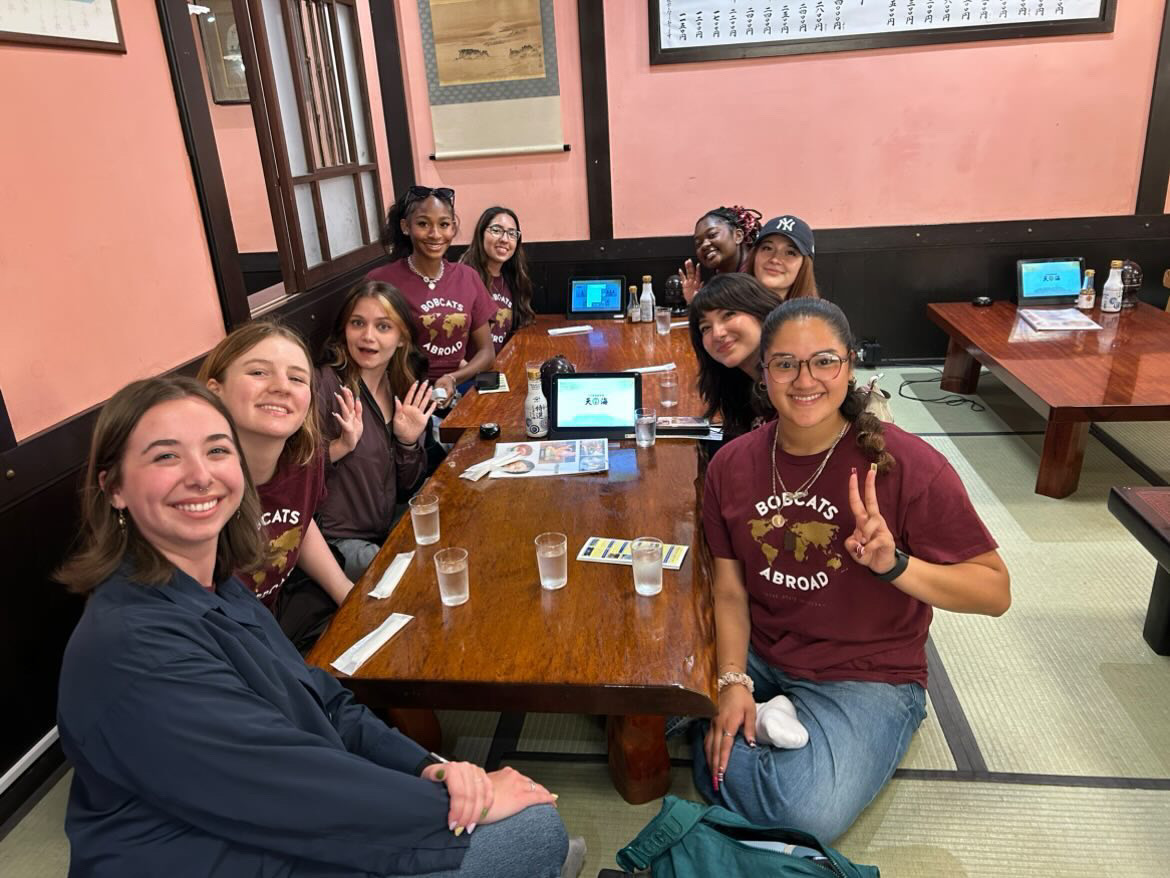
When students entered the restaurant, they were greeted by seafood decor and a fish tank filled with lobster. Celeste Montoya thought she ordered nigiri but instead received sashimi.
“I thought it came with rice but it was only the raw fish,” Montoya said, “but it’s OK, it was still really good.”
Others chose to seek more comfort-style foods, ending the day with a hamburger, corn on the cob and a Dr. Pepper soda. For those who were up to the challenge of walking the 200+ stairs to view Enoshima Shrine, Enoshima Sea Candle and a garden at the top, they were rewarded with opportunities for more unique photo ops of the scenery.
As the day came to a close, students headed towards the bus to beat the last minute rain and made their way back to Tokyo.
SJMC Japan students are looking forward to Friday’s all-day adventure visiting Meiji Jingu, Shibuya, the Yuri Group and, for 18 students and program leaders, a Tokyo Giants baseball game.
About The Author