On their first full day in Kyoto, SJMC Japan students were treated to a visit to Kyoto Shimbun’s only newspaper factory, Kiyomizu-dera Temple and Yasaka Shrine.
The Kyoto Shimbun is a daily newspaper local to the Kyoto and Shiga prefectures, founded on June 9, 1879, as Kyoto Shōji Jinhō. It celebrated it 147th birthday the day before the students’ arrival. The Kyoto Shimbun publishes a total of 400,000 newspapers every day: 310,000 for the morning edition and 90,000 for the evening version.
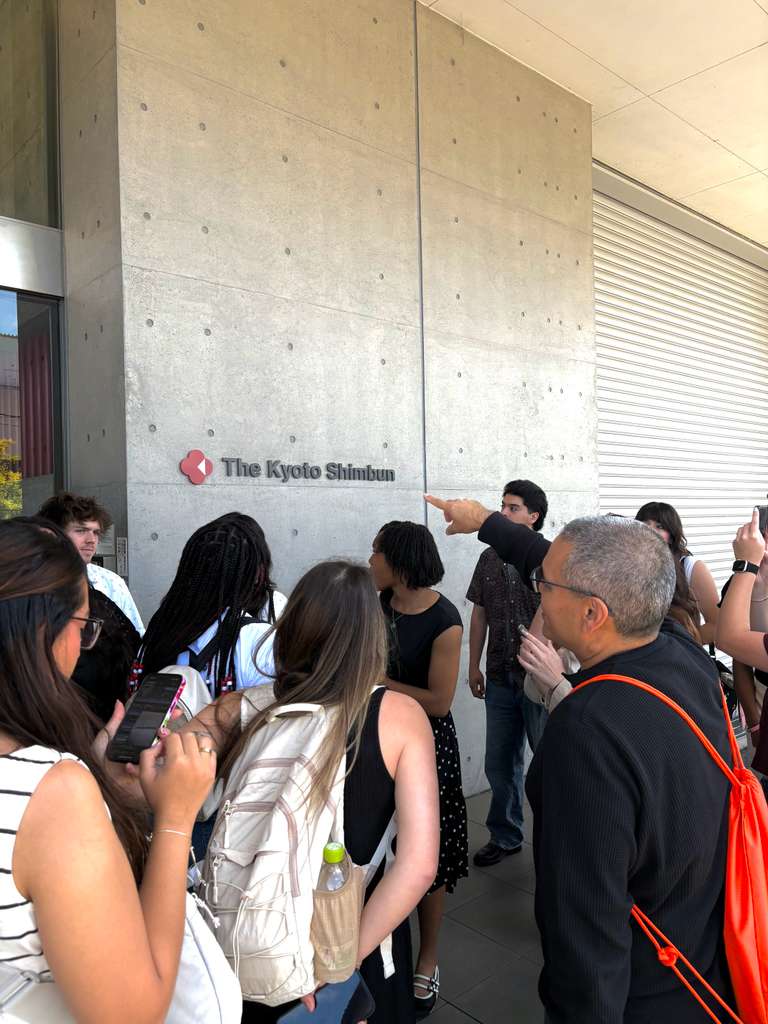
When students arrived outside The Kyoto Shimbun newspaper factory, they were informed that photos inside were strictly prohibited except for the meeting room. Instead, they gathered around the entrance and took a group photo there to commemorate the event, later making front page news on a special edition of the newspaper.
While SJMC Japan has visited The Kyoto Shimbun in the past, previous education abroad groups had only ever visited the office in downtown Kyoto. This is the first year students have visited the factory where the newspapers are printed.
Upon arrival, students received a copy of the morning newspaper, printed in the very factory they toured.
They met Midori Dei-san, who with the help of Michio-san’s translation, introduced the group to The Kyoto Shimbun and served as the guide for the factory tour. Students were first shown a video about the newspaper’s coverage of the 2011 Tōhoku earthquake and tsunami that gave them an overview of how a newspaper is created and emphasized the newspaper’s dedication to speed and accuracy.
Students admired the continued use of physical newspapers in Japan as well as the quality control displayed by The Kyoto Shimbun. Electronic media freshman Evan Luna reflected on the contrast between Japan and the U.S.
“This is really cool and interesting to see how fast the newspapers take to make!” Luna said. “Compared to the U.S, the news is more clear with better quality of ink, and the paper itself seems a lot better.”
Dei-san then gave the students a demonstration of the CMYK color model used to print The Kyoto Shimbun’s color newspapers. CMYK stands for Cyan, Magenta, Yellow, and Key (referring to the key plate, which is black). The method relies on layering the four colors onto the page with ink-covered plates.
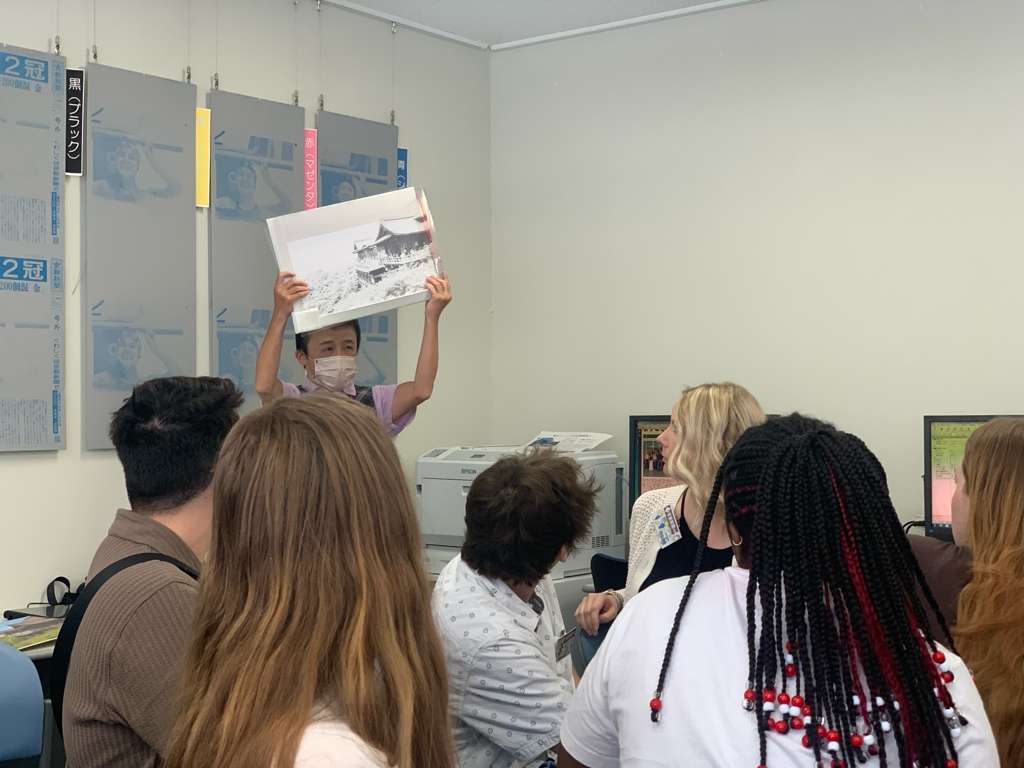
After the demonstration, students began the tour of the factory. The first machine students were introduced to was the Automatic Guided Vehicle (AGV), a low to the ground, self-guiding cart that ferries around the rolls of paper in the factory until they are eventually fed into the printer. Each roll of paper weighs about 1.5 U.S. tons. The AVGs each played a different distinct jingle to notify nearby workers of their presence to avoid collisions. Many found the music endearing, though the overlapping songs could become overstimulating to some.
The students followed one AGV as it brought a roll of paper to a machine to prepare it for a process called splicing, where a fresh roll of paper is added to a printer while the current one is near depletion.
After that, students were taken to the factory floor where 17 printers, some as tall as four stories, churned out 8,750 full newspapers every nine minutes. The sounds emitted by the machinery made it difficult for students to hear each other as they passed around freshly printed copies of the biweekly edition of Iru Miru, a lifestyle information publication published for Kyoto Shimbun subscribers. The room smelled like paper and ink.
Communication studies senior Christina Saenz likened the experience to the TV show “How It’s Made.”
“It’s kind of like seeing that in person,” Saenz said.
As the tour came to a close, each student was given a memento to remember their visit: a special edition of the newspaper welcoming SJMC Japan students and featuring the group photo they took upon arrival.

Students then said goodbye to Dei-san and The Kyoto Shimbun and headed to Kiyomizu-dera Temple.
On their way to the temple, Michio-san gave students a lesson in the three Japanese writing systems by explaining the difference between hiragana, katakana and kanji. Then he demonstrated to students by writing their names for them in katakana on a whiteboard.


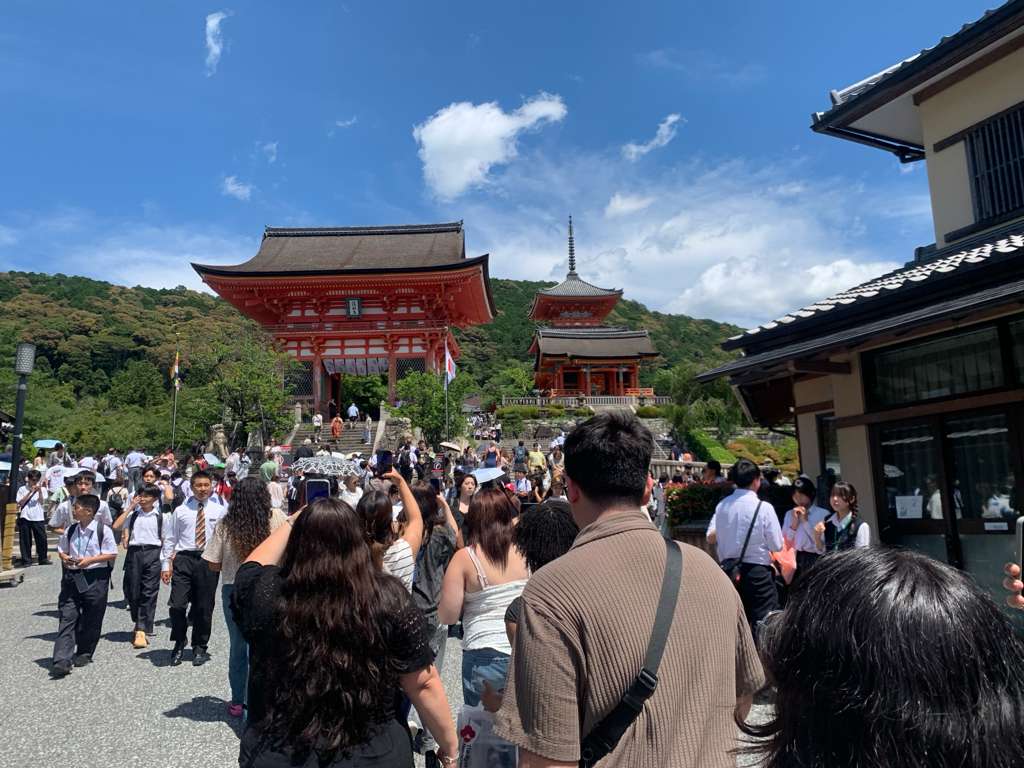
Covering 150,000 square yards, Kiyomizu-dera Temple stands as one of the largest temples in Kyoto. Founded in 778, the Buddhist temple was established by a monk named Kenshin. Students admired the temple’s impressive architecture and stunning views, especially from the famous wooden stage that extends out from the Honden, the main hall. Following a divine revelation to move north, Kenshin discovered a pure flowing waterfall on Mount Otowa in Kyoto, which became the sacred site on which the temple stands today.
Once students reached the Otowa Waterfall, some participated in the sacred tradition to drink from its three water streams, representing wishes for academic success, longevity and love.

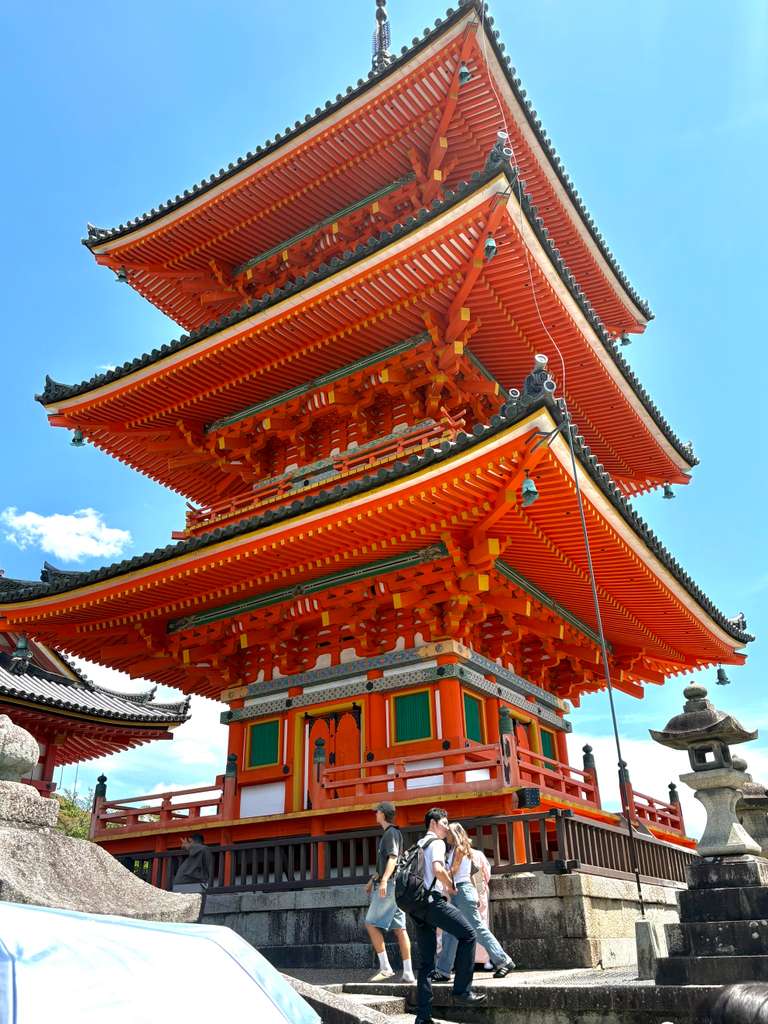

“I didn’t know if I was doing it right,” digital media innovation junior Berkelee Bryan said. “I didn’t tip (the ladle) the way everyone else tipped it, so I just hope that doesn’t mean my wish won’t come true!”
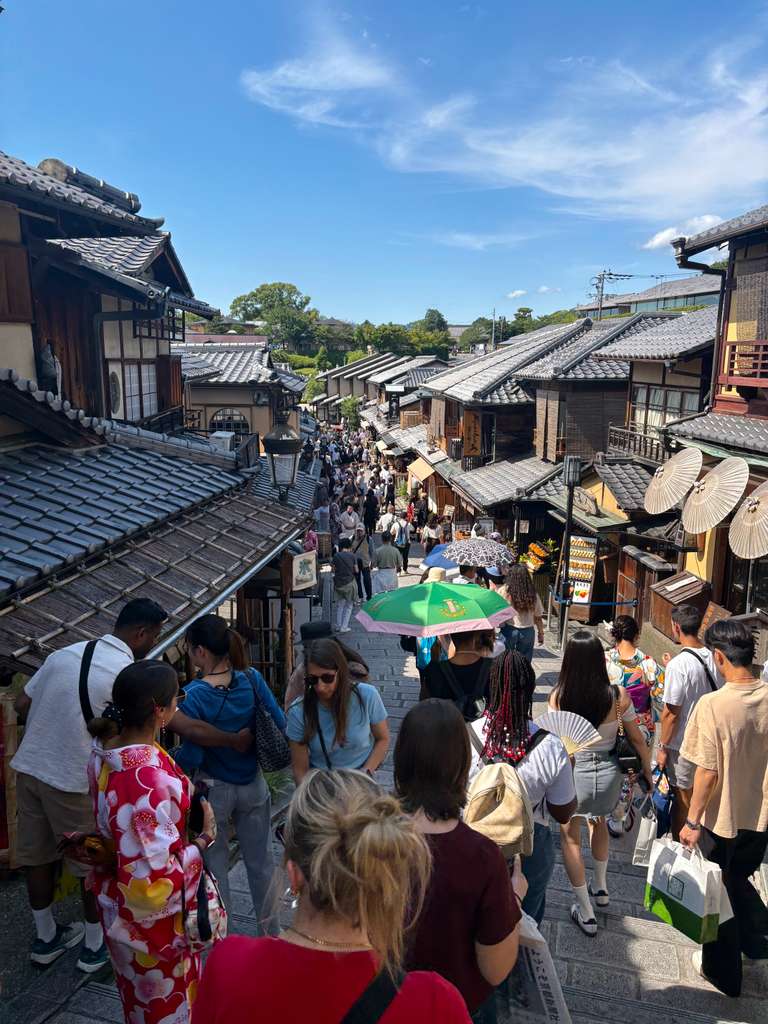
Continuing past the temple grounds, students took advantage of their free time in Kiyomizu-zaka shopping district and continued to their next stop: Yasaka Shrine.
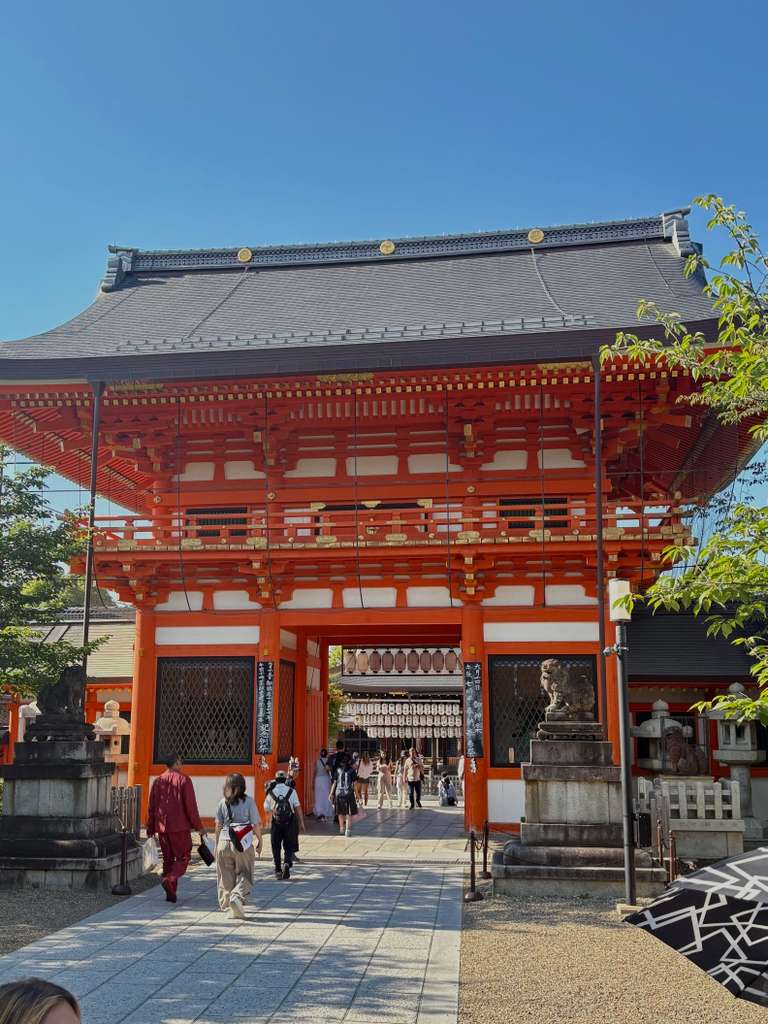
There, Michio-san guided them through one of Kyoto’s most famous Shinto shrines. Located in the historic Gion district, the shrine has served as an important place of worship for more than 1,350 years. Known for its striking vermilion gates and lantern-lined grounds, Yasaka Shrine is dedicated to Susanoo-no-mikoto, a deity associated with protection from disease and misfortune. Students enjoyed walking through the peaceful shrine grounds while learning about the role that Shinto traditions continue to play in Japanese culture today.
Students then either indulged in free time or ventured back to the hotel with Michio-san.
Digital media innovation junior Kennedy Jacquet explored Teramachi Street “on a mission to find the perfect vintage designer bag” she said.
“Japan can be more affordable than in many other countries, and with tax-free shopping available for international visitors, I was determined to see what I could uncover,” she said.

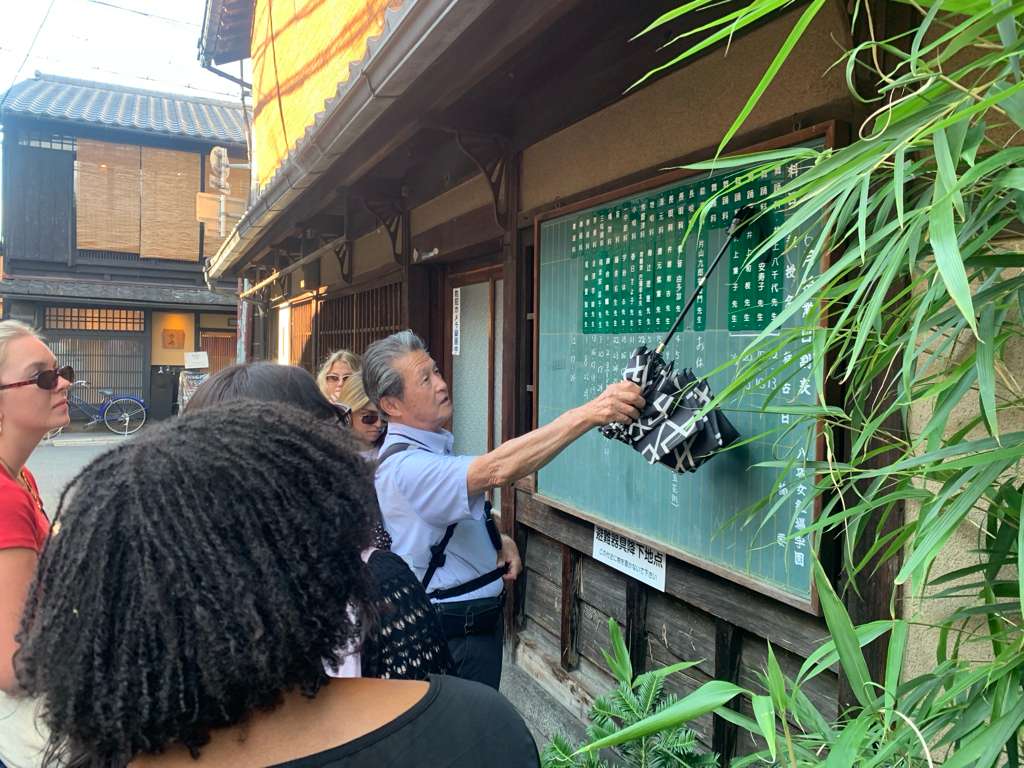
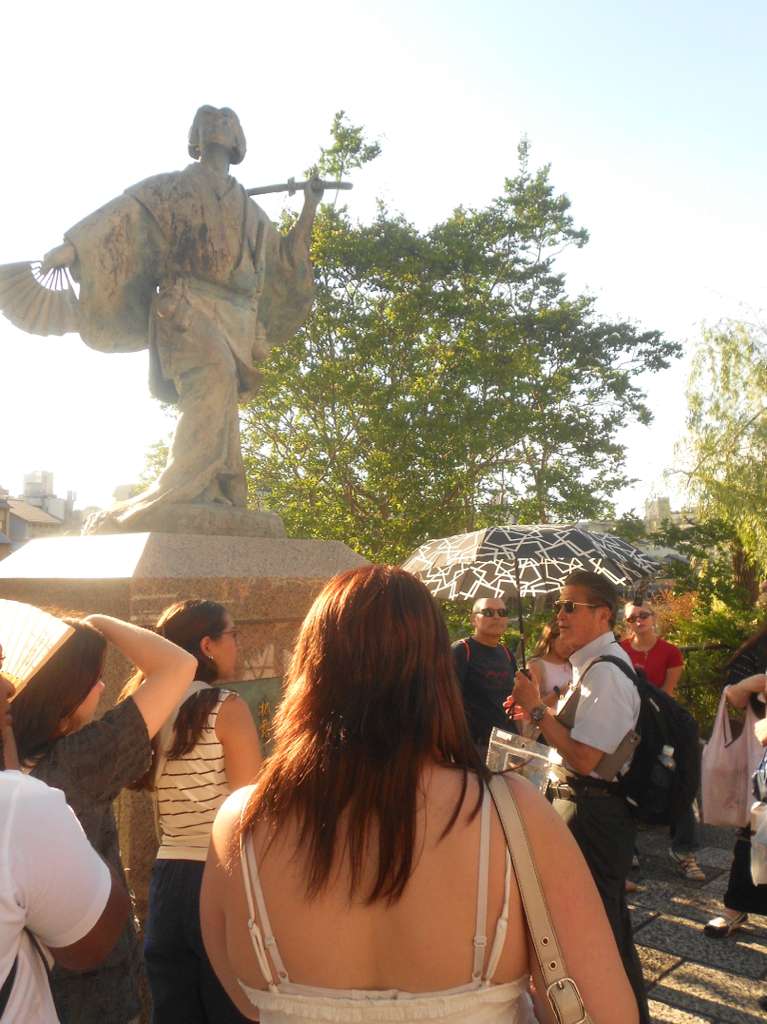
Those who traveled back to the hotel with Michio-san got to see a place where geiko (a type of geisha) practice their traditional dance. Michi-san also walked students by a statue of Izumo no Okuni, the woman known for the creation of the kabuki dance.
After a full day running around Kyoto, students are looking forward to free time on Thursday morning before visiting Kinkaku-ji Temple, also know as the Golden Pavilion, and participating in a traditional tea ceremony while wearing kimonos in the afternoon.
About The Author