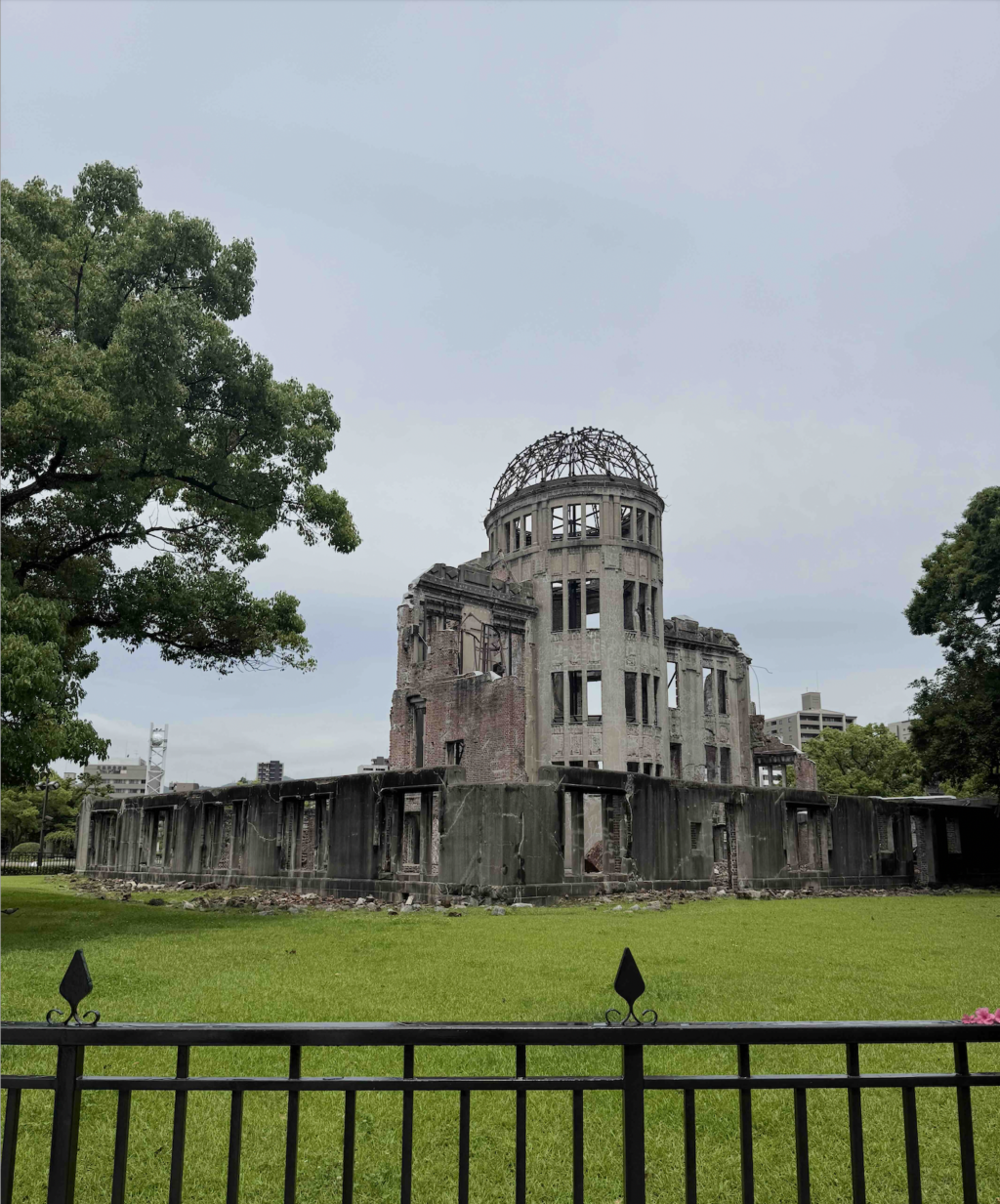
When SJMC Japan students first learned they would visit Hiroshima as part of this program, they anticipated it with great nervousness. On Tuesday, the day had finally arrived.
Academic Program Director Gilbert D. Martinez assigned John Hersey’s “Hiroshima” essay, written one year after the dropping of the bomb in World War II. Students learned how several city residents experienced the bombing, losing loved ones and witnessing the devastation.
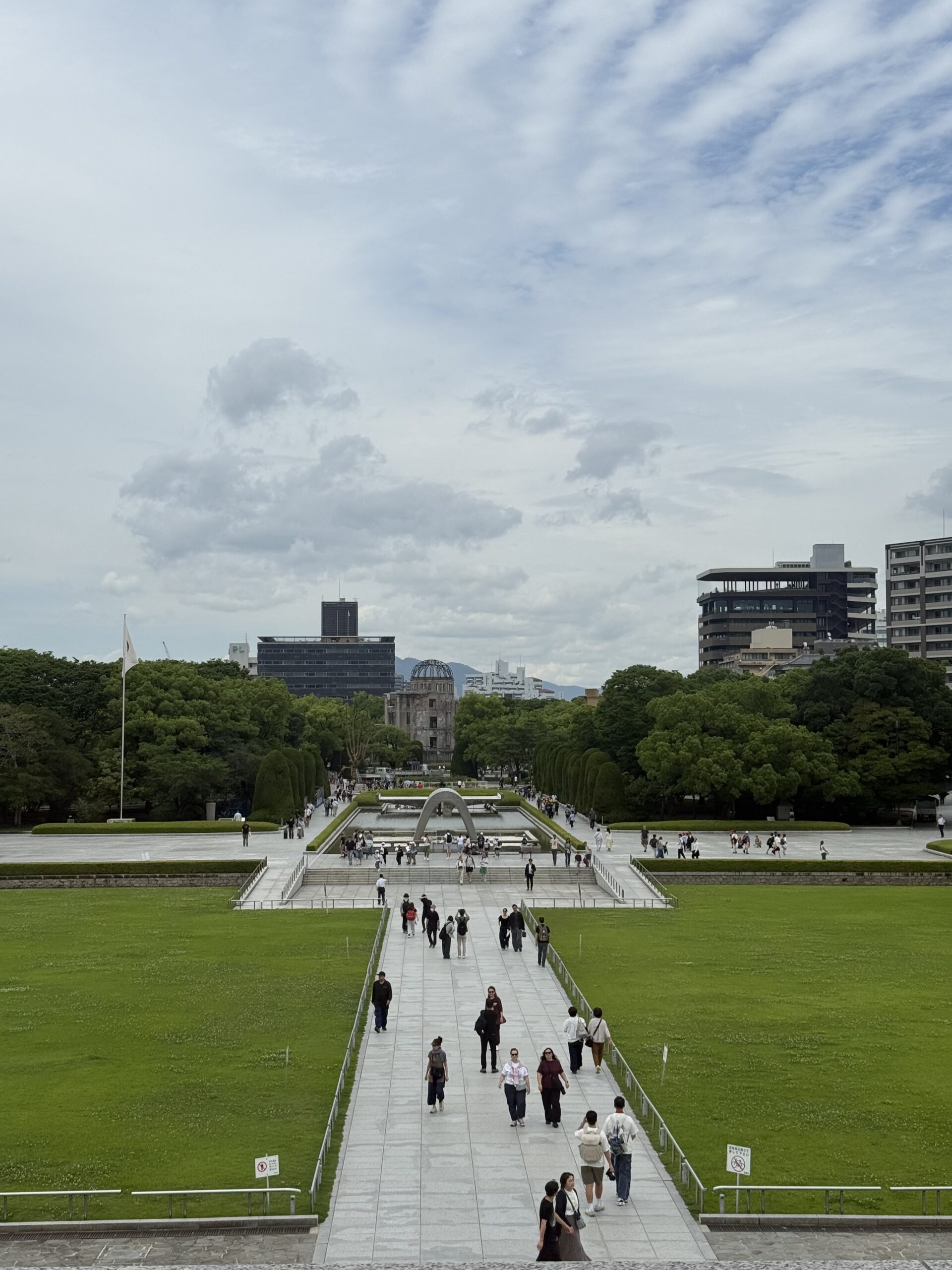
Tour guide Michio Akutsu led the group to the Hiroshima Peace Memorial Park and gave additional details about the bombing.
U.S. President Harry Truman authorized an atomic bomb to be dropped on Hiroshima from a B-29 bomber named the Enola Gay. The bomb, nicknamed Little Boy, caused massive destruction across the city because it was specifically designed to detonate nearly 2,000 feet (600 meters) above to cause maximum destruction to people. About 70,000 people died immediately, and roughly 140,000 died by the end of 1945 from radiation sickness and related illnesses.
On Aug. 9, just three days later, a second atomic bomb nicknamed Fat Man was dropped on Nagasaki, thereby leading to Japan’s unconditional surrender before the end of World War II. These events forever changed Japan’s history and left a lasting impact on the world.
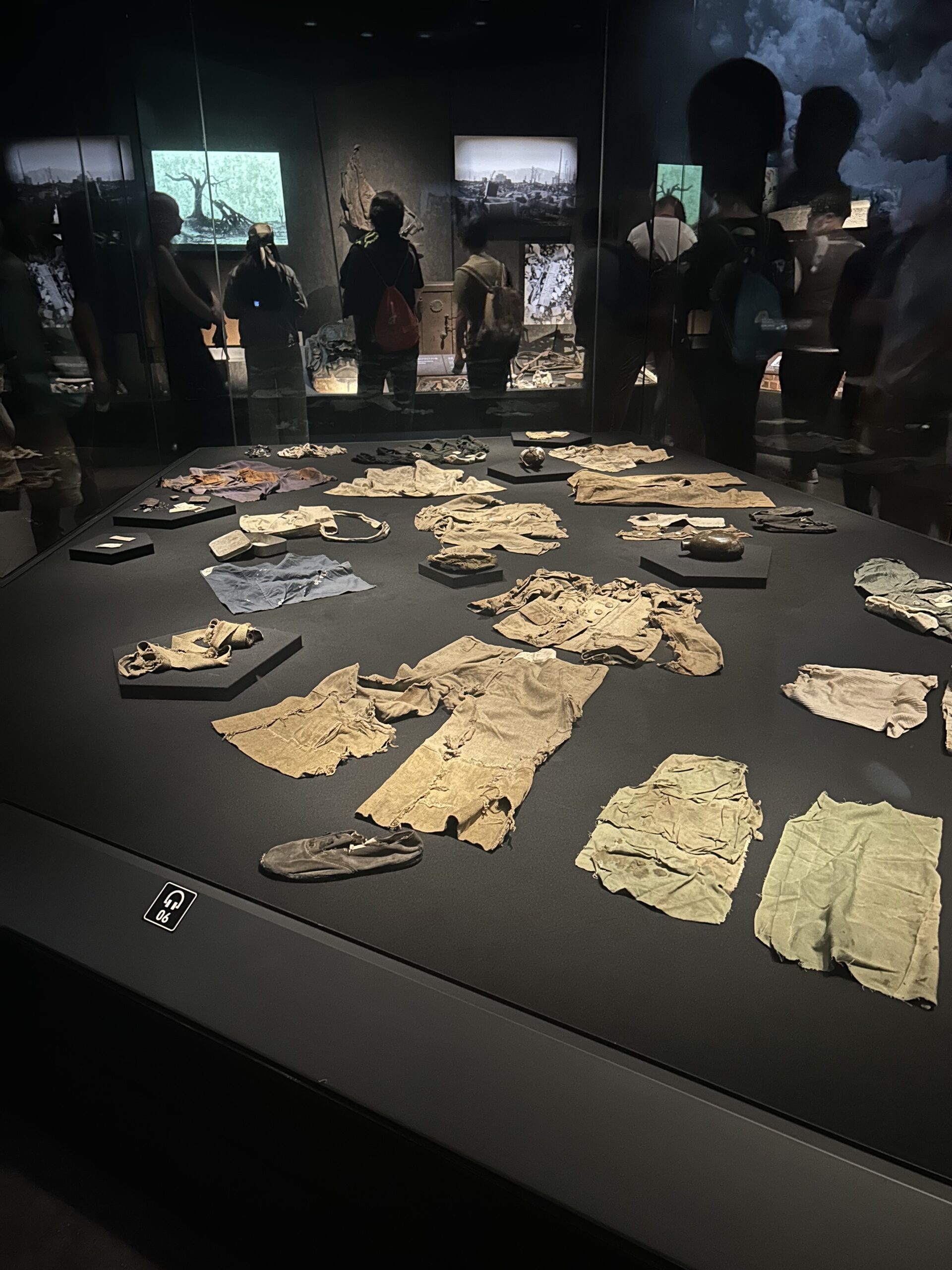
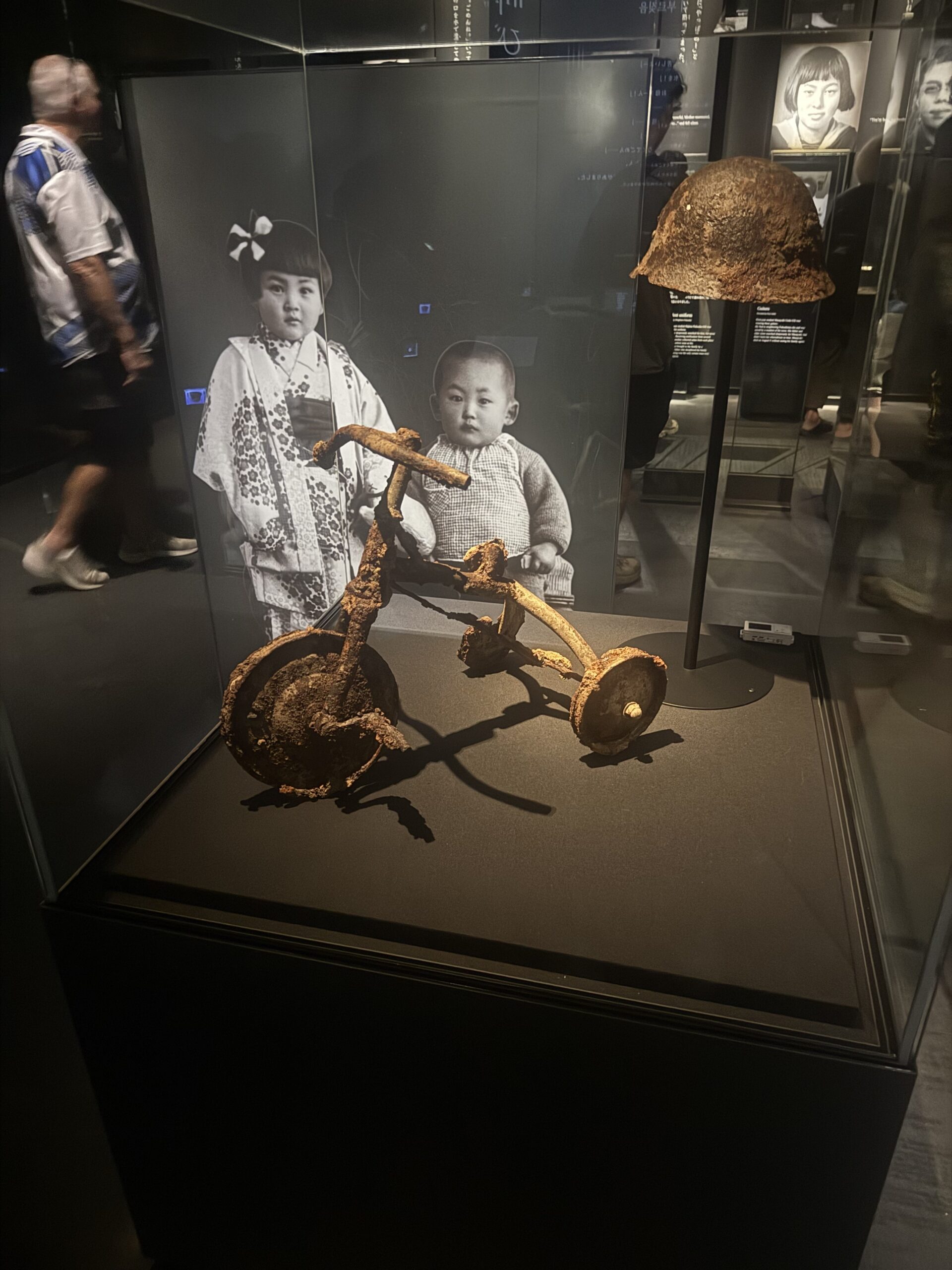
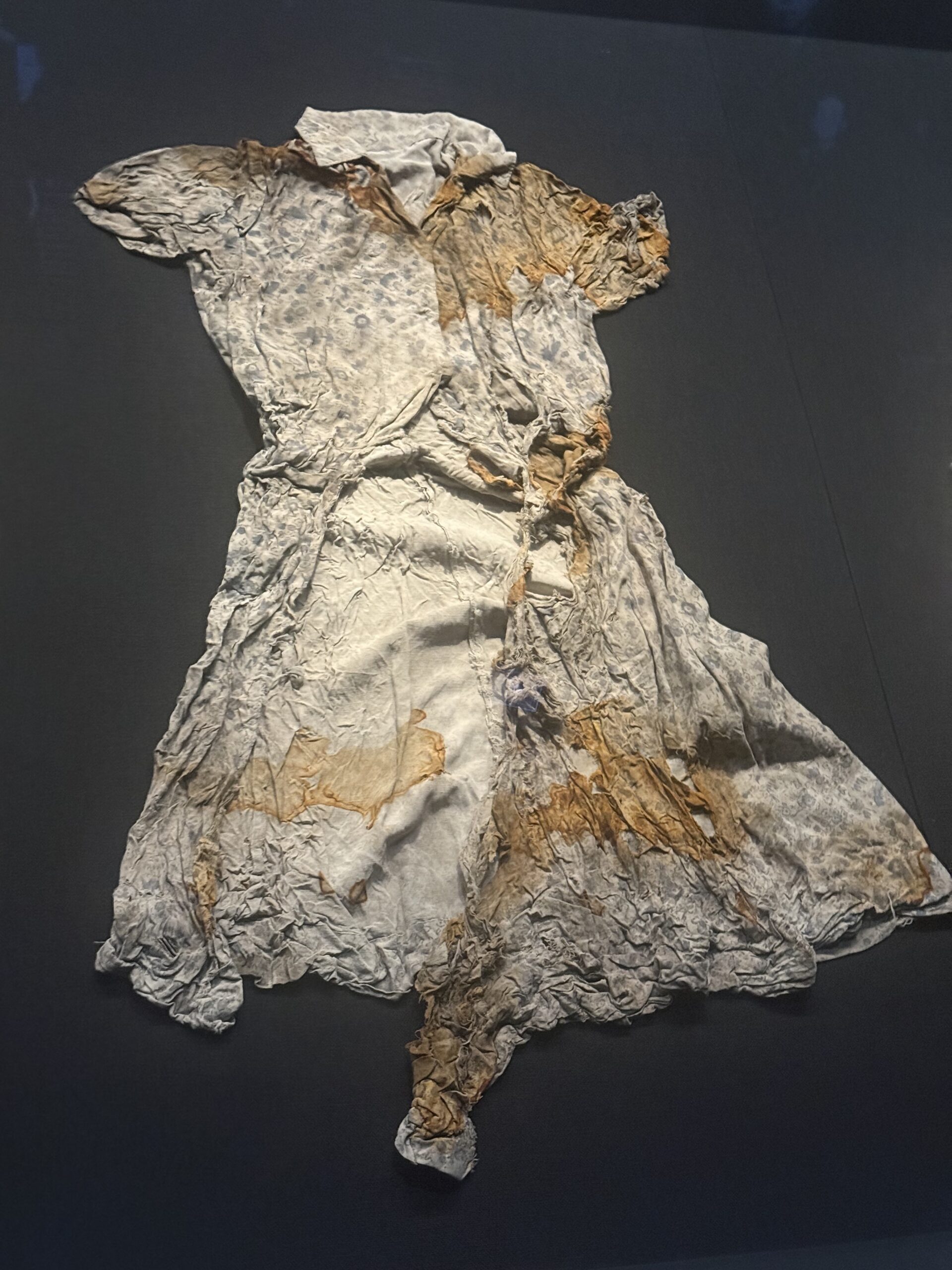
The visit gave students an opportunity to learn more about the atomic bombing through artifacts, survivor testimonials and memorials dedicated to those affected.
Students researched the topic before heading in, fully expecting a profound and heart-wrenching experience. Taylor Carrasco, journalism and digital media innovation senior, said she reflected on the importance of Hiroshima in world history.
“I know it’s going to be really emotional,” Carrasco said. “But I’m eager to learn about the cultural significance of this. I know this is very impactful to the people here and their history in Japan, so I’m definitely expecting to gain a lot of information and leave with a new perspective on life.”
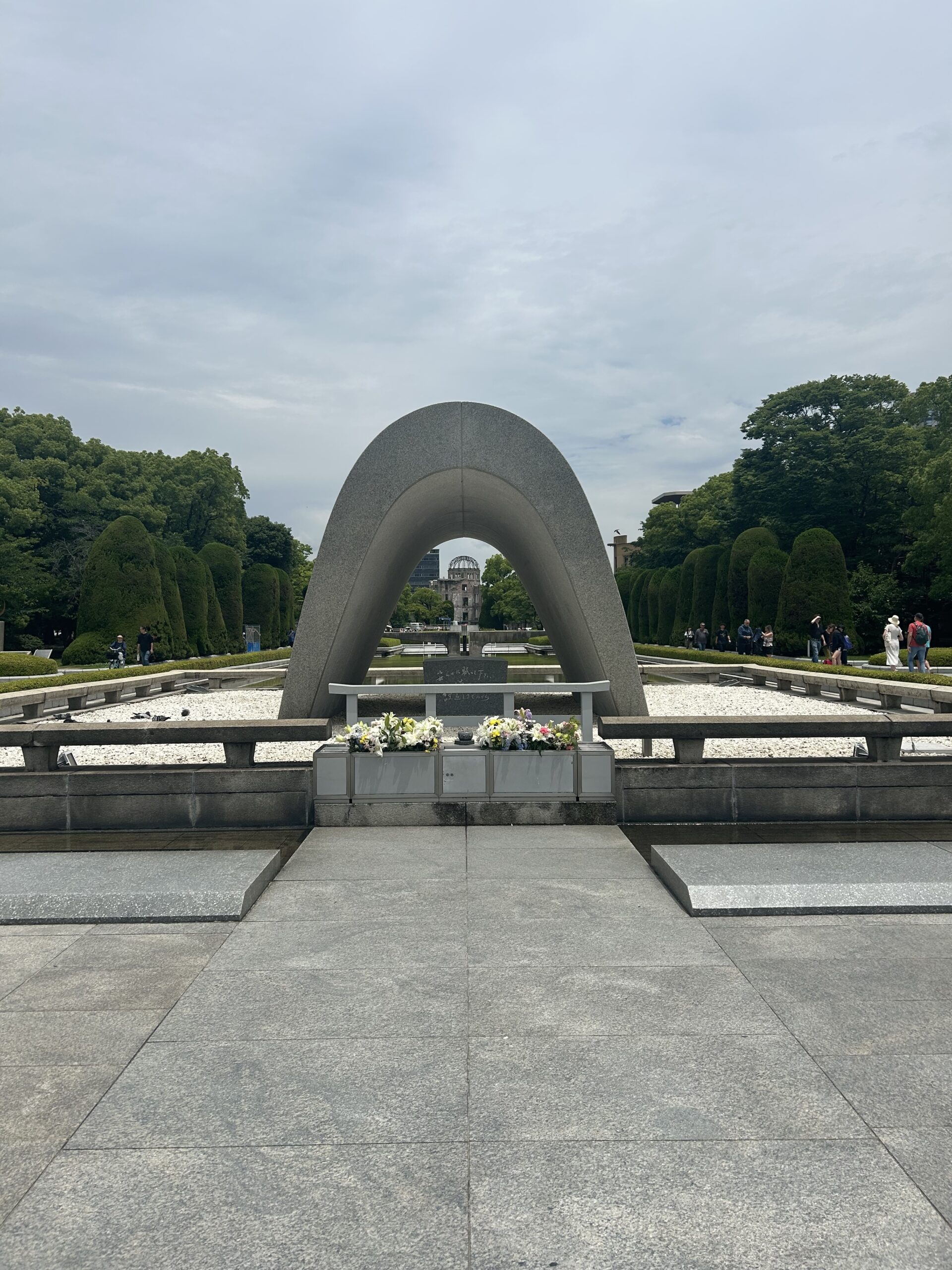
The Hiroshima Peace Memorial Museum and Park opened in August 1955 in honor of the lives lost and those affected by the tragedy. Through belongings left by the victims, artifacts and testimonies, the museum shares the horrors and the inhumane nature of nuclear weapons to spread its message of “No More Hiroshimas.”
Although students had prepared and set their expectations for the experience, there were some images and details that they did not anticipate. Jack Grettler, a journalism senior, said he was caught off guard.
“I think what’s most surprising is just the visual imagery that we saw,” Grettler said. “There was an image of a man, and his entire back was completely burned. He had to have over 16 surgeries. Just seeing these people really humanizes the situation and shows just how devastating it was.”
The museum includes a graphic content disclaimer for visitors, as some may not have been prepared for what they were about to see. The content left a lasting impression on Cayden Perkins, digital media innovation senior.
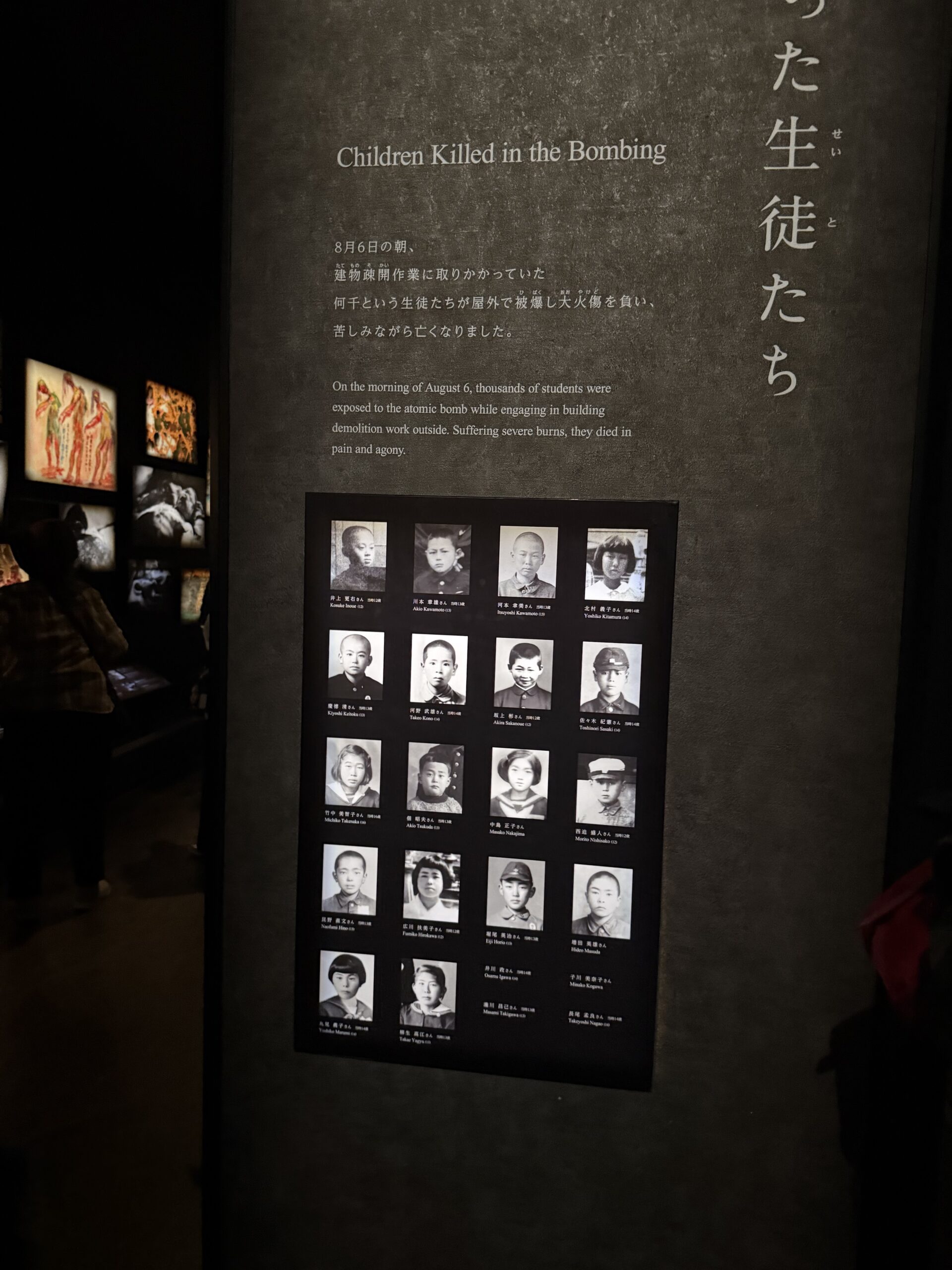
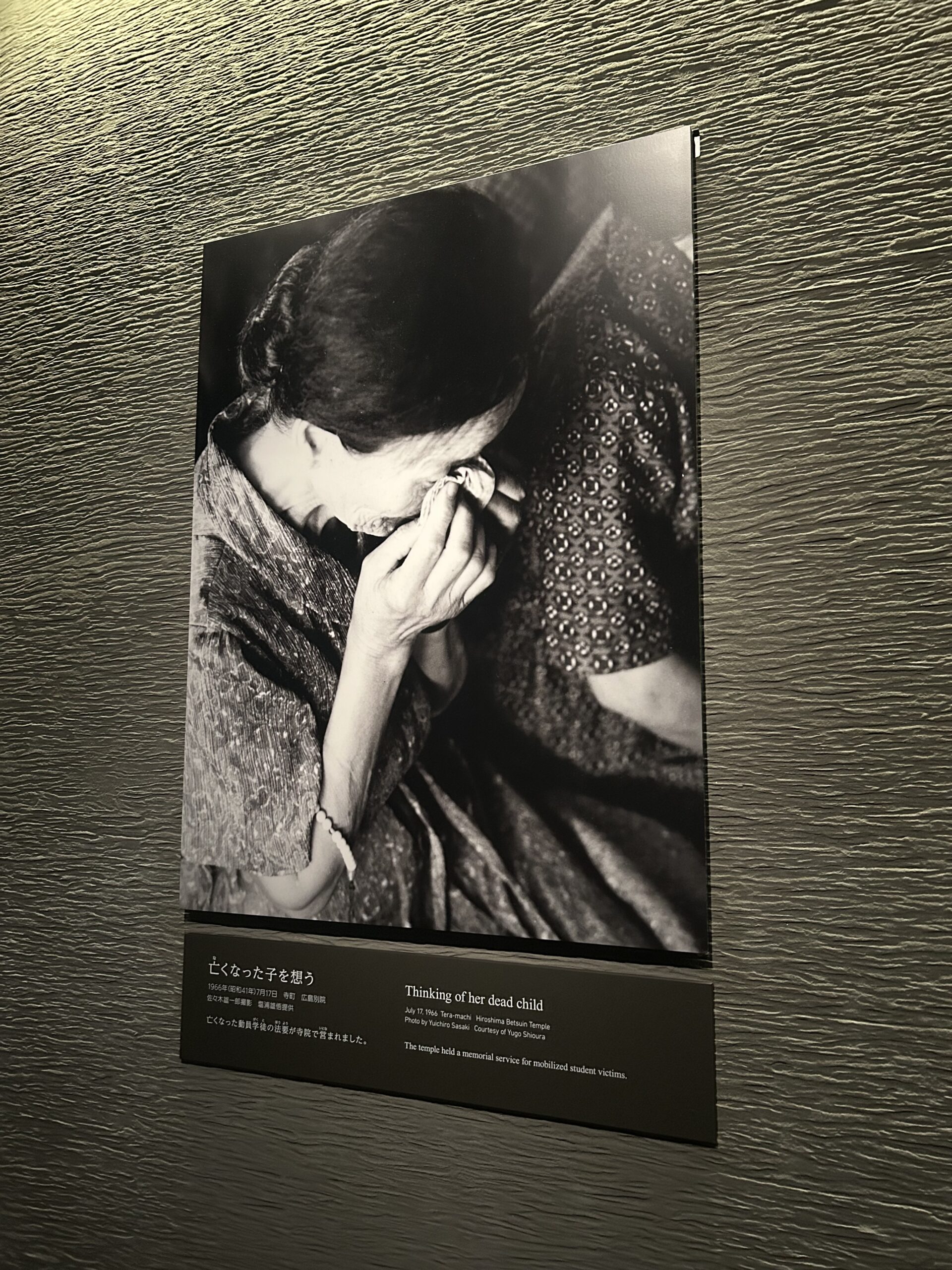
“The photos were very graphic, so it was hard not to look away, but I knew it was important for me to see and learn how it affected people,” Perkins said. “Hearing stories of how mothers lost their children was very impactful.”
Traveling to the sites by city tram, the students’ first stop was the Genbaku Dome (Atomic Bomb Dome), which is in the same condition it was left in after the bombing to symbolize the destruction of Hiroshima. Originally, it was known as the Hiroshima Prefectural Industrial Promotion Hall, which was popular with city residents as an art museum, educational workshop and gallery.
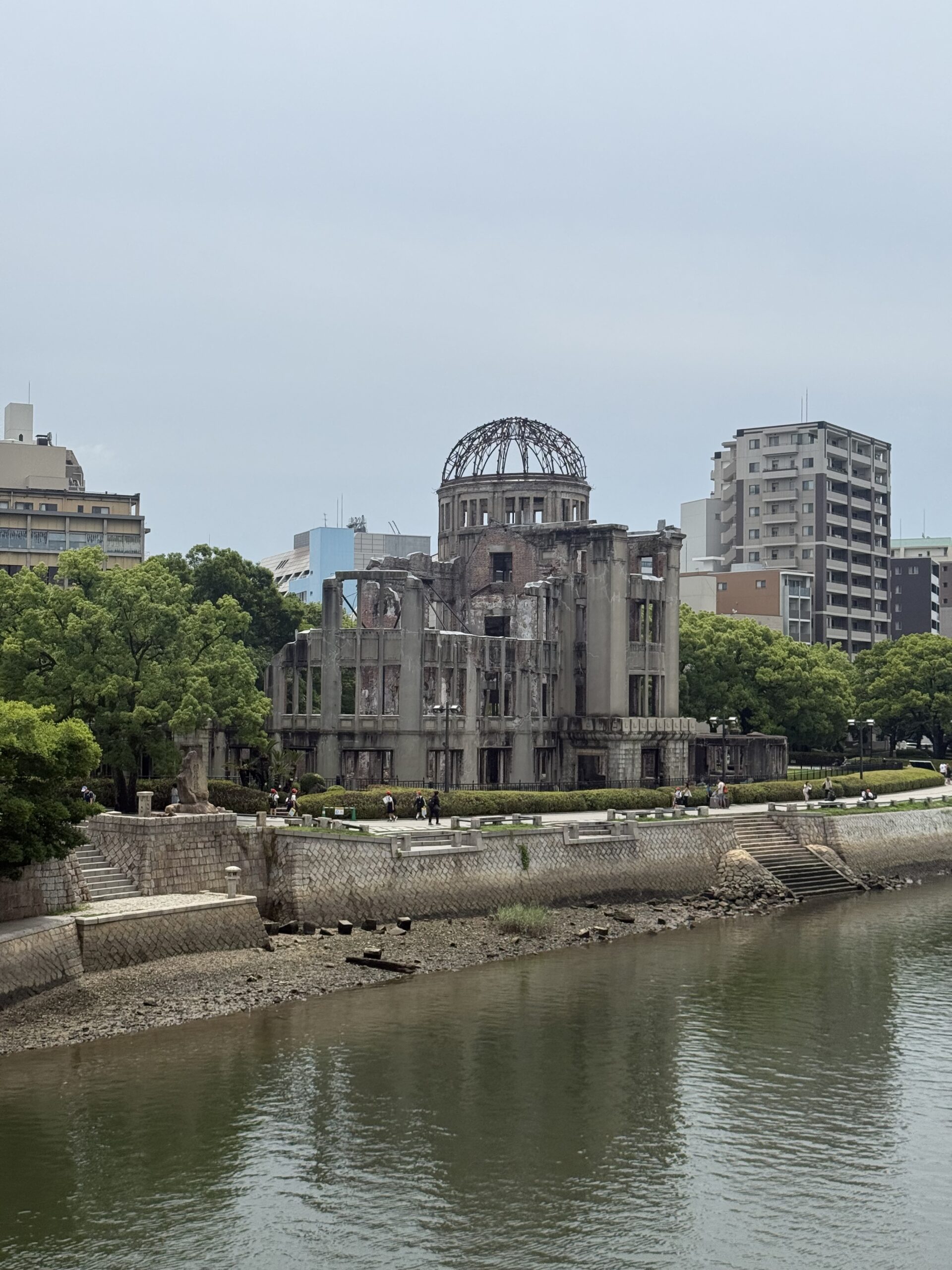
While visiting the Genbaku Dome, Michio-san told the students about Hiroko Kaiyama, who was exposed to radiation from the blast as a 1-year-old and later died from the radiation exposure at 16. Michio-san began to get emotional telling this story. Fighting back tears and choking up, he asked SJMC Japan Academic Program Director and Professor Gilbert D. Martinez to read from Kaiyama’s diary.
“I felt as if death was coming for me, as the spots on my thigh gradually turned purple like a flower,” Martinez said, quoting from Kaiyama’s diary. “Would only that painful Industrial Promotion Hall be able to tell the world about the horrific atomic bombing forever?”
He explained Kaiyama was one of the reasons why the city decided to preserve the dome, as a reminder to never forget the victims of the bomb.
Michio-san also noted that water in bottles and bowls is sometimes left at a memorial near Genbaku Dome. He explained that people who initially survived the explosion begged for water, but caregivers learned that water often accelerated their deaths.
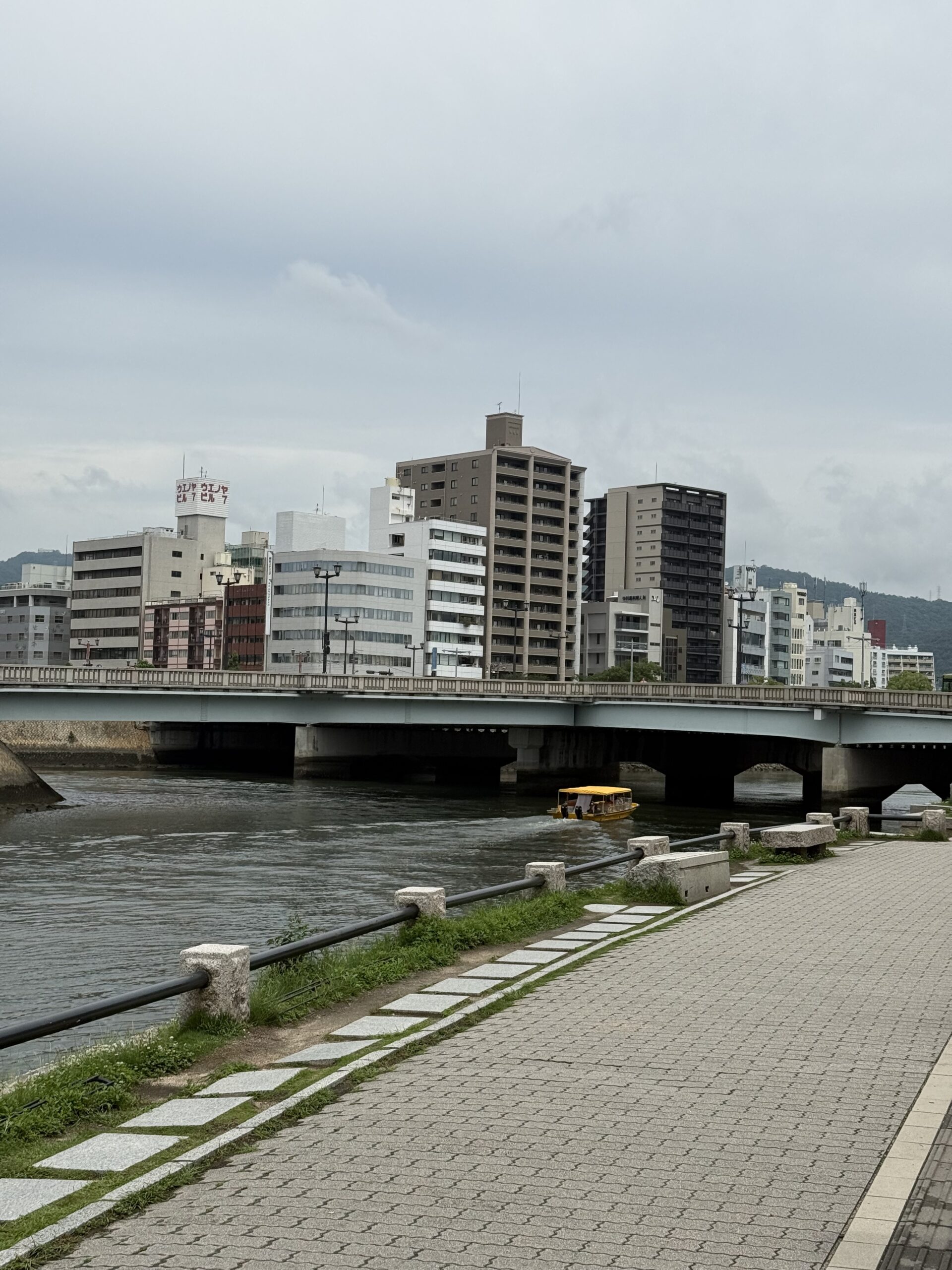
Students stood on the Aioi Bridge which American bombers targeted when they dropped the atomic bomb. The bridge was severely damaged and was later rebuilt after World War II. It has remained in the same state since then.
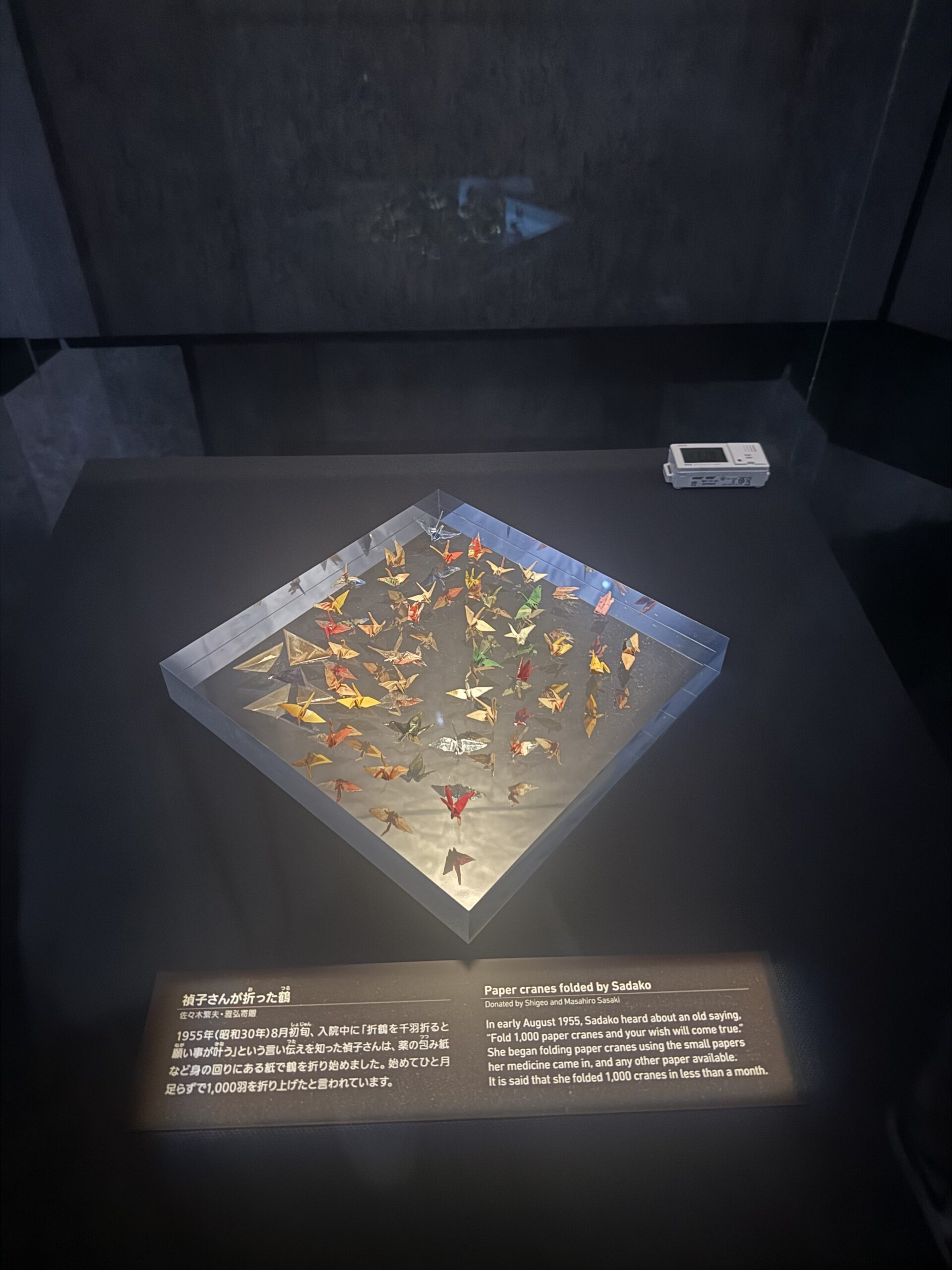
Sadako Sasaki, a young girl exposed to radiation from the bomb, died of leukemia 10 years after the blast. In her hospital bed, she folded origami paper cranes in hope of recovery. Michio-san explained that in Japanese culture, cranes are a symbol of longevity and peace. According to Japanese legend, folding 1,000 cranes would grant a wish. She made more than 1,300 origami paper cranes before she died. Sasaki’s story became an international call for peace.
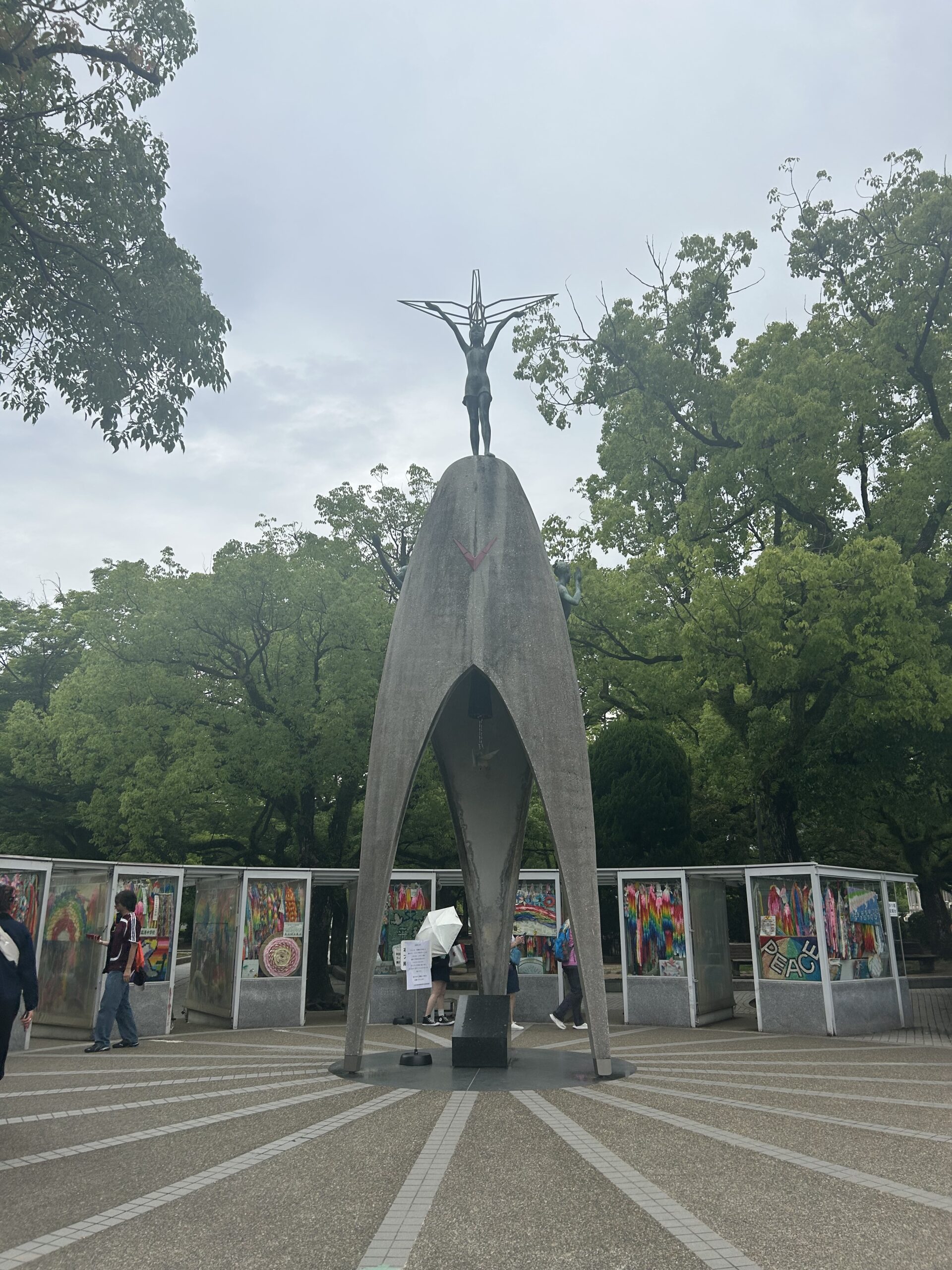
To commemorate Sasaki and the children who died from the atomic bomb and its aftereffects, the Children’s Peace Monument was built with a sculpture of Sasaki on top. At the monument, there are millions of colorful origami cranes donated from people all over the world. Some SJMC Japan students donated an origami crane to the memorial to honor the lost lives of these children.
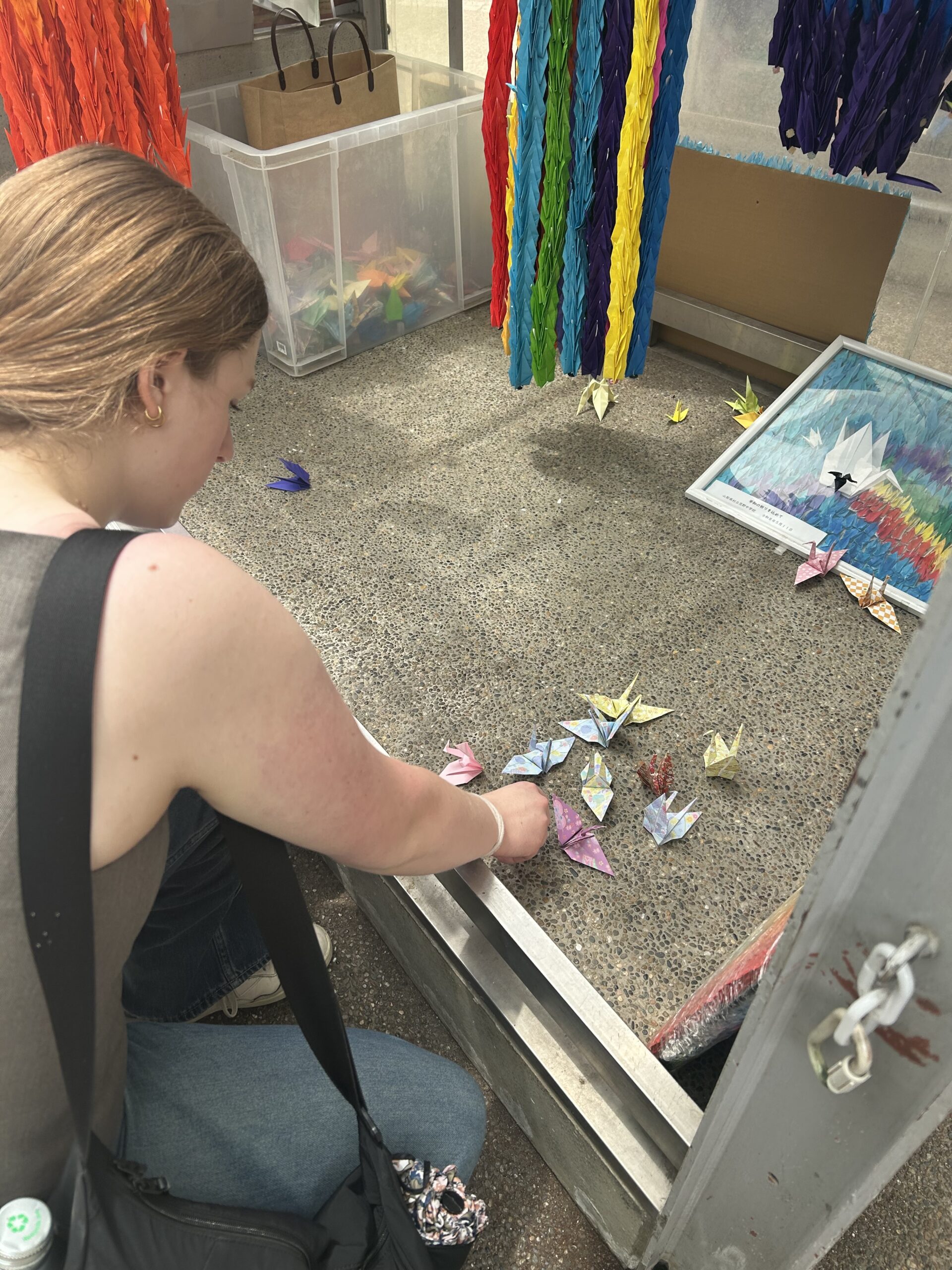
“The story of the thousand cranes means a lot to me,” said Camren Nichols, electronic media senior. “When I was younger, I had read a book about it. I knew when we came here, I wanted to donate a crane. Learning about it put the war and the bombing in perspective for me, and I was impacted on how I view this… [the United States] might’ve ‘won’, but a lot of people suffered because of it.”
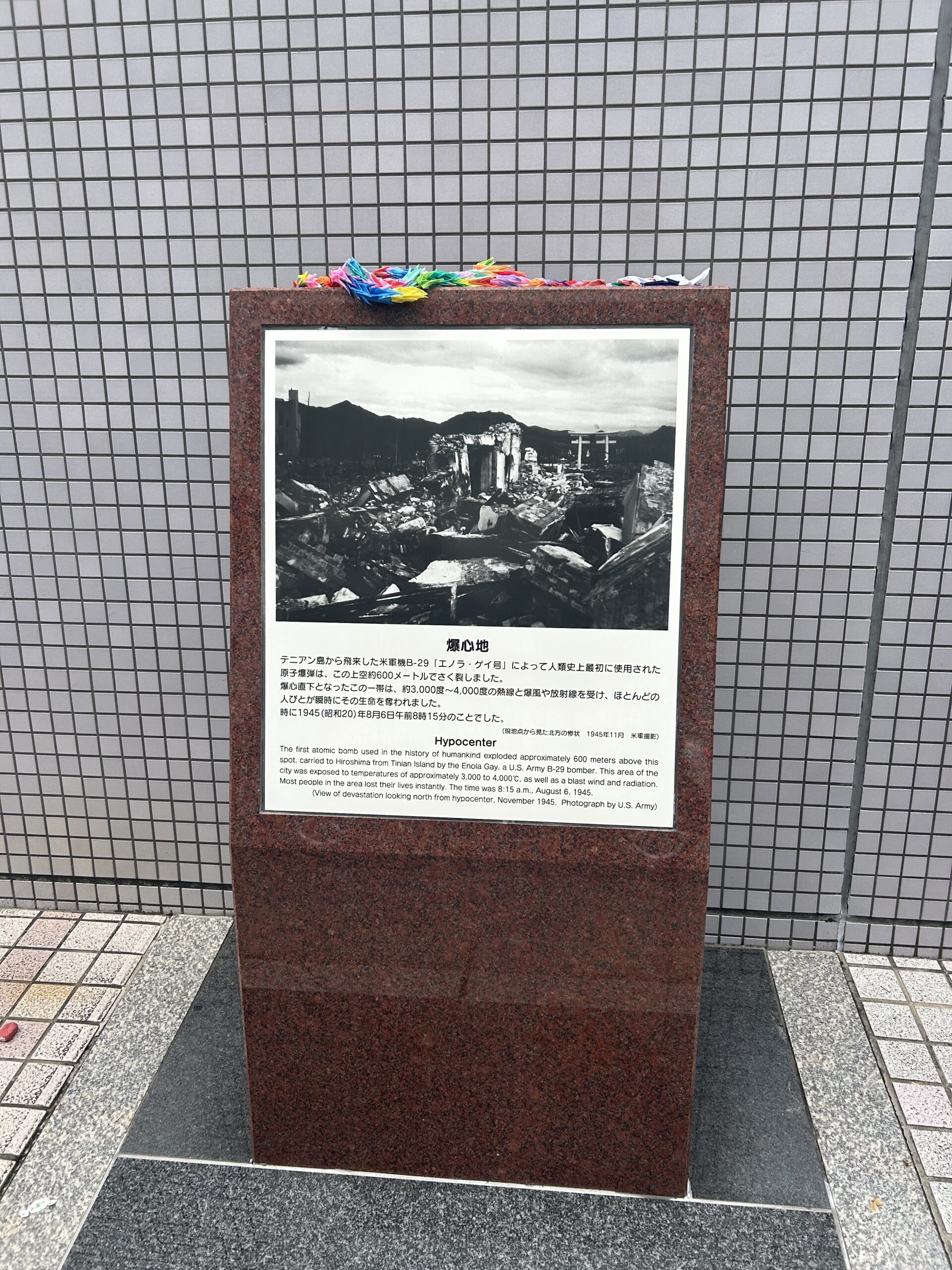
Students visited the memorial plaque right outside of what is now the rebuilt Shima Surgical Clinic, formerly the Shima Hospital, which marks the exact hypocenter of the blast. The building was destroyed and all the people inside were killed instantly. Dr. Kaoru Shima, the founder and a surgeon at the hospital, was away during the explosion but returned later that night to begin treating victims. Michio-san shared that the hospital continues to be owned by the same family today.
In Hiroshima Peace Memorial Park, there is a monument called The Flame of Peace. It is a fire sitting atop a structure that is shaped like hands with its palms open towards the sky. This flame symbolizes a world-wide effort to abolish nuclear weapons in favor of peace.

After the Hiroshima Peace Memorial Park and museum, the students headed to the last destination of the program: Kyoto by shinkansen.
Once students arrived to Kyoto and checked into the hotel, they were released for dinner and free time. Students used this time to grab a quick bite from the nearest 7-Eleven and worked on their Hiroshima travel stories due later Tuesday night.
As the SJMC Japan students get accustomed to their new hotel in Kyoto, they will continue their learning experience outside the classroom with a visit to the Kyoto Shimbun, Kiyomizu-dera and Yasaka Shrine on Wednesday.
About The Author