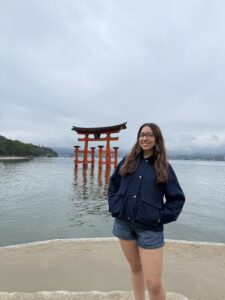
Hidden in a very mystical corner of Miyajima Island’s Mount Misen, Daisho-in Temple is a very sacred and special place for locals and tourists alike. Also known as the Ward of Misfortune, it is widely considered one of the top temples in Japan for yakuyoke kaiun, warding off evil spirits and inviting good fortune.
Daisho-in is the oldest Buddhist temple on Miyajima Island established in 806 by the revered monk Kūkai, the founder of the Shingon sect. Kukai traveled up Mount Misen and performed the purification goma fire ritual, a major Shingon Buddhist practice that purifies and connects with the divine. The eternal flame he ignited during that ceremony had once burned at Reikado Hall on the summit, a short climb from the temple, and has been maintained alive for more than 1,200 years.
However, on May 20, 2026, the Reikado Hall was destroyed by a fire. Though the fire to the hall was extinguished within two hours, this historic building was lost. According to Daishoin Temple, which has acted as steward of Mount Misen and its spiritual sites for centuries, the “Eternal Flame” was moved to another location by the temple monks and is safe. The same fire from the eternal flame was also used to ignite the Flame of Peace at Hiroshima’s Peace Memorial Park.
A special detail about the Daisho-in Temple is the kaidan meguri, a traditional Buddhist ritual where visitors descend a narrow staircase into an unlit, winding corridor beneath the temple’s main altar. Mass communication senior Celeste Montoya liked how the experience forced her to use all of her senses.
“I feel like it’s a good representation of rebirth because I had to really focus on my other senses and the next thing you know, you see the light and are back out into the world,” Montoya said.
The experience in the darkened pathway make visitors rely on their sense of touch to navigate through the path stripping away reliance on the sights of the material world.

It is said visitors have to run their left hand along the wall to find an ancient, large metal lock. Touching this key is believed to forge a direct connection with the temple’s principal Buddha, granting enlightenment and good fortune. Emerging from the inky darkness back into the outdoors is meant to simulate spiritual awakening and a clean slate.
After exiting the temple, you are taken into a little winding path full of Rakan statues with offerings surrounding them all along the trail. As silly as they may look, these statues are depicted as the original disciples of Buddha. Each stone statue was individually carved between 1780 and 1820, and no two share the same facial expression. They are particularly famous for the colorful, hand knitted caps and scarves placed on them by visitors and locals.


Daisho-in Temple is an overall very special place where one can learn and be more connected with their spirituality. Mount Misen is not just a place to take good photos for its scenery. It has a very strong spiritual presence, and the mountain is a very sacred and special place.
Miyajima Island does not have a single documented date for first opening to the public because it was historically worshipped as a sacred entity rather than a public settlement. The entire island was closed to commoners for centuries to preserve its ritual purity.
Daisho-in Temple offers an immersive, mystical spiritual experience. Far less crowded than the neighboring Itsukushima Shrine, it uniquely blends sacred Buddhist rituals, playful statues and 1,200 years of history.
About The Author