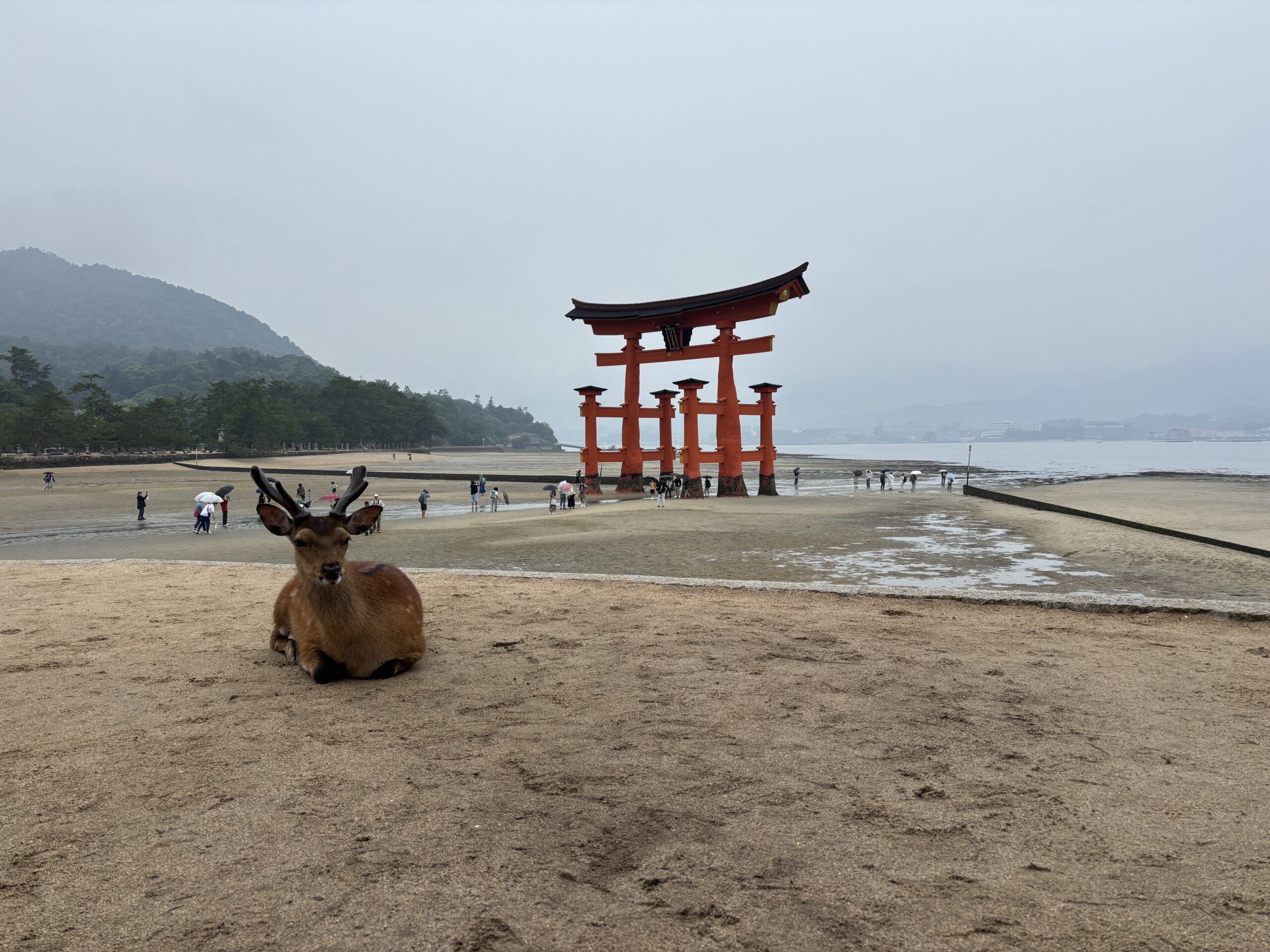
On June 9, SJMC Japan arrived on Miyajima Island by ferry. Although the sky was quite cloudy with light rain, the sight of the seemingly floating torii gate took away from all other distractions. The weather didn’t stop SJMC Japan students or other tourists from gathering near the shoreline to see one of Japan’s most famous and iconic attractions, the O-Torii Gate.

The O-Torii Gate is located off the coast of Hiroshima on Miyajima Island and is one of Japan’s most visited locations. The island is free and open to the public, and visitors are encouraged to come and learn about the history of this great gate and island. The only cost would be the short 10 minute ferry ride needed to reach the island. A round trip ticket typically costs 400 yen.
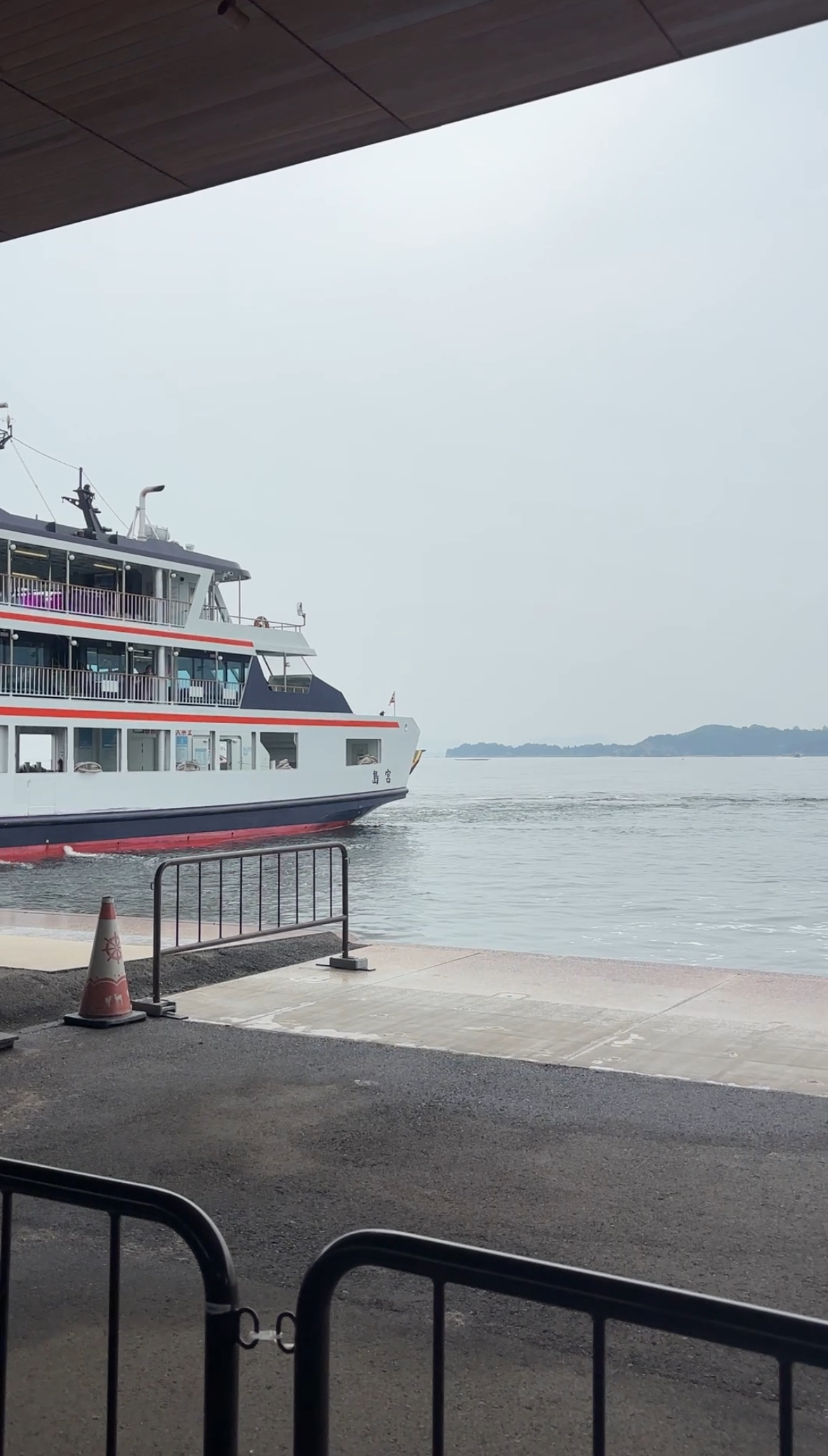
The ferry ride was short but worthwhile; one can stand by the railings and see the waves caused by the ferry. As the ferry passes by O-Torii Gate and approaches Miyajima, many take pictures and grip their phones tightly to make sure they wouldn’t drop them into the sea. The wind blows through one’s hair and the smell of salt in the air really enhances the experience. From the boat, tourists could already see O-Torii Gate in the distance, which only added to the anticipation of getting a closer look on the island.

Upon arriving on Miyajima, a short walk leads to the entrance of Itsukushima Shrine, another one of Japan’s popular attractions. Tourists are greeted by native Japanese deer, who follow along closely, trying to eat bags and clothing!
After passing through the entrance, tourists are stunned by a breathtaking view of the O-Torii Gate that seemingly appears to be floating in the sea. This torii gate is considered special because it is not a regular gate; it is known as the Grand Torii. It stands in front of Itsukushima Shrine, which is sacred ground. No one was allowed to be born or buried on the island to preserve its purity, and even today that rule remains in place to maintain its spiritual sanctity.

What sets this torii gate apart from any other in Japan is its unique location in the water. During high tide, the base of the gate is submerged, giving it the illusion of floating. This design is not only outstanding but it symbolizes the boundary between the human world and the the “pure land” that is for the gods.
During low tide, the water recedes, and visitors can walk across the beach right up to the gate’s base and touch it. On a recent visit, low tide occurred in mid-afternoon, so tourists planned accordingly.
On SJMC Japan’s visit, Academic Program Director Gilbert D. Martinez, graduate student Angie Vasquez and I timed it just right. We were able to walk up to the gate. It was even more beautiful up close and larger than expected. We could see the algae and plants that clung to the gate’s legs from when the high tide had covered them. It was truly a beautiful experience.

SJMC Japan felt truly grateful for the chance to experience the O-Torii Gate. Of all the temples and shrines we visited, this torii gate stood out the most to me.
The O-Torii Gate looked magical in the water, and the atmosphere with the deer roaming, the smell of the ocean and the breeze in my hair made it feel even more special.
For those who planning a visit to Japan, Miyajima and its Grand O-Torii Gate are a must see!
About The Author