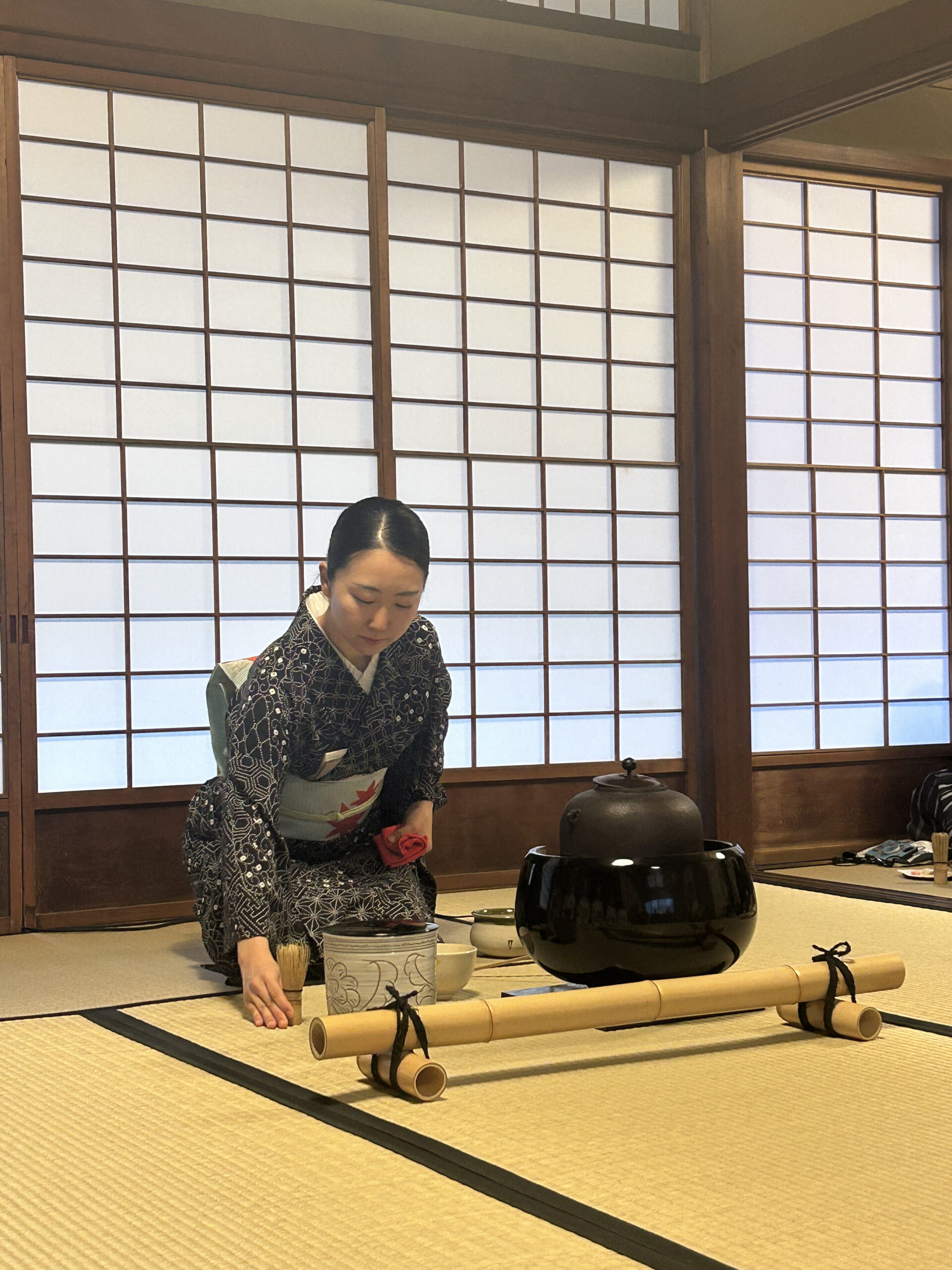
In a quiet tatami matted room, the sound of a gentle bell rings as the hostess begins her cleansing, signaling the start of the ceremony. Every gesture is precise as she whisks the matcha, the silence meaningful as guests dressed in traditional kimonos watch quietly, fully immersed in the moment.
The Japanese tea ceremony is more than the simple act of preparing and drinking tea. It is a deeply meditative tradition that reflects centuries of philosophy, artistry and cultural identity. Influenced by Zen Buddhism, the ceremony is guided by four core principles: harmony, respect, purity and tranquility. Each of these values contributes to the atmosphere of balance and mindfulness.
The origins of the Japanese tea ceremony date back to the 9th century, when tea was introduced to Japan from China. What started as a tool for monks to aid rituals, turned into an elite practice for Japan. In the beginning, the rich were the only people with access to these ceremonies, using gold utensils and flaunting their riches. It wasn’t until the 15th century, under the influence of tea master Sen no Rikyū, that the ritual became what it is now. The tea master revolutionized the ceremony by emphasizing simplicity and spiritual depth over extravagance.
Matcha is the traditional tea made during the ceremony, with many health benefits and thought to be good for the mind, body and soul. Originally used in China for health benefits, matcha was brought to Japan and quickly became one of the most popular items in not only Kyoto but the world. As you travel through Kyoto, it is very common to find matcha cafés, desserts and foods outside of the traditional tea ceremony.
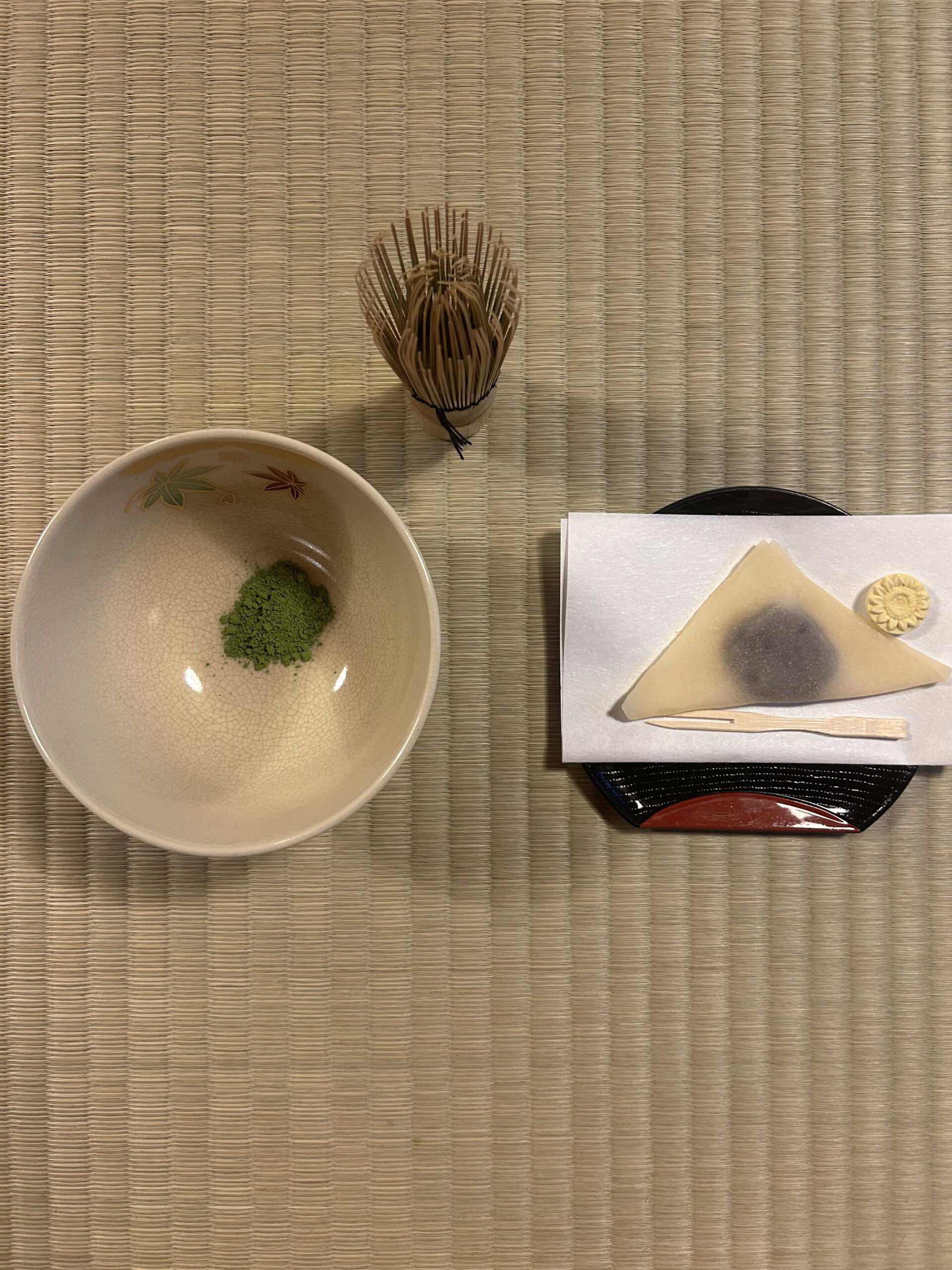
Throughout the tea ceremony, you will quickly notice that this is a quiet practice. The hostess encourages guests to appreciate the simple sounds of boiling water, whisked matcha and rustling of movement, making guests mindful of the moment and the surrounding peace. Before learning to make your tea, sweet snacks will be provided to complement the matcha. Matcha is normally strong and bitter on its own, so eating a higashi, a dry sweet made with 99% sugar, will keep a sweet taste in your mouth as you enjoy the tea.
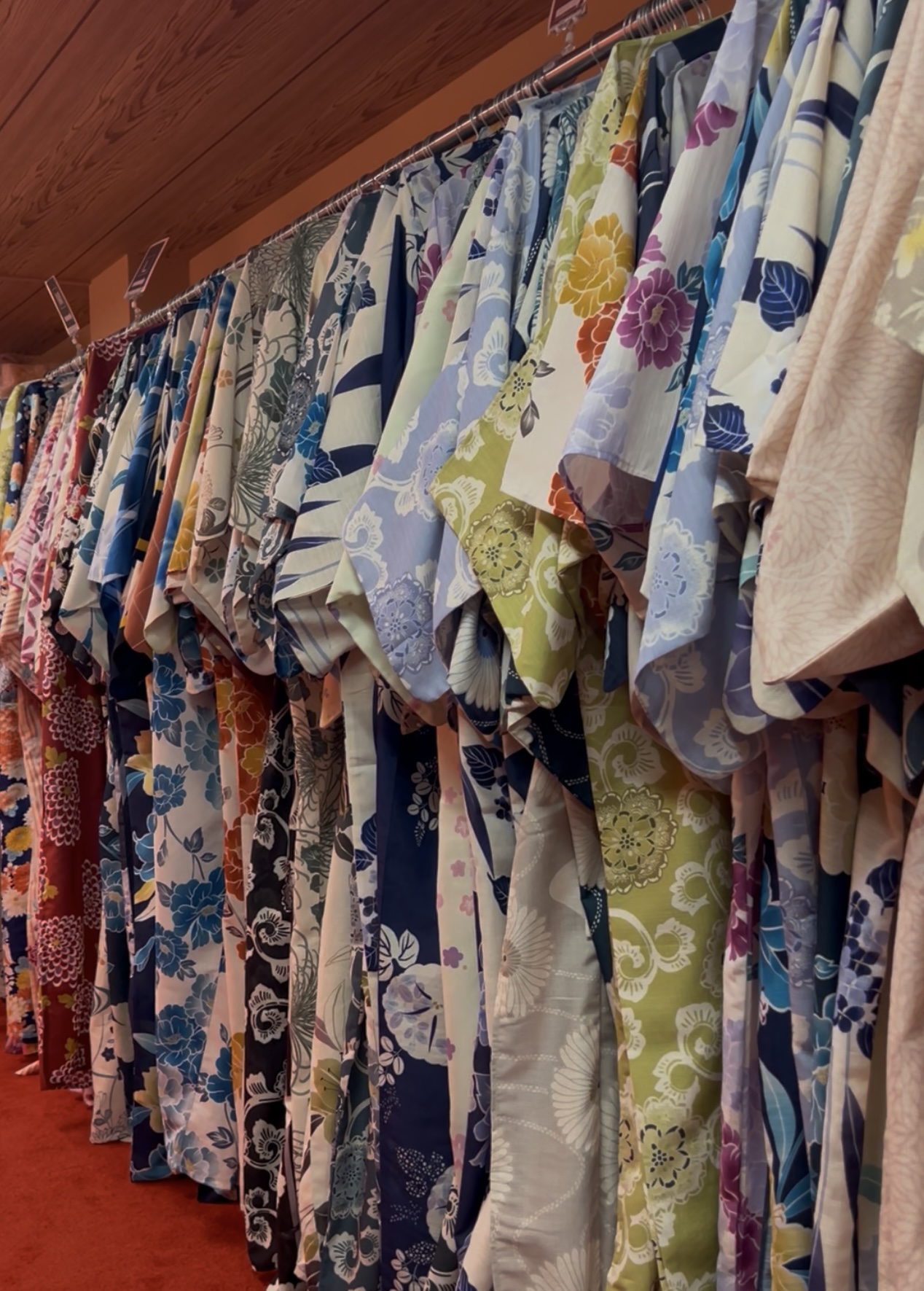
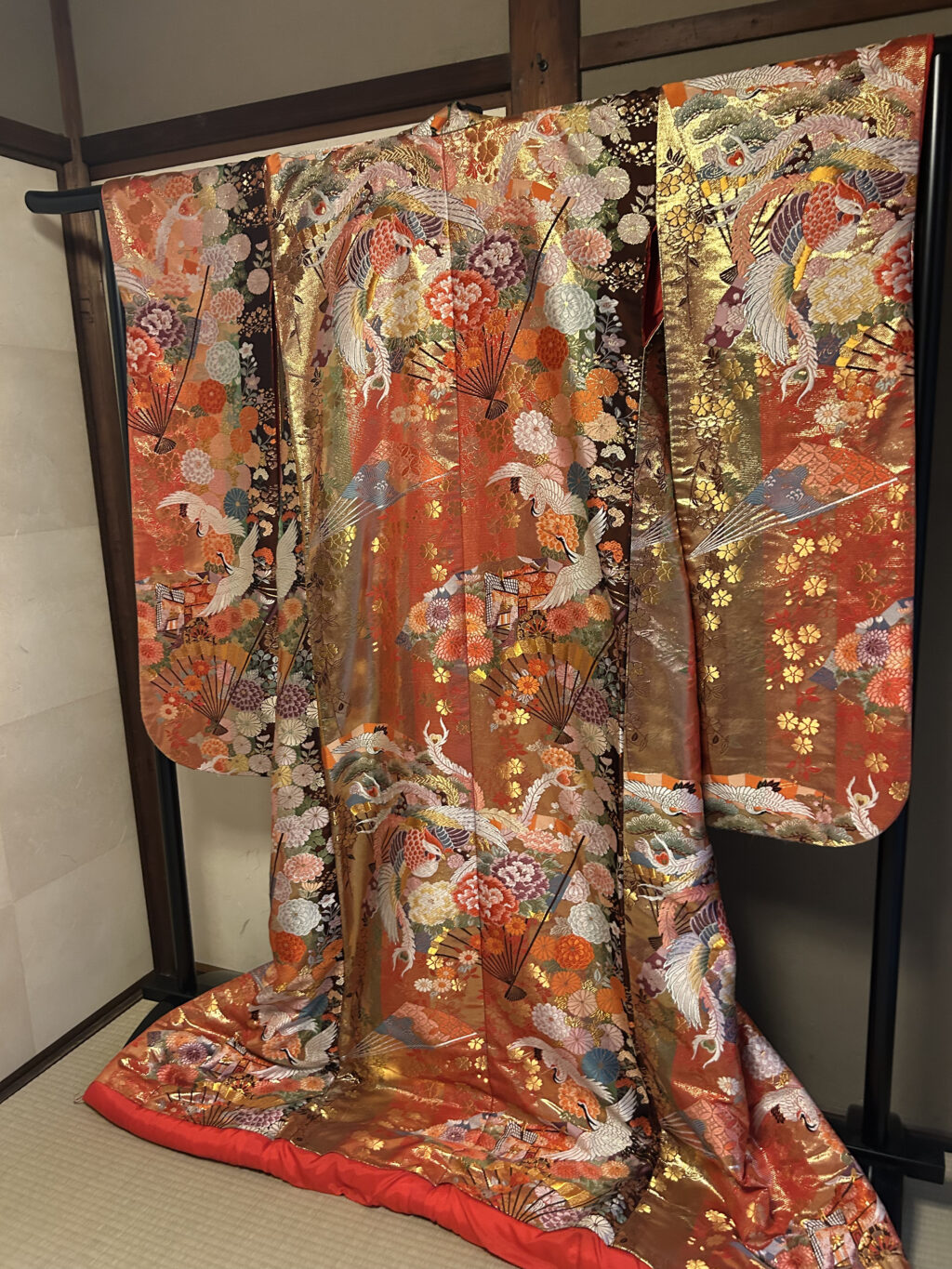
When participating in the tea ceremony, one can often wear a kimono, Japan’s traditional garment which complements the aesthetic of the practice in both form and spirit. The kimono has a history as layered as its fabric, evolving from a Chinese garment to a reflection of social status and finally becoming a wardrobe for celebration and special occasions.
The hostess emphasizes this experience as being one moment in time. Although people may meet many times, every moment is precious and should be appreciated. Losing focus on the past and future, you are asked to only think about the present. This healing experience calms nerves and lets you take the time to slow down from the normal fast-paced environment around you.
Wrapped in the timeless folds of a kimono, you do not simply witness tradition within the ceremony but become a part of it.
About The Author