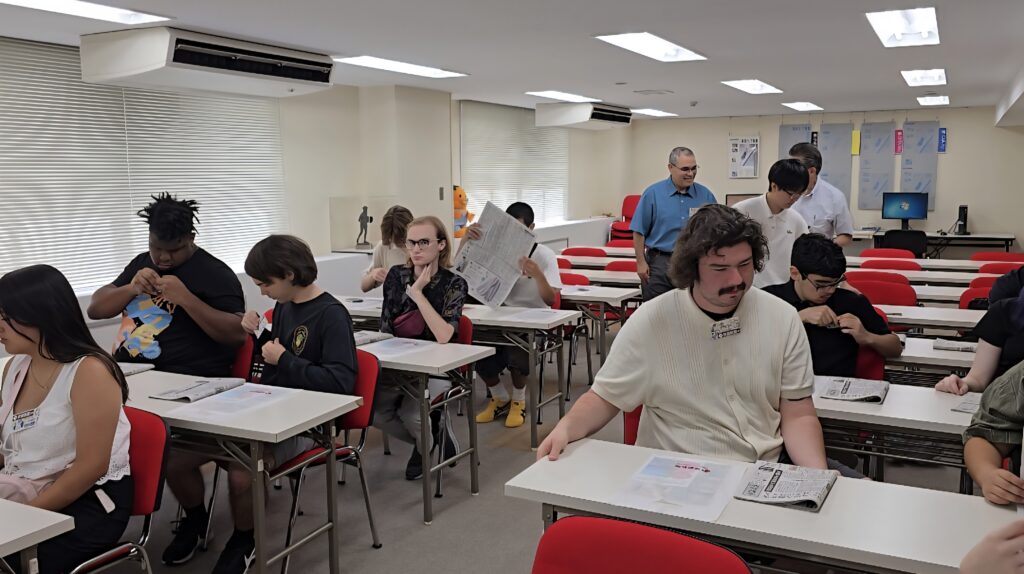
Though vastly different in size and reach, The Wall Street Journal and the Kyoto Shimbun demonstrate how newspapers adapt their reporting to serve unique audiences while also confronting very different challenges.
The WSJ is the largest newspaper in the United States by print circulation, with Asian and European editions extending its reach to a global audience. As of June 2024, the newspaper has over four million paying subscribers. In contrast, the Kyoto Shimbun, a regional newspaper in Japan, prints 310,000 copies each morning for the Kyoto and Shiga prefectures and 90,000 in the evening. Despite these differences, both newspapers share a commitment to delivering timely, relevant and in-depth stories.
Based in New York City, The Wall Street Journal specializes in business and finance. The Tokyo bureau plays a vital role in reporting on Japan’s economy, industry trends and major corporations like Toyota and Sony. Its coverage helps connect developments in Japan to global financial markets and geopolitical shifts, especially given its proximity to China, the world’s second-largest economy.
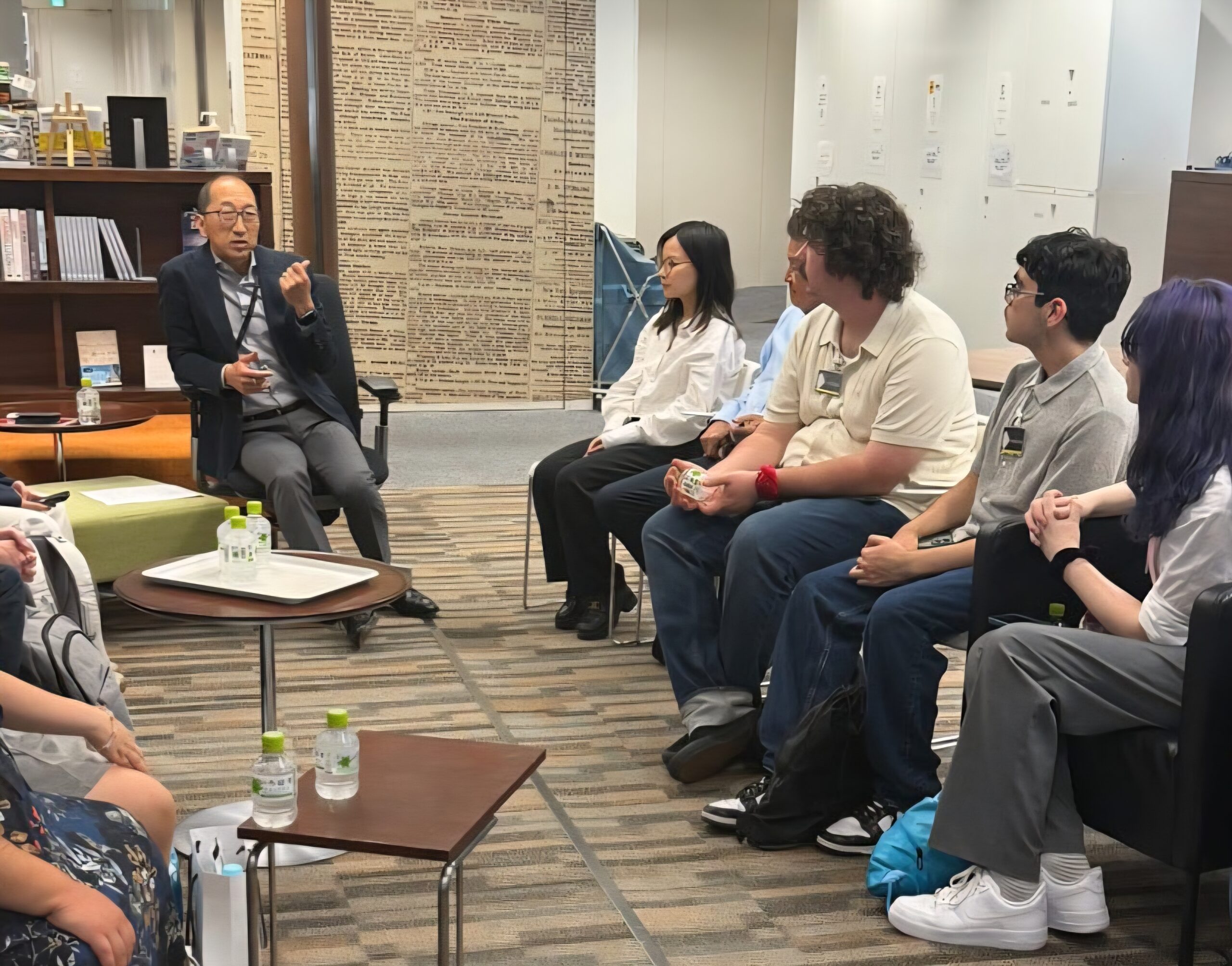
George Nishiyama, managing editor for the Tokyo bureau of the WSJ, has been bridging the gap between United States and Japan since he was a child. Born in Japan but raised in the U.S., Nishiyama grew up hopping back and forth. This is reflected in his journalistic career, as he’s written from English to Japanese and vice versa.
“I wouldn’t say it’s about being bilingual,” Nishiyama said. “It’s being bicultural more than anything.”
He said he always knew that he was going to go into journalism, but his vision of being a TV news ambassador gave way to the allure of investigative reporting. After 18 years at Reuters, Nishiyama joined the Tokyo bureau of The Wall Street Journal. There, translating is a constant practice, as news coverage travels overseas in addition to the Japanese audience, but that’s not the only process different from the typical newspaper.
“A news wire’s focus tends to be on straight news, being fast—faster than others,” Nishiyama said. “Whereas The Wall Street Journal, it’s more about analyses and longer stories.”
One such story was a multimedia feature Nishiyama created in 2014 about a high school baseball pitcher who defied traditional nagekomi, the Japanese training method of throwing hundreds of full-speed pitches daily to build up the pitching arm. The athlete’s decision to attend a public school, knowing it would hurt his chances of going pro, led to a powerful narrative of resilience and determination.
“The baseball story that I touched on, that was like a dream job—just committing to that story,” Nishiyama said. “Because for journalists, especially in news wires—it’s very busy, very fast-paced. One story to another.”
For Mr. Kubota, a journalist for the Kyoto Shimbun, interacting with sports players is a regular occurrence. However, working on tight deadlines leaves little room for long-form storytelling.
“For breaking news, I write it, and then send it right away,” Kubota said. “If I need to add more information, then I will add it after the breaking news is already out.”
Working for a regional paper means he must wear many hats to cover a story. As his own photographer, interviewer, writer and editor, Kubota spends more time out in the city than he does at the office. With all the different tasks he interacts with, research is a frequent task.
“Do not hesitate to learn and study as many things as possible,” Kubota said. “I studied Chinese history in university, but I was asked to write an article about a scientific topic. Being a journalist, we don’t know what topics we’ll be asked to write, interview or report, so in that sense, we study and learn many things.”
There are some assignments, however, that defy preparation. Mr. Kubota explained that one of the hardest parts of the job is having to talk to a victim.
“Of course, I cannot prepare anything for accidents, so I go there and then ask the victims or the witnesses what they saw,” Kubota said. “Going to the scene, past the officers, seeing them by the disaster…I cannot do any preparation for that interview.”
Whether it’s consoling a grieving citizen or writing stories for an audience across oceans, the Kyoto Shimbun and the Tokyo bureau of The Wall Street Journal face different obstacles in their journey to print meaningful stories. Despite that, the fundamental principles of networking, interviewing and investigating remain the same. Therefore, Nishiyama advises students to not only secure internships and real-world experience, but to hone their mind and journalistic instincts.
“I think what we really recognize in the interns is their difference in curiosity and always looking for things,” Nishiyama said. “Not being passive, but active.”
Mr. Kubota echoes the sentiment by urging young journalists to open their minds to new experiences and perspectives.
“Be sure to keep many interests,” Kubota said. “Travel overseas and see many different cultures, feel different cultures. You never know what you may write about.”
Ultimately, whether covering global economies or local characters, journalism thrives on inquisitiveness, compassion and hard-work, principles that unite WSJ’s Tokyo bureau with the Kyoto Shimbun in their mission to tell stories that matter.
About The Author