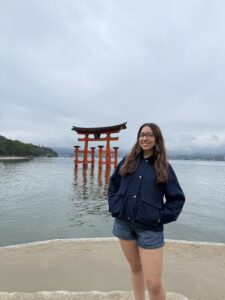
Through the fog and light rain, as the ferry glides through the waters of the Seto Inland Sea, you can begin to spot a glorious red gate that appears to be standing tall on the approaching island.
As one of the most recognizable landmarks in Japan, the Floating O-Torii Gate stands at about 55 feet tall. Even from a distance, the O-Torii already feels like a powerful symbol of Miyajima Island. Just behind the gate stands one of Japan’s most important and beautiful places: Itsukushima Shrine.

Miyajima Island directly translates to shrine island and gains its fame and name from Itsukushima Shrine. In 1168, Taira no Kiyomori was known as the most powerful man in Japan around the end of the Heian period. Once he saw Miyajima Island, he knew it was the place he would choose to build Itsukushima Shrine, which then became the home and site of his family’s shrine. The shrine is located on a small inlet, unlike the torii gate, which lies out in the Seto Inland Sea. The shrine was built over water to continue to preserve the island’s sacredness. Itsukushima Shrine exemplifies the Japanese belief in harmony between nature and human creation.
Just less than an hour from Hiroshima by train and ferry, the Itsukushima Shrine was registered as a World Heritage Site in 1996. The uniqueness of the shrine lies in the above-water design that deepens the connection between nature and the human experience. The changing tides play a large part in the design of the shrine, creating two very different immersive experiences as you walk through the beauty of the Itsukushima Shrine.
Stepping off the ferry during low tides gives you a chance to walk all the way up to the O-Torii Gate for a more up-close experience. Depending on when you arrive, the longer you stay, the higher the tides may rise, allowing you to see the “floating on water” illusion that the O-Torii Gate is known for. Advertising senior Austin Barwegen said he noticed the uniqueness of the viewing experience compared to other shrines, making it stand out on the trip so far.
“You get to see that when the high tide comes in,” Barwegen said. “It’s sitting upon the water. I think it’s a great view.”
Acting as a spiritual threshold between the human world and the realm of the gods, the O-Torii Gate holds a great significant connection with the Itsukushima Shrine. The position of the gate shows the sacredness of the entire island. It acts as a divine boundary that purifies the visitors of the island and also protects the shrine from outside negative forces.
Prayer is a large aspect of the Itsukushima Shrine. Safe travels, protection from misfortune, business success and good fortune are some of the most common blessings asked for by visitors. Upon arrival, you may be lightly tapped on the head by a prayer stick called a shide, which are wands made up of zigzag white paper streamers used by Shinto priests for purification processes (or exorcisms) to bless individuals or spaces. The shrine also practices private formal blessings or “gokito” by a formal request through the shrine for a more personal religious experience.
The combination of history, natural beauty and spiritual significance make the shrine feel unlike any place Japan has to offer.
Standing on the shrine’s wooden platform, it was easy to see why the Itsukushima Shrine has brought in so many visitors for generations.
As the afternoon went on, the tide slowly returned to high tide, and the O-Torii Gate once again appeared to float on water.
While standing on the shrine’s walkways looking out at the beautiful Seto Inland Sea, surrounded by all the nature Japan has to offer and centuries of history, it was easy to understand why Itsukushima Shrine remains one of Japan’s most treasured landmarks.
About The Author