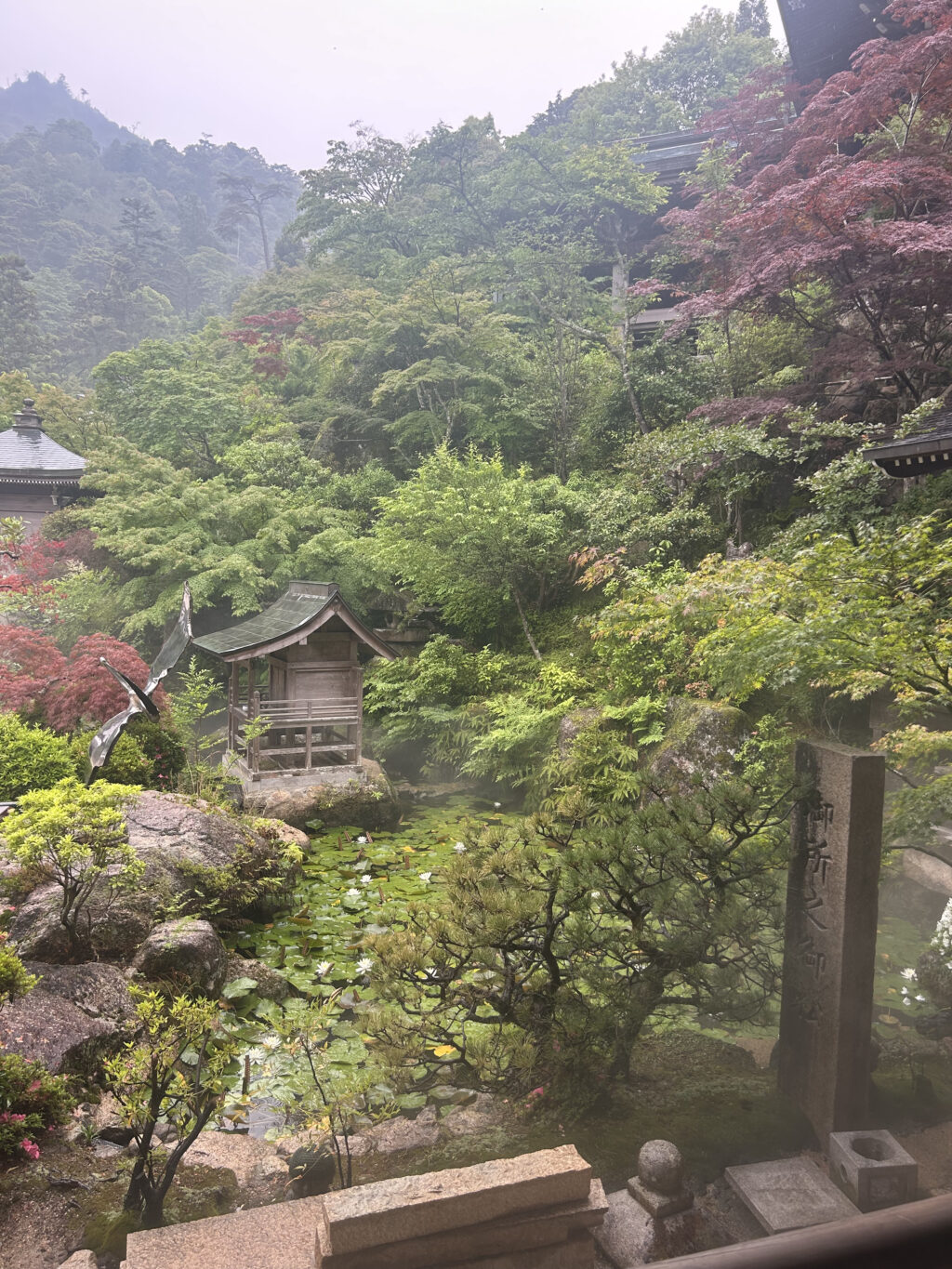
Nestled into the steep slopes of Miyajima Island’s iconic mountain, Mount Misen, is Daisho-in Temple. Ggreeting its visitors with a beautiful aroma of incense and the sound of the Daisho-in bell ringing, itis more than a place of worship. It is a quiet, spiritual playground where centuries of Buddhist devotion lie.
Dating to 806 A.D., the Daisho-in Temple is one of the most historically significant temples in the region. It was founded by Kobo Daishi, or Kukai, the revered monk who brought Shingon Buddhism to Japan. Kukai climbed Mount Misen and performed the purifying Goma fire ritual, a central practice within Shingon Buddhism that is a rite for purification and divine connection. The eternal flame he lit during that ceremony still burns at Reikado Hall near the summit, a short hike from the temple, kept alive for over 1,200 years. This fire also was used to start the Flame of Peace at Hiroshima Peace Memorial Museum.
Despite being overshadowed by its famous neighbor, the floating O-Torii gate of Itsukushima Shrine, Daisho-in offers a deeper and more personal spiritual experience. While Itsukushima Shrine opens in grand fashion onto the sea, Daisho-in nestles into the mountainside, asking not to be seen, but to be felt.
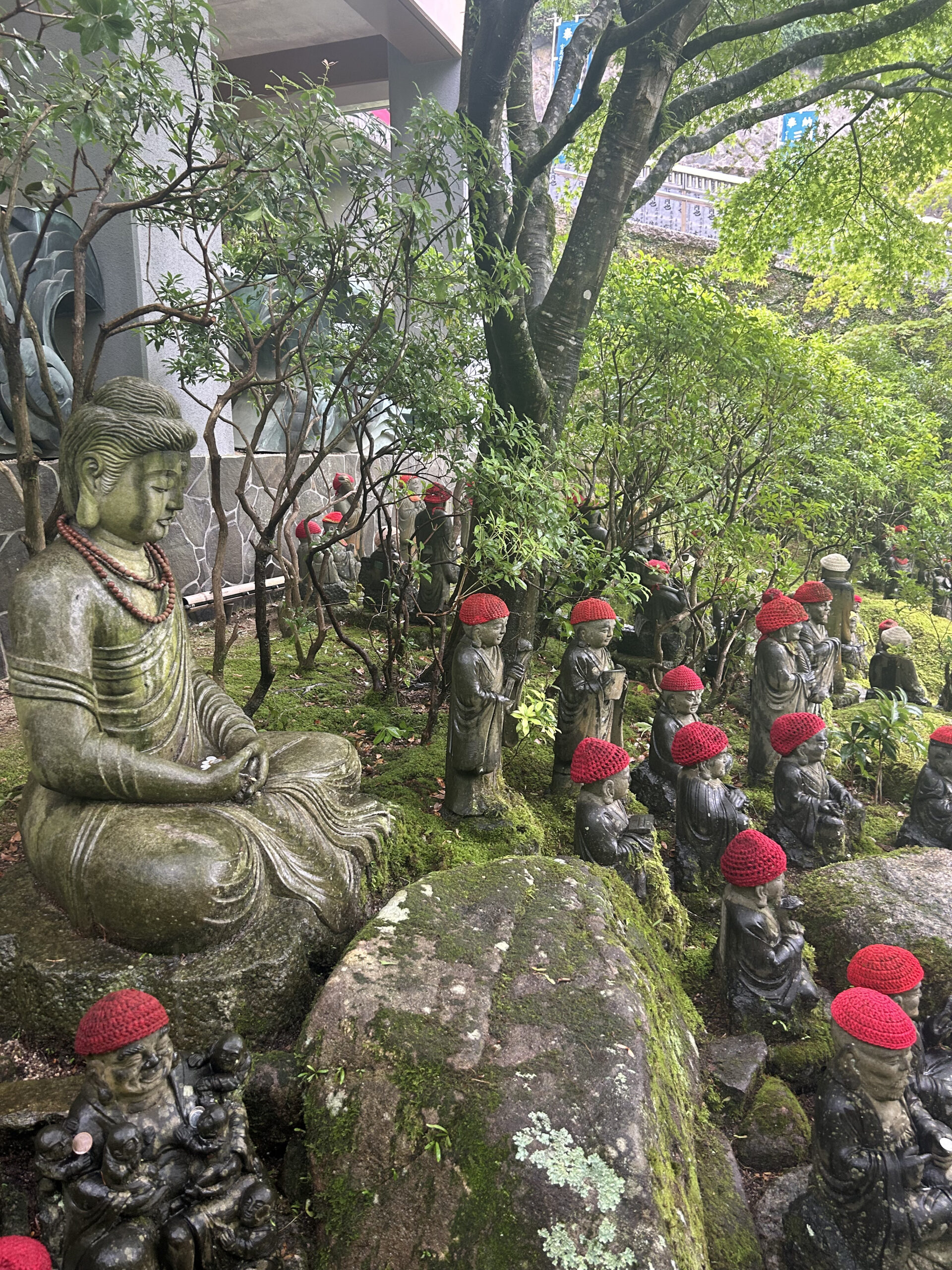
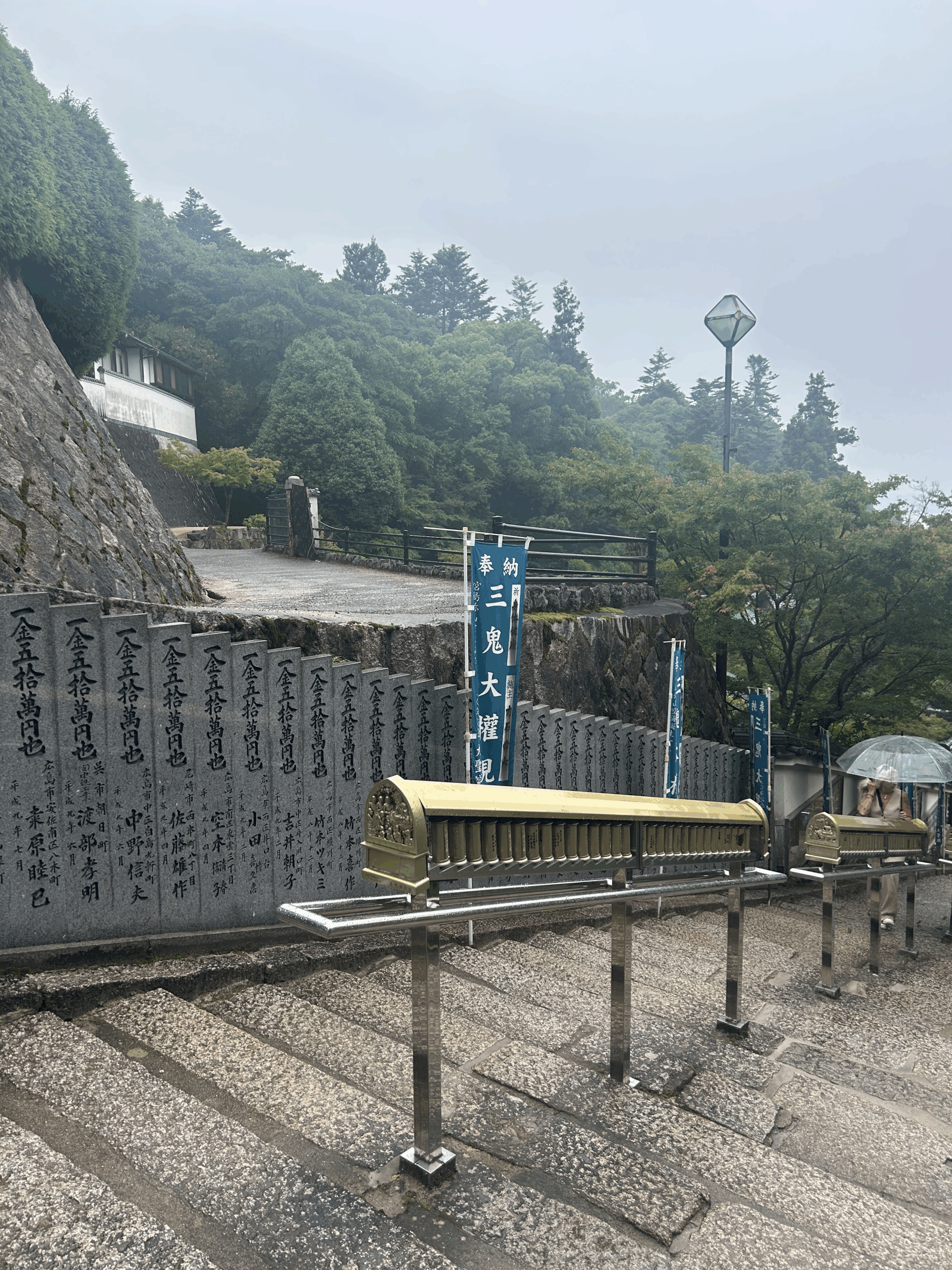
Along the path to the main hall, hundreds of Rakan statues line the path, each with a different facial expression. Some have witty faces and tiny, knitted caps or scarves. As you walk up the stairs leading to the entrance, prayer wheels at your feet spin with the touch of a hand; each rotation is believed to send out a wave of blessings.
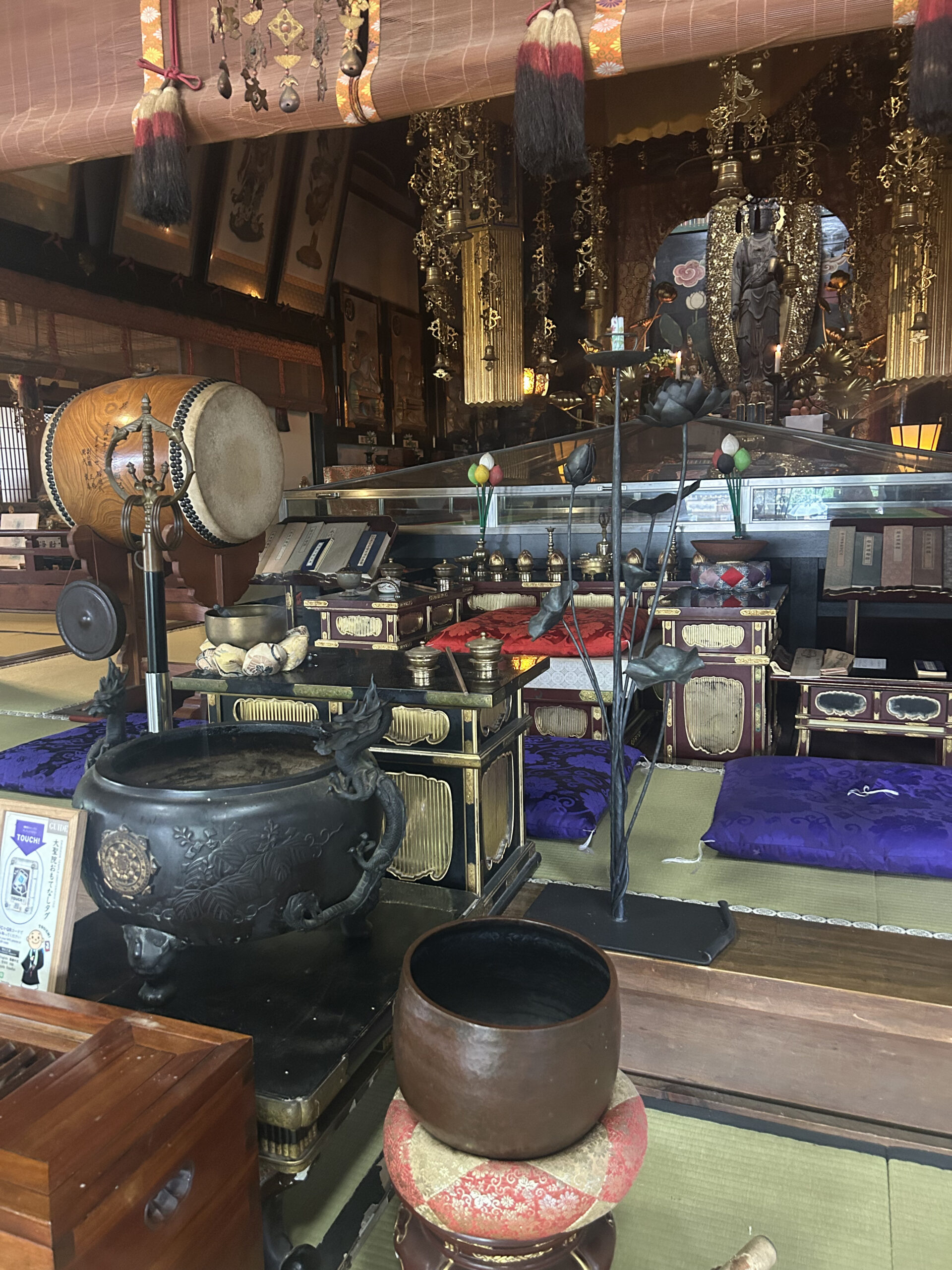
Daisho-in Temple lives up to its name with the unique experiences to be had within the worship grounds. As Rakan statues grin from behind their red bibs, you may remove your shoes and walk through the sacred temple, finding many prayer and worship areas, as well as a pond that is occasionally covered with the eerie mist of the mountain.
Before leaving the temple, follow the steps down a steep passage, leading you to Henjoukutsu, or rebirth tunnel. As you descend into this dim corridor, you walk in peaceful darkness before emerging into the light. This experience is meant to represent spiritual rebirth or enlightenment. With the heavy air and still darkness, you invite silence and reflection. Tour guide Michio Akutsu explained that it is best to feel the left side of the wall when navigating the tunnel, in hopes of finding the key to enlightenment. This practice was both thrilling yet peaceful, leaving you with a fresh feeling once you reached the end.
“Feel the wall for the key as you make your way through,” Akutsu said. “If you are lucky enough to find the key, good luck and enlightenment will come to you.”
Mount Misen, rising 535 meters above sea level, is not just a scenic backdrop; it’s an active spiritual presence. The entire mountain is considered sacred, inhabited by ancient forest spirits and watched over by the gods. Wild Sika deer wander its wooded paths, and mysterious mists linger on its surface even during bright and sunny days.
The land around Daisho-in has always been treated with respect. Miyajima itself was so sacred that until the 19th century, commoners were forbidden to give birth or be buried on the island to preserve its purity.
Daisho-in isn’t just a stop on a tourist map; it’s a soul checkpoint. Whether you come for history or just a moment of quiet, you leave changed, reborn even, in your own way.
About The Author