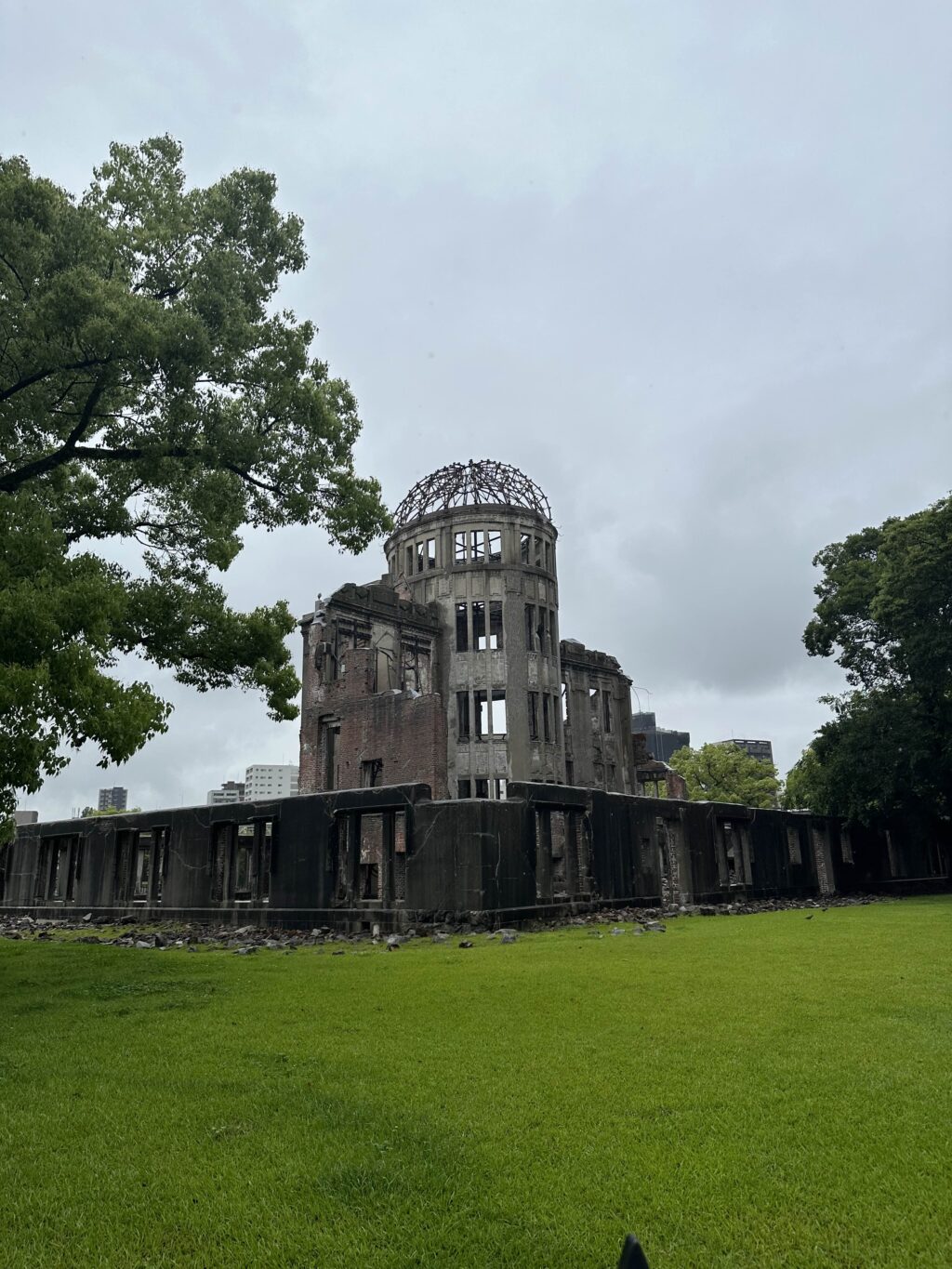
The Atomic Bomb Dome
Built directly over the original target of the atomic bomb dropped on Hiroshima on Aug. 6, 1945, the Hiroshima Peace Memorial Park now holds the memories of the victims from that horrifically destructive day. The park now stands as a strong commitment to worldwide peace and nuclear disarmament.
The hypo-center, where the atomic bomb was detonated, was located 240 feet away from where the bomb was initially aimed. The fireball completely consumed Shima Hospital directly beneath and pulverized the entirety of Hiroshima’s central area, instantly killing 140,000 innocent victims. Subsequent deaths from radiation sickness, or A-bomb disease, brought the number of victims to 220,000 in Hiroshima alone. The death count has continued to rise years after the initial explosion. Cancer, reproductive problems and other health complications have affected victims exposed to the bomb for decades.
It’s a privilege to visit the Hiroshima Peace Memorial Park when staying in Hiroshima. The site is remarkably beautiful; the information placards and curated museum exhibits convey a tangible sense of the events on Aug. 6. It’s an emotionally challenging and unforgettable experience that permanently alters visitors’ perspectives of the atomic bomb.
The Atomic Bomb Dome, originally known as the Hiroshima Prefectural Industrial Promotion Hall, was the one building left standing in the hypo-center after the bomb exploded. Now an UNESCO World Heritage Site, the Atomic Bomb Dome is reinforced with new materials to maintain its structure and preserve its memory. The Peace Emblem and Red Bird Monument are located near the structure. Offerings of water to the victims of the atomic bomb are left on the Peace Emblem, a way of paying respect to those who called out for water they could not have after being burned.
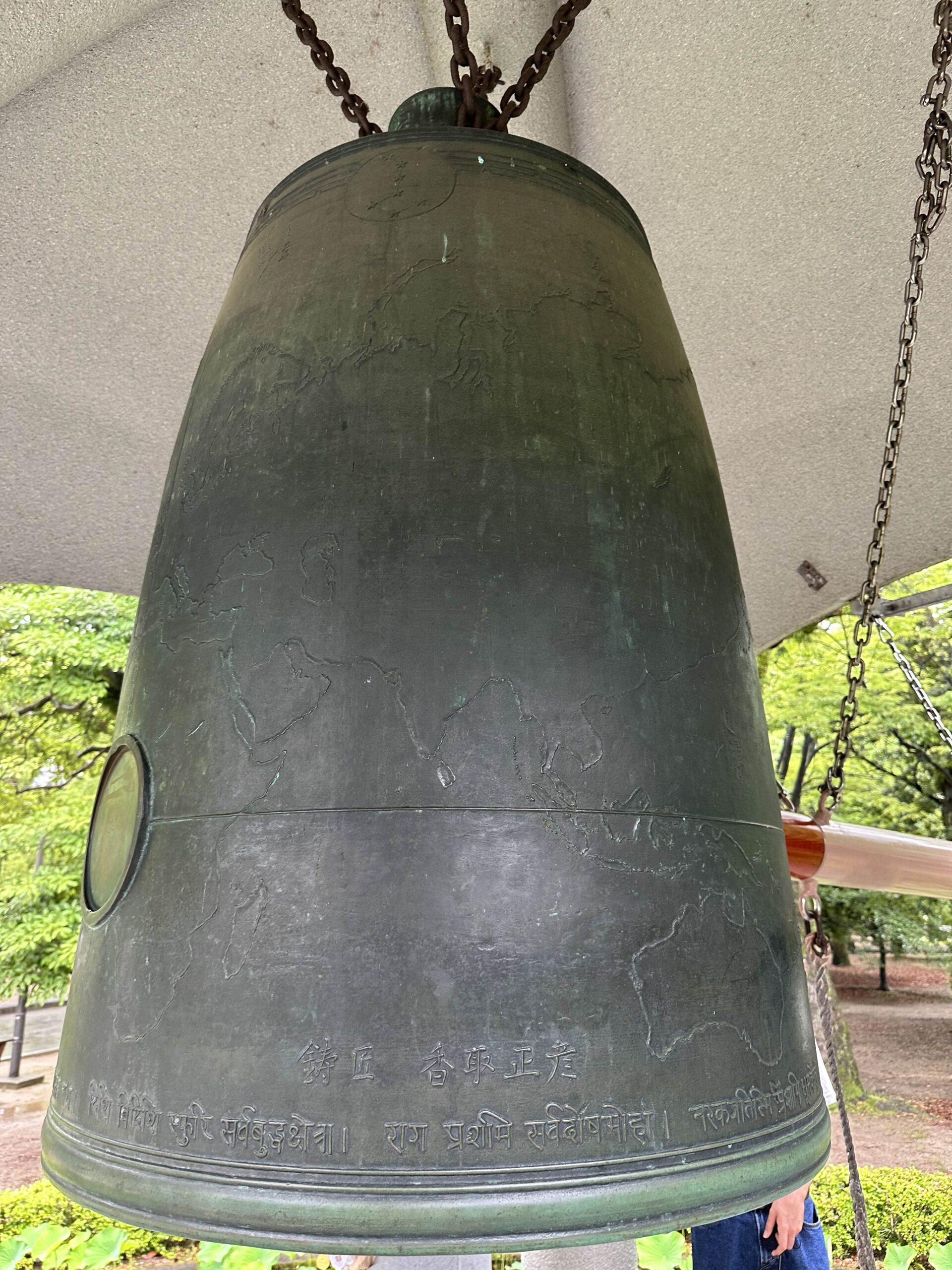
The Peace Bells at Hiroshima Peace Memorial Park are rung gently. The bell-ringer impacts a symbol of an atom, representing a commitment to de-nuclearization world wide. A pond of lotus flowers surrounds the bells, representing the many ways victims of the atomic bomb attempted to bandage their wounds.
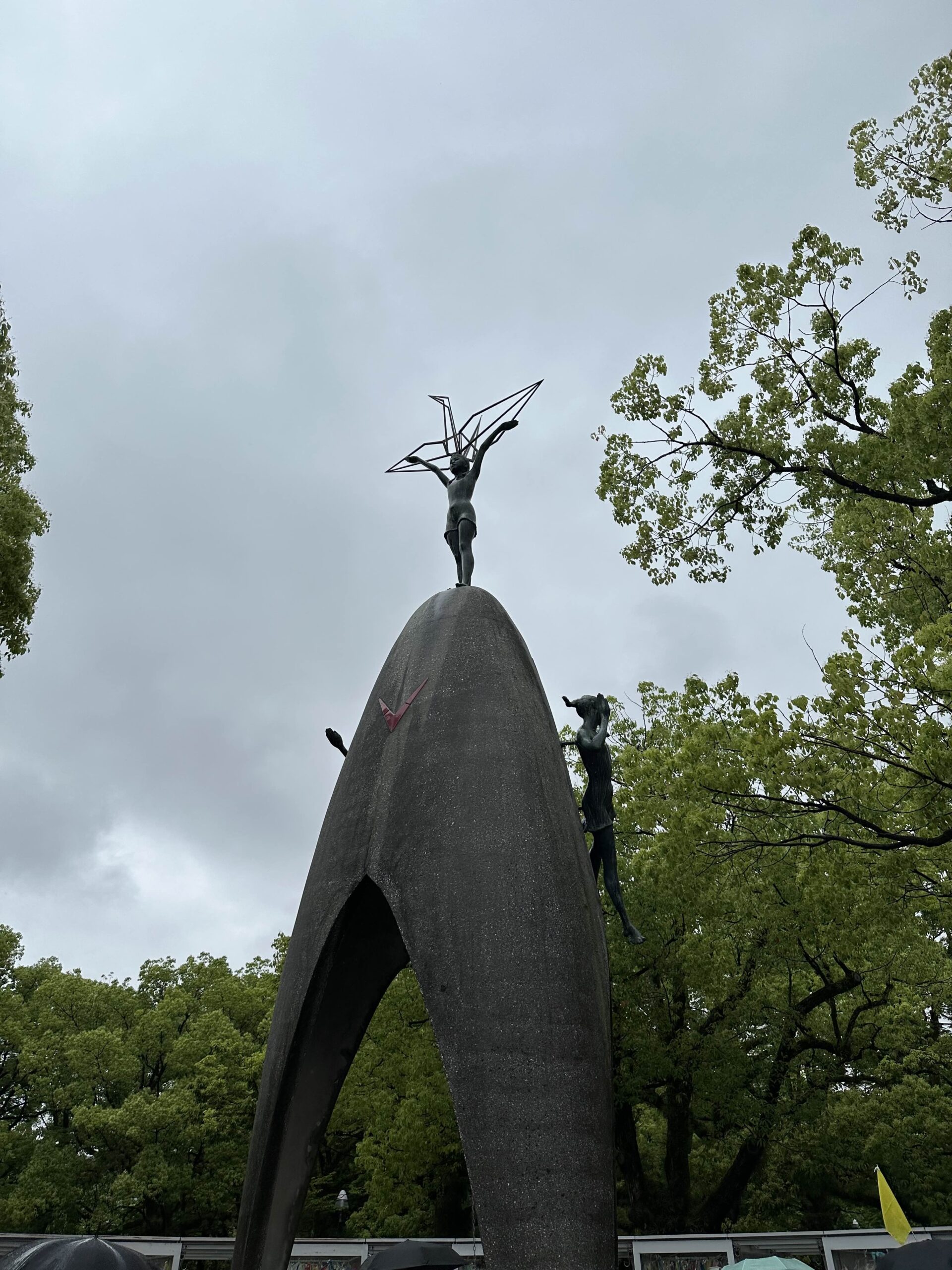
Further past one of the Peace Bells, the Children’s Peace Monument stands tall to commemorate the children who were killed by the atomic bomb. A girl lifts a paper crane over head, representing the paper cranes folded by Sadako Sasaki, who developed leukemia from the radiation of the bomb. She passed at age 12, after folding 1,000 paper cranes in the hope that her wish to be cured would be granted and she would survive.
The Flame of Peace burns on a pedestal over the Peace Pond in the park. Lit by the Eternal Flame on Mount Misen on Miyajima, the Flame of Peace has been burning since 1964. The flame continues to burn until de-nuclearization has been achieved worldwide.
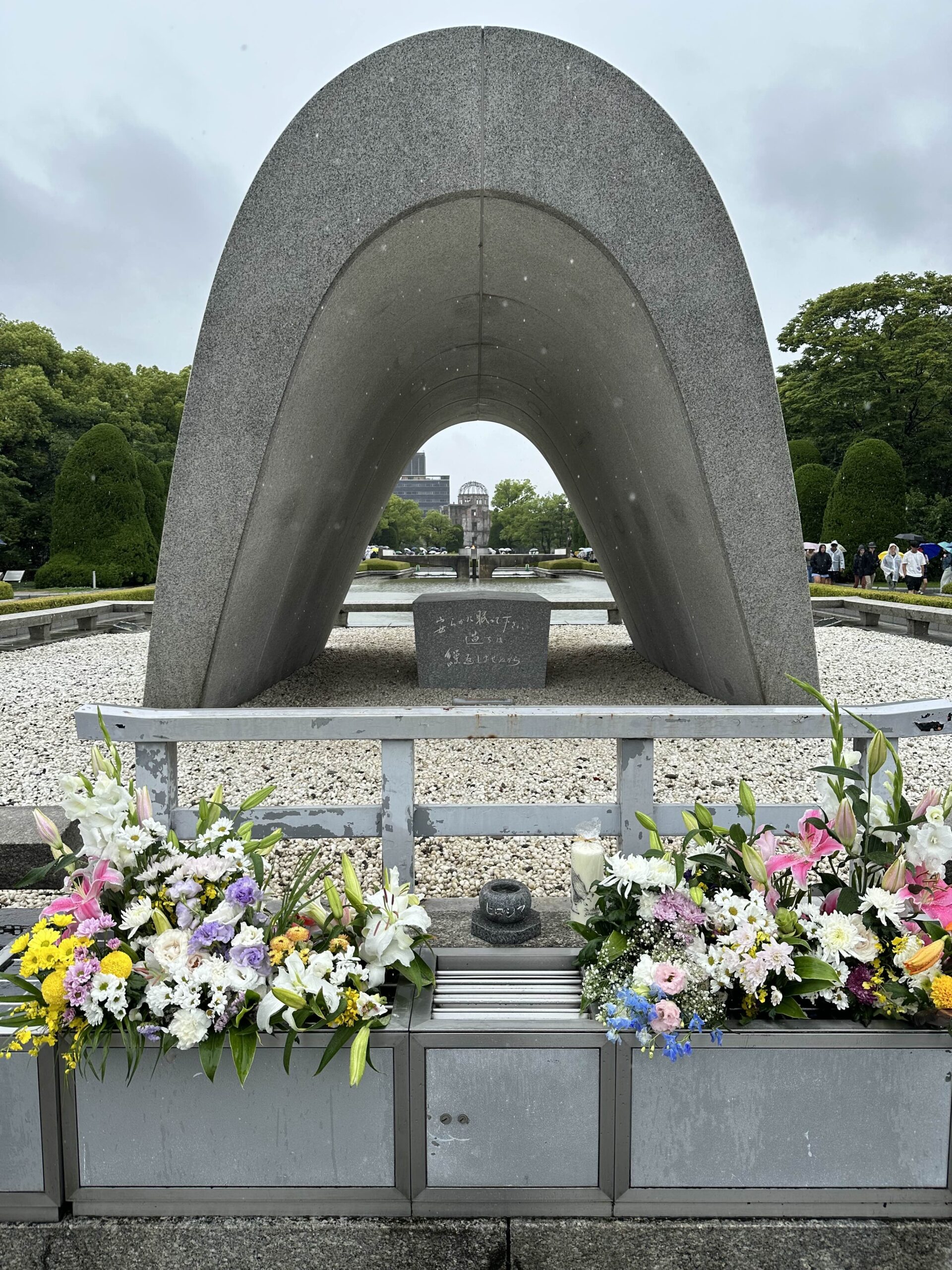
Constructed by renowned architect Kenzo Tange, the park grounds are centered around the north-south Axis of Peace, which positions the Memorial Cenotaph as a frame from which the Flame of Peace and Atomic Dome can be seen. The Memorial Cenotaph contains the names of all of the victims.
A short distance from the Memorial Cenotaph, the Hiroshima Peace Memorial Museum ensures that the memory of the destruction the atomic bomb wreaked on Hiroshima is never forgotten. The museum maintains exhibits that cover the entirety of Hiroshima’s history related to the atomic bomb. The main building illustrates the realities of the atomic bombing in uncensored detail.
The devastation from Aug. 6 is unimaginable. Artifacts recovered from the city are in every room. Children’s clothing, medical supplies and debris are displayed in each exhibit. Artwork of the survivor’s experiences are placed on the walls. Numerous images of the bombs destructive effects on victim’s bodies are a painful reminder of the damage caused by the atomic bomb.
Deeper into the east building, the history of Hiroshima before and after the bomb decorates the walls. Images of busy streets full of school children, kimono shops, food markets and restaurants are preserved within these walls. Across from this exhibit and down a floor, the history of nuclear weapons research and de-armament pans over a large wall. The exhibits further into the museum encourage permanent peace and de-nuclearization as soon as possible.
The Hiroshima Peace Memorial Grounds are a symbol of hope in the midst of one of humanity’s greatest sins. Visiting the site is a deeply moving experience and provides a perspective of the atomic bombing that is unattainable through a screen or textbook.
About The Author